
Tremellodendropsidaceae
Tremellodendropsidaceae
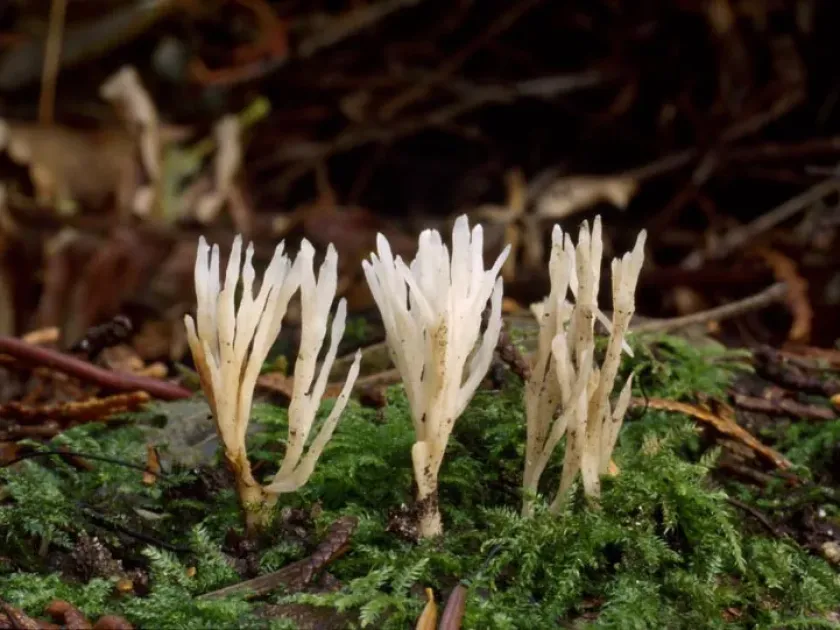
Description
Symptoms
The primary symptom is the emergence of white to yellowish, branch-like fungal structures around the base of stems or on moist soil surfaces.
Visible white mycelial threads may spread across the soil, often creating a dense network that can inhibit water absorption by roots.
Plants exhibiting these signs often appear chlorotic or stunted due to competitive nutrient uptake and restricted oxygen availability in the soil.
Unlike necrotic rot, these fungi do not cause localized tissue disintegration of the main stem, which serves as a diagnostic feature to distinguish them from pathogens.
The presence of these fungi often occurs in localized patches where moisture accumulation is highest, rather than uniform field infestation.
Pathogen
The Tremellodendropsidaceae family belongs to the Basidiomycota phylum. These fungi are predominantly saprotrophic, thriving on decaying organic matter in soil environments.
They are characterized by unique, often coral-shaped or club-like basidiocarps that appear under high humidity conditions during the growing season.
Unlike obligate plant parasites, these fungi do not directly attack healthy living plant tissues; they primarily occupy the rhizosphere of weakened plants.
Their life cycle depends on the availability of decomposing lignocellulose material, making them common in fields with poor residue management.
In modern phytopathology, they are classified as opportunistic organisms that signify underlying imbalances in soil structure or moisture management.
Conditions for development
High soil moisture combined with poor drainage is the primary driver for the rapid development and sporulation of Tremellodendropsidaceae.
Excessive surface crop residues that remain unmixed with the soil provide the necessary carbon sources for these fungi to establish dominance.
Compacted soil surfaces that prevent proper air circulation create a stable, low-oxygen microenvironment preferred by these basidiomycetes.
Cool to moderate temperatures, typically ranging from 15°C to 20°C, provide an ideal climate for the structural formation of the fungi.
Irrigation systems that promote frequent surface wetting without deep soil moisture penetration encourage the proliferation of surface-dwelling fungal colonies.
Why it matters
The main agricultural damage stems from soil hypoxia, as the fungal mat acts as a physical barrier preventing necessary gas exchange.
By competing for soil nutrients, these organisms can limit the growth potential of young seedlings during critical stages of early development.
While not primary killers, their presence significantly weakens plant immunity, making crops more susceptible to secondary pathogenic infections.
Heavy fungal colonization of the topsoil can interfere with soil structure and hinder the efficiency of fertilizers applied to the field.
Crop losses are generally indirect, manifest through overall yield reduction and diminished vigor of the harvested products.
Protection
The most effective strategy involves improving soil aeration through mechanical cultivation, which disrupts the fungal mycelial structure.
Proper residue management is essential; shredding and incorporating crop residues into the soil prevents the buildup of the substrate required by the fungi.
Adjusting irrigation schedules to ensure deep watering and allowing for a dry surface layer effectively halts the growth of surface fungi.
Using soil amendments to improve drainage in low-lying areas of the field will significantly reduce the risk of infestation.
- Mechanical soil cultivation.
- Improved field drainage systems.
- Balanced fertilization practices.
Discussion
No discussions yet — be the first.