
Tremella fungi
Tremellales
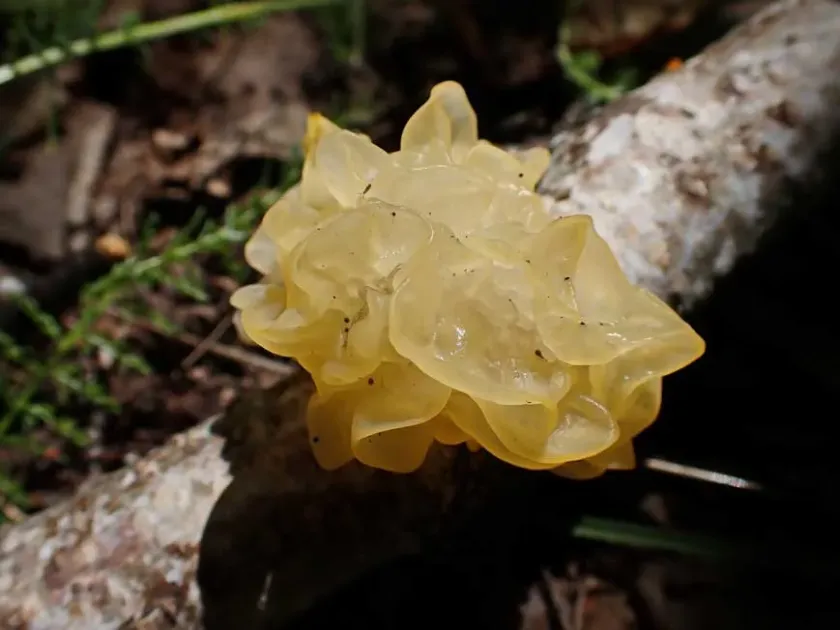
Description
Symptoms
The most visible symptom is the appearance of gelatinous, blob-like, or foliose fruiting bodies on the surface of branches and stems. These structures are often jelly-like when wet and shrivel into thin crusts when dry.
Colours can range from translucent white or grey to bright yellow, orange, or even dark brown. Their appearance is highly dependent on recent rainfall, often swelling significantly after a storm.
Bark tissue under and around the fruiting bodies usually shows signs of necrosis, cracking, or peeling. The wood underneath may become soft, discolored, or brittle as the fungal mycelium digests the structural components of the wood.
Infested areas may leak dark, foul-smelling exudates, which are often a byproduct of the fungal activity combined with secondary bacterial decay.
The tree canopy may exhibit chlorosis, premature leaf drop, and stunted growth of shoots, indicating that the fungus is interfering with the tree's overall hydraulic health.
Pathogen
The order Tremellales comprises a group of fungi commonly known as jelly fungi. While some species are edible, many members of this order are mycoparasites or opportunistic pathogens that colonize woody plants.
These fungi are basidiomycetes that produce gelatinous or rubbery fruiting bodies. Their life cycle is complex, often involving both a yeast-like state and a mycelial stage that can penetrate deep into plant tissues.
In the context of plant health, Tremellales species often thrive on weakened wood, utilizing saprotrophic or parasitic mechanisms to degrade complex polymers like lignin and cellulose.
The ability to transition between different physiological forms allows them to persist on bark surfaces, waiting for favorable conditions to expand their mycelial networks into the tree's vascular system.
Their biological complexity makes them resilient, as they can colonize existing wounds and expand their influence during periods of high humidity and moderate temperatures.
Conditions for development
Tremella fungi flourish in environments with high humidity and prolonged moisture. They are most active during cool to moderate seasons, specifically in spring and autumn when rainfall is frequent.
The primary entry points for these fungi are mechanical wounds caused by pruning, storms, frost cracks, or insect damage that exposes the cambium layer to the air.
Poor orchard sanitation, such as the accumulation of dead branches or debris, provides a perfect substrate for the spores to germinate and establish initial colonies.
Insufficient ventilation within the tree canopy creates microclimates with stagnant, humid air, which is highly conducive to the rapid spread of the fungus among neighboring branches.
Trees that are under physiological stress—due to nutrient deficiency, waterlogging, or severe infestations of other pests—are significantly more susceptible to colonization by these opportunistic fungi.
Why it matters
The primary harm is the structural degradation of woody tissue, which weakens the tree and increases the risk of limb failure during wind or snow loads.
By attacking the conductive tissues, the fungus disrupts the transport of water and nutrients, leading to the progressive dieback of affected branches and potentially the death of the entire tree.
These fungi often act as precursors to more aggressive wood-decay organisms, creating an entry point for various pathogens that accelerate the decline of the plant.
In commercial orchards, the presence of these fungi significantly reduces the lifespan and productivity of the trees, leading to lower fruit quality and eventual loss of the crop.
Because these fungi produce millions of airborne spores, an untreated infestation can quickly spread throughout an entire plantation, turning a localized problem into a major outbreak.
Protection
Sanitation is the cornerstone of control. All infected wood must be pruned back to healthy tissue and removed from the site to prevent further spore dispersal.
All pruning wounds should be sealed with specialized antifungal pastes or painted with protective solutions to prevent opportunistic colonization by spores.
Copper-based fungicides applied as a dormant season spray can help sanitize the bark surface and reduce the number of fungal spores present on the trees.
Good agricultural practices, including balanced fertilization and proper irrigation, maintain the tree's vigor and improve its natural ability to heal wounds and resist fungal invasion.
- Maintain proper canopy density to ensure adequate airflow.
- Monitor and treat wood-boring insects that create infection entry points.
- Isolate or remove severely infected trees to protect the remaining healthy population.
Discussion
No discussions yet — be the first.