
Trechispora hymenocystis
Trechispora hymenocystis
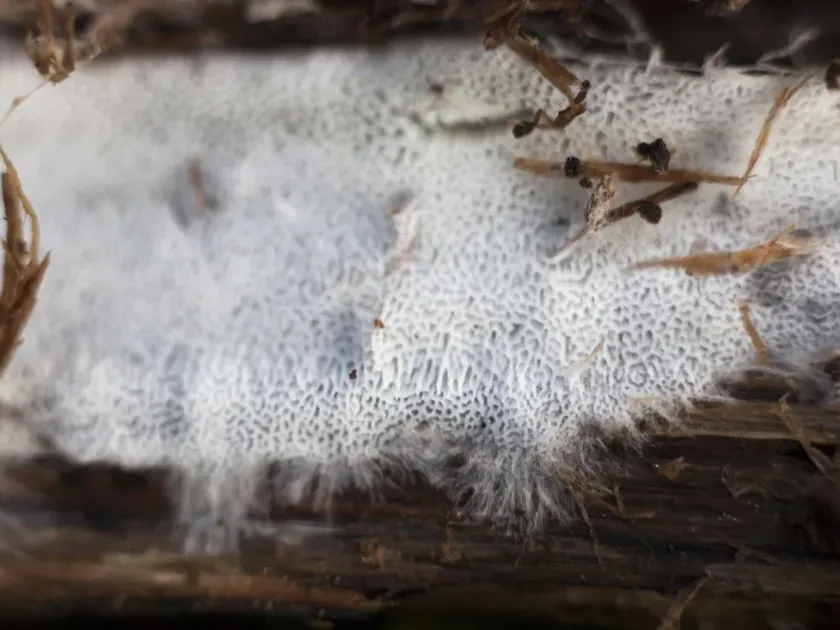
Description
Symptoms
The primary symptom of infection is the emergence of a white or cream-colored, cobweb-like mycelial mat located at the base of the plant stem. This mat often adheres closely to the soil surface and the lower stem, creating a distinct "cocooning" effect.
Plants affected by the fungus exhibit signs of general decline, including leaf chlorosis, stunted growth, and premature wilting that does not recover even after irrigation. These symptoms result from the pathogen's interference with the plant's water and nutrient transport system.
Upon closer inspection of the root system, one may observe necrotic lesions and softened, degraded tissue. In severe cases, the stem base becomes brittle and prone to breakage under minimal physical pressure.
In seedlings, the pathogen often causes damping-off. Affected young plants quickly yellow and collapse as the fungus rapidly destroys the delicate tissues of the root collar, effectively cutting off the plant's supply lines.
In the later stages of infection, the affected tissue turns brownish. In humid conditions, fine, grainy sporulation structures become visible on the surface, which serve as the primary source for further spread of the infection to healthy neighboring plants.
Pathogen
Trechispora hymenocystis is a fungal microorganism belonging to the class Basidiomycetes. While primarily recognized as a soil saprotroph, it possesses the capability to act as a facultative parasite, particularly under conditions that stress the host plant.
As a member of the Hydnodontaceae family, this fungus develops a characteristic thin, cobweb-like mycelial mat on substrates. Its biological strategy relies on a robust enzyme system capable of breaking down organic matter, including cellulose and lignin found in plant tissues.
The fungus is highly resilient and can persist in the soil for extended periods by utilizing plant debris as a nutrient source. This persistence makes it a common component of the soil microbiome, especially in areas with intensive cultivation practices.
Microscopic spores produced by the fungus are easily dispersed through water splashes and air currents. This efficient spread mechanism allows the infection to establish itself rapidly across a field or within a greenhouse structure when humidity levels are elevated.
Unlike some highly specialized pathogens, Trechispora hymenocystis exhibits significant plasticity in its growth habits. It can quickly colonize organic matter and subsequently invade the compromised root systems of nearby crops, utilizing a range of enzymatic pathways to degrade plant cells.
Conditions for development
High soil moisture is the most critical environmental factor promoting the development of Trechispora hymenocystis. Moisture levels exceeding 70-80% facilitate rapid spore germination and extensive growth of the fungal mycelium.
The pathogen thrives within an optimal temperature range of +18°C to +24°C. During these conditions, the fungus displays maximum metabolic activity, aggressively colonizing both available organic matter and any susceptible host tissues.
The presence of significant amounts of fresh, undecomposed organic material, such as raw manure or unmulched straw, provides an ideal habitat for the fungus. This organic accumulation acts as an incubator, allowing the pathogen population to increase before it shifts to crop tissues.
Poor soil aeration and high-density planting create microclimates characterized by stagnant air and high humidity at the soil level. Such conditions are particularly conducive to disease outbreaks, especially in protected environments like greenhouses.
Soil pH plays a secondary role in the fungus's development. While it remains active across a broad pH range, neutral to slightly acidic soils are generally more favorable for its growth, as they often correlate with reduced competition from other beneficial soil microorganisms.
Why it matters
The primary economic impact of this fungus is the reduction of crop density and overall yield potential. Plants that survive an initial infection often show reduced vigor, limited nutrient uptake, and decreased harvest quality.
The infection necessitates the replanting of damaged areas, leading to increased production costs and wasted resources. In greenhouse settings, seedling loss can be catastrophic, potentially reaching 25-35% if containment measures are not implemented promptly.
The pathogen releases metabolic byproducts, including specific toxins, which can cause systemic stress to the plant. This leads to the early senescence of foliage and negatively affects the development of fruits and seeds.
The persistence of the fungus in the soil limits future crop rotations. Fields with significant pathogen loads may become unsuitable for sensitive crops for several seasons, requiring expensive soil remediation or extended fallow periods.
In addition to field losses, infected products like root vegetables are highly susceptible to post-harvest decay. If the fungus is present at harvest, it can continue to degrade tissues in storage, leading to significant spoilage of the stored commodity.
Protection
The cornerstone of management is a robust crop rotation program that avoids planting susceptible species in the same field sequentially. This practice helps break the life cycle of the pathogen and allows for a natural reduction in its soil population.
Agronomic measures such as deep plowing help incorporate and decompose organic debris, effectively removing the pathogen's primary food source. Additionally, improving soil aeration through proper tillage reduces the environmental favorability for the fungus.
Managing water usage is essential. Ensuring proper drainage and avoiding over-irrigation are key to preventing the moist conditions that favor the fungus. In greenhouses, improving ventilation and implementing drip irrigation can significantly lower the risk of infection.
Biological control using beneficial microorganisms, specifically those of the Trichoderma genus, has proven effective. These antagonistic fungi colonize the root zone, creating a barrier that prevents Trechispora from establishing itself.
Chemical control strategies involve the application of soil-active fungicides or seed treatments designed to protect the root system during the critical early stages of plant development, thereby minimizing the risk of primary infection.
Discussion
No discussions yet — be the first.