
Tilletiopsis
Tilletiopsis
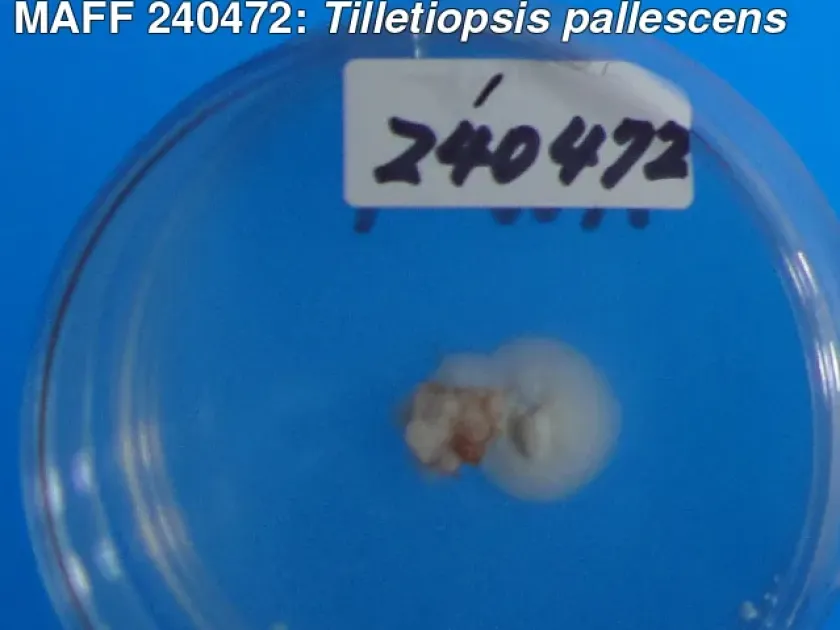
Description
Symptoms
The most recognizable sign of Tilletiopsis colonization is the appearance of a whitish to creamy-colored powdery growth on the surface of leaves and fruit skins.
Unlike some other fungal pathogens, the growth of Tilletiopsis can appear somewhat diffuse or blotchy, often concentrating along leaf veins or around micro-abrasions in the cuticle.
On fruits, the colonization can lead to the formation of light-colored, ill-defined spots that detract from the visual quality and marketability of the agricultural produce.
In humid conditions, the growth can become more pronounced, potentially causing premature yellowing or necrosis of small leaf areas if the colony density becomes very high.
- Development of a whitish or cream-colored epiphytic bloom.
- Appearance of irregular, diffuse patches on plant surfaces.
- Potential cuticular damage due to extended fungal contact.
Pathogen
Tilletiopsis is a genus of yeast-like fungi belonging to the order Exobasidiales. These microorganisms are commonly found as epiphytes on the surfaces of leaves, stems, and fruits of various plant species.
The biology of Tilletiopsis is characterized by its ability to utilize plant exudates as a nutrient source, allowing them to proliferate rapidly across the surface of the host plant under specific conditions.
While often acting as saprotrophs, some species within this genus can display weak parasitic tendencies, potentially impacting the physiological state of the host by covering the leaf surface.
The taxonomic classification of this group is complex due to high morphological variability, often requiring sophisticated laboratory diagnostics to distinguish between different species and their specific roles.
These fungi do not typically invade deep plant tissues, preferring to remain within the phyllosphere where they interact with the plant cuticle and other members of the leaf microbiome.
Conditions for development
High relative humidity is the primary driver for the development and spread of Tilletiopsis. Levels consistently above 80% create an ideal environment for the spores to germinate.
Moderate temperatures ranging between 15°C and 25°C are highly favorable for the metabolic activity and budding reproduction of these yeast-like fungi.
Poor ventilation within crop rows or dense canopies significantly increases the risk of infection by preventing the foliage from drying out after rain or dew.
The presence of free moisture, such as condensation or persistent morning dew, is a critical requirement for the survival and expansion of Tilletiopsis colonies on the plant surface.
Cultural practices that maximize airflow, such as appropriate plant spacing and canopy management, are essential to create an environment hostile to the growth of this fungus.
Why it matters
The primary damage caused by Tilletiopsis is the physical obstruction of the leaf surface, which reduces photosynthetic efficiency and impairs the plant's ability to produce sugars.
Persistent presence of the fungus on fruit surfaces can lead to downgraded quality, resulting in economic losses for commercial growers due to visual defects.
By competing with the natural microflora of the phyllosphere, Tilletiopsis may disrupt the plant's natural defense mechanisms against more aggressive, invasive pathogens.
In cases of heavy infestation, the cumulative stress on the plant can lead to reduced vigor, impaired development, and early senescence of the foliage.
The contamination of produce with fungal mycelium makes the fruits more prone to colonization by secondary decay organisms, shortening their shelf life.
Protection
Effective management begins with improving field sanitation and cultural practices, focusing on reducing humidity and ensuring proper plant spacing to increase airflow.
Fungicidal applications, particularly those effective against powdery mildew and basidiomycetous fungi, can provide reliable control when the disease pressure is high.
Biological control methods involving competitive antagonistic bacteria or fungi are increasingly used to suppress the growth of Tilletiopsis in sustainable farming systems.
Regular monitoring of canopy humidity and foliage health allows for early detection of fungal colonization, enabling timely intervention before the infection reaches an economic threshold.
Proper removal of infected crop residues at the end of the season is a critical preventative step to lower the overall inoculum load for subsequent growing cycles.
Discussion
No discussions yet — be the first.