
Tilletiaceae smuts
Tilletiaceae
Description
Symptoms
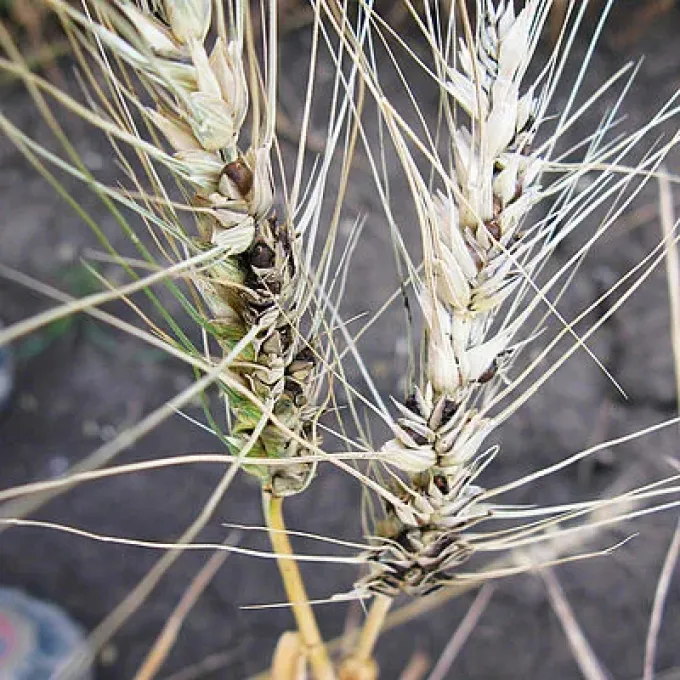
Symptoms often go unnoticed until the heading stage, when infected plants exhibit signs of stunted growth and slightly altered coloration.
Affected heads often appear more open or elongated than healthy ones, and the individual glumes may remain green for a longer period during ripening.
The most diagnostic feature is the replacement of grain kernels with black, powdery spore balls known as bunt balls, which maintain the shape of the original seed.
If these balls are crushed, they emit a distinct, unpleasant fishy odor caused by the chemical compound trimethylamine, which confirms the presence of the pathogen.
- bunt balls replacing normal grain kernels;
- a strong, fishy smell when infected grains are broken;
- stunting of the infected cereal plants;
- dark, powdery spore mass visible at harvest time.
Pathogen
The Tilletiaceae family includes fungi responsible for several types of bunt or smut diseases in cereal crops, with Tilletia caries being the most prominent species.
These fungi function as obligate parasites, meaning they rely entirely on the host plant's living tissue to complete their complex biological life cycle.
Infection primarily occurs during the germination phase of the crop, when the fungus enters the coleoptile before the plant emerges above the soil line.
The fungal mycelium spreads systemically throughout the plant, remaining dormant until the reproductive stage when it invades the developing ovaries.
At maturity, the pathogen replaces the grain tissue with a dense mass of black teliospores, effectively sabotaging the plant's reproductive effort for its own survival.
Conditions for development
Environmental conditions during the germination period are critical, as the fungus requires cool and moist soil to successfully infect the young host.
Soil temperatures ranging from 5°C to 12°C create an optimal window for spore germination and rapid mycelial penetration into the tender seedling tissues.
Deep planting of seeds extends the time that seedlings remain in the susceptible stage, significantly increasing the probability of successful fungal invasion.
High moisture levels in the soil at the time of sowing facilitate the movement of basidiospores, which is essential for the initial stage of infection.
The persistence of teliospores in the soil serves as a primary inoculum source, especially in fields where susceptible cultivars have been repeatedly planted.
Why it matters
The direct impact of Tilletiaceae smuts is a substantial reduction in overall yield, as individual grains are entirely consumed and replaced by fungal spores.
Even if the percentage of infected plants is low, the presence of smut spores can cause the entire harvest to be rejected due to contamination standards.
The grain loses its nutritional and commercial value, as the spores impart an off-flavor and dark color that ruins flour quality for baking purposes.
In addition to economic losses, contaminated grain dust poses health risks to workers in silos, including potential respiratory issues and severe allergic reactions.
Logistical challenges arise when cleaning and sanitizing equipment after handling infected crops to prevent the further spread of spores to clean batches.
Protection
Seed treatment with systemic fungicides remains the most effective and widely used method for preventing Tilletiaceae smuts by eradicating spores on the seed coat.
Practicing crop rotation is a vital cultural control method, as it disrupts the life cycle of the fungus and reduces the level of inoculum present in the field.
Sowing at the optimal time allows the crop to emerge and establish itself quickly, thereby reducing the duration of susceptibility to fungal infection.
Selecting resistant cultivars that have been specifically bred to withstand common bunt is a key strategy for integrated pest management in modern agriculture.
Maintaining high-quality seed stocks by removing any visible infected grains during the cleaning process is crucial for preventing the introduction of the pathogen.
Discussion
No discussions yet — be the first.