
Holcus smut
Tilletia holci
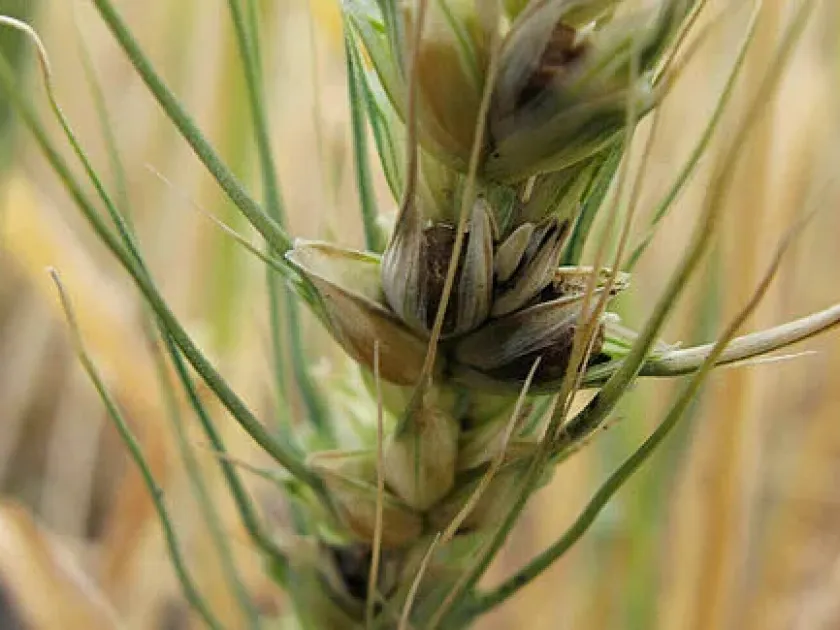
Description
Symptoms
The hallmark symptom of the disease is the transformation of the plant's reproductive organs into "smut galls," which are filled with a dark, powdery mass of spores.
Infected panicles show significant deformation, often appearing shorter, twisted, and stunted compared to healthy counterparts.
The spikelet glumes may spread apart as the developing spore mass pushes against them, causing the infected structures to split open.
Plants affected by the fungus often exhibit reduced vigor, chlorosis, and general stunting, as the pathogen drains essential nutrients from the system.
The spore mass is visually distinct and is easily dispersed by wind or physical contact once the protective epidermal tissues rupture.
Pathogen
The causative agent of this disease is the microscopic fungus Tilletia holci, which belongs to the class of Basidiomycetes. It is a highly specialized pathogen that primarily infects grasses of the genus Holcus.
This fungus is a type of smut, characterized by a life cycle closely linked to the phenological development of its host plant. Teliospores are highly resilient and can remain viable in soil or on seeds for extended periods.
Infection is typically transmitted through contaminated seed lots, where spores remain dormant on the surface until planting conditions are met.
Germination of the fungus coincides with the germination of the host plant's seeds, allowing the mycelium to penetrate the seedling before it emerges from the soil.
As an obligate parasite, Tilletia holci redirects the host's metabolic resources to fuel its own sporulation, effectively neutralizing the plant's reproductive output.
Conditions for development
The development of Tilletia holci is heavily dependent on soil temperature and moisture levels during the seedling germination phase.
Moderate temperatures combined with high soil moisture create an ideal environment for spore germination and subsequent invasion of the plant tissues.
High planting density can exacerbate the spread of the disease by modifying the microclimate, increasing humidity around the base of the stems.
Infection risk is significantly higher in fields where previous crops were symptomatic, as spores can persist in the soil profile.
Air currents during the flowering stage play a crucial role in the horizontal spread of spores between plants, facilitating the rapid escalation of the infection.
Why it matters
The primary economic impact is the total loss of grain or seed yield, as the floral parts are replaced by fungal sporulation, rendering the plant useless.
For forage crops, the disease reduces the quality and quantity of the harvest, making the biomass potentially unsafe for livestock consumption.
The presence of smut spores poses risks to animal health if contaminated forage is integrated into the diet without proper safety precautions.
Long-term soil contamination creates an ongoing threat, forcing producers to seek alternative crops or implement rigorous decontamination programs.
Pathogen activity disrupts the photosynthetic efficiency of the plant, weakening its resilience against abiotic stressors like drought or frost.
Protection
The most effective strategy for managing Holcus smut is the exclusive use of clean, certified seed that has been verified as free from smut spores.
Systemic seed treatments are essential for preventing primary infection, effectively killing spores on the seed coat before they can penetrate the host.
Crop rotation is a vital agronomic practice that helps reduce the concentration of pathogens in the soil over several years.
Optimizing planting times and ensuring rapid, uniform germination can help seedlings quickly move past the stage of highest susceptibility to the fungus.
- Fungicidal seed dressing.
- Crop rotation with non-host species.
- Use of smut-resistant cultivars.
- Removal of infected crop debris post-harvest.
Discussion
No discussions yet — be the first.