
Thraustochytriales
Thraustochytriales
Description
Symptoms
The early signs of infection include the appearance of localized discolored spots on the thallus, which eventually become necrotic and translucent.
As the disease progresses, the infected tissue softens significantly, leading to the disintegration of the cell structure and tissue sloughing.
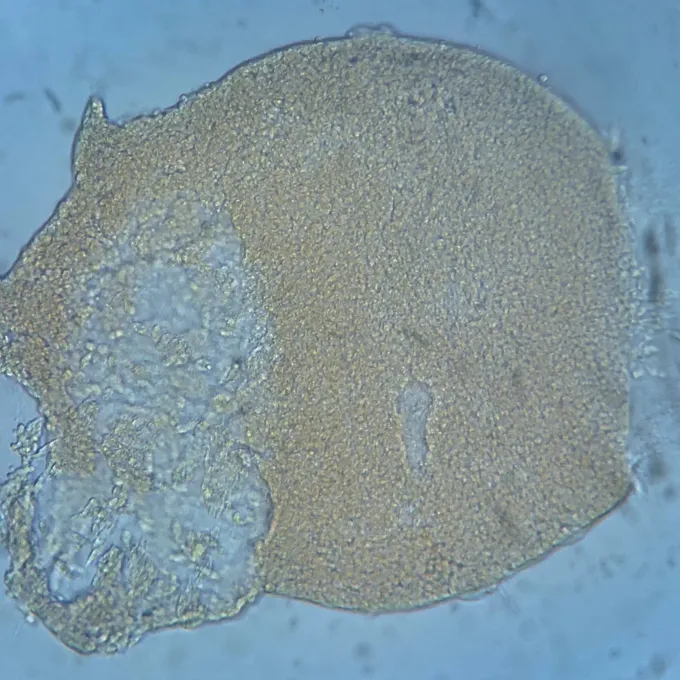
Microscopic inspection reveals the presence of spherical vegetative cells surrounded by the characteristic ectoplasmic net attached to the damaged area.
Secondary infections by opportunistic bacteria often follow the primary pathogen, accelerating the decay process and spreading the lesion.
Visually, the disease manifests as spreading ulcers that can rapidly affect entire colonies of aquatic plants under high-density conditions.
Pathogen
Thraustochytriales are a group of unicellular eukaryotic organisms belonging to the Labyrinthulomycetes, traditionally considered closely related to oomycetes.
These organisms act as facultative parasites or saprotrophs in marine environments, capable of infecting the tissues of various macroalgae and seagrasses.
They are characterized by unique ectoplasmic networks that facilitate the attachment to host tissues and the enzymatic uptake of nutrients from the host cells.
The life cycle includes a motile zoospore stage equipped with biflagellated structures, which allows them to actively swim and locate new hosts in aquatic systems.
Their cell walls are distinct from true fungi, containing specific components that make them resilient to many standard agricultural fungicides.
Conditions for development
High stocking density in aquaculture facilities is the primary driver for the rapid spread of the pathogen between individual plants.
Favorable conditions for development include moderately high water temperatures and the accumulation of organic matter that provides a nutrient base.
Poor water circulation and stagnant conditions in culture tanks significantly exacerbate the spread of zoospores and increase the incidence of the disease.
Fluctuations in salinity or physiological stress in plants can weaken their innate resistance, making them more susceptible to colonization by Thraustochytriales.
Pollution and high levels of dissolved organic carbon in the water column promote the proliferation of these organisms in coastal ecosystems.
Why it matters
The main impact is the significant reduction in biomass and quality of cultivated aquatic crops, causing substantial economic losses for marine farms.
Infected plants exhibit reduced photosynthetic efficiency and growth retardation, eventually leading to crop failure if left unmanaged.
The disease can rapidly sweep through nursery systems, jeopardizing the entire production cycle and necessitating the culling of affected stock.
Ecologically, the spread of this pathogen can lead to the degradation of natural seaweed beds, negatively affecting marine biodiversity.
Metabolic byproducts of the pathogen may also alter water quality, creating an unfavorable environment for other co-cultured marine organisms.
Protection
Effective management starts with rigorous sanitation protocols and regular health monitoring of the cultivated plant populations.
Implementing water treatment technologies, such as UV irradiation and mechanical filtration, is essential for reducing the zoospore load in closed systems.
Maintaining strong water circulation helps prevent the settling of zoospores onto the host tissue, thereby reducing infection rates.
Quarantine measures and the prompt removal of infected debris are critical steps to prevent the transmission of the pathogen throughout the facility.
Future control strategies include the use of biocontrol agents, such as beneficial bacteria that inhibit the growth and attachment of these pathogens.
Discussion
No discussions yet — be the first.