
Thielaviopsis paradoxa
Thielaviopsis paradoxa
Description
Symptoms
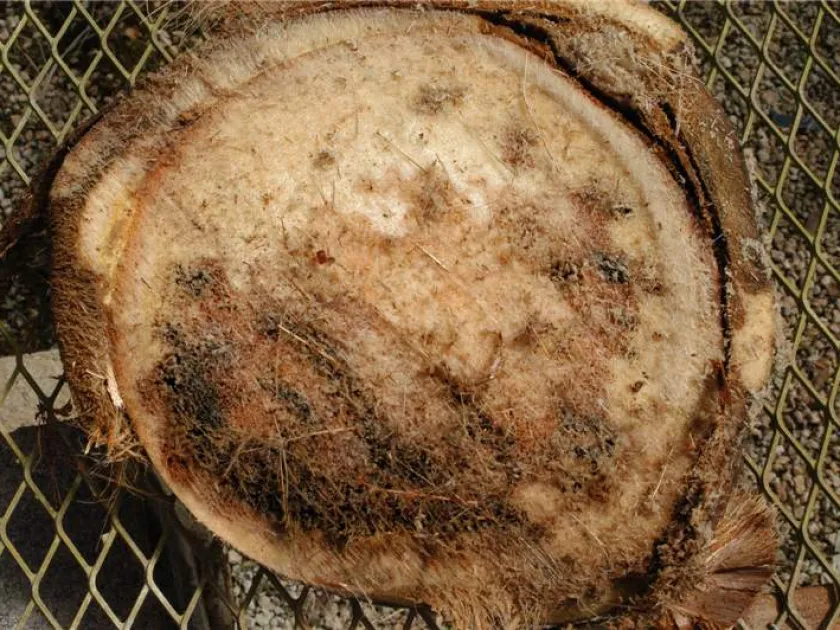
Initial infection often appears as water-soaked lesions that progressively darken, eventually turning into necrotic black areas with a fruity, sweet odor.
A distinctive sign is the development of a profuse, powdery growth on the infected surface, representing the mass of fungal conidia and spores.
In pineapples, it causes a severe black rot that turns the internal core into a soft, blackened mass, rendering the fruit completely unusable.
In palms, the fungus causes trunk rot and internal decay of the apical meristem, which leads to the collapse of the canopy and plant death.
Root systems attacked by the pathogen become discolored, soft, and brittle, significantly reducing the plant's capacity to absorb nutrients and moisture.
Pathogen
Thielaviopsis paradoxa is a fungal pathogen, often associated with the teleomorph Ceratocystis paradoxa, that affects a wide range of tropical plants.
The fungus produces two types of spores: hyaline endoconidia and dark, thick-walled chlamydospores, which allow it to survive harsh conditions in the soil.
It acts as a facultative parasite, living saprophytically on decaying plant matter until it finds a suitable host to infect via wounds or openings.
The pathogen is highly mobile in agricultural environments, spreading through air currents, irrigation water, contaminated tools, and infected planting stock.
The biological complexity of this organism makes it a persistent challenge in tropical agriculture, capable of infecting roots, stems, and fruits.
Conditions for development
The pathogen thrives in warm, humid conditions, with temperatures typically ranging between 25 and 30 degrees Celsius being optimal for rapid infection.
Mechanical injuries caused by harvesting equipment, insects, or pruning serve as the primary entry points for the fungus into the plant tissue.
Excessive soil moisture or poor drainage encourages the germination of spores in the root zone, significantly increasing the severity of root rot.
Poor ventilation in storage facilities or greenhouses creates a microclimate that facilitates the rapid spread of spores from infected to healthy plants.
Prolonged rainy seasons increase the risk of field outbreaks, as water serves as a primary vehicle for moving spores throughout the plantation.
Why it matters
The fungus causes significant economic losses by destroying fruit crops, making them completely unmarketable due to internal decay.
It weakens the host plant's immune system, making it more susceptible to secondary infections and opportunistic pests that further damage the plant.
In plant nurseries, it can devastate large quantities of young seedlings, disrupting production cycles and increasing the cost of replanting.
The disease requires intensive sanitation measures, including the destruction of large swaths of crops to control the spread of the pathogen.
For perennial crops, the death of a plant represents a long-term loss in yield and necessitates costly field rehabilitation efforts.
Protection
Effective management begins with strict sanitation practices, such as the prompt removal and burning of all infected plant tissues to reduce inoculum load.
The use of pathogen-free planting material is essential, coupled with seed or cutting treatments using appropriate fungicides before propagation.
Improving field drainage and ensuring proper spacing between plants helps to reduce humidity and discourage the buildup of the fungal population.
Regular disinfection of all agricultural tools with chemicals is crucial to prevent the mechanical transmission of the fungus between different plant sites.
Applying systemic fungicides at critical growth stages can protect vulnerable tissues from infection, especially after pruning or harvesting operations.
Discussion
No discussions yet — be the first.