
Thielaviopsis
Thielaviopsis
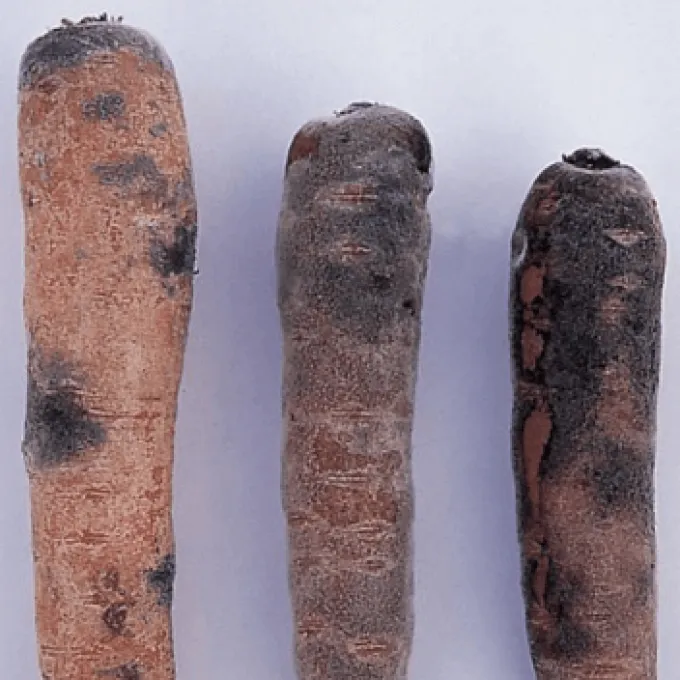
Description
Symptoms
The hallmark symptom of this disease is the development of black lesions on the roots, which is why it is commonly known as black root rot. As the disease progresses, the entire root system may turn black and decay.
Above-ground symptoms include stunted growth, chlorosis (yellowing of leaves), and general wilting, particularly during hot periods when the root system can no longer supply sufficient water to the plant.
In the case of seedlings, the disease often causes damping-off. The base of the stem may show dark, sunken lesions that lead to the collapse and death of the young plant.
When examining infected roots, one may observe the breakdown of the cortex, which eventually sloughs off, exposing the vascular cylinder. This systemic damage severely limits nutrient uptake.
In advanced stages, the roots become brittle and necrotic. Diagnostic confirmation often requires microscopic observation to identify the characteristic chains of dark spores produced by the fungus.
Pathogen
The disease is caused by the soil-borne fungus Thielaviopsis basicola, a notorious plant pathogen. It is highly resilient due to its ability to produce thick-walled chlamydospores, which allow it to survive in the soil for several years.
The pathogen attacks the root system and the lower stem of host plants. Its life cycle involves the production of both endoconidia and chlamydospores, facilitating its rapid dissemination during the growing season and long-term persistence in the absence of a host.
Infection spreads through contaminated soil, infected nursery stock, agricultural machinery, and irrigation water. The fungus invades roots primarily through natural openings or wounds in the root tissue.
It has an exceptionally wide host range, infecting critical crops such as cotton, tobacco, beans, and various ornamental plants. This versatility makes it a major concern for both field and greenhouse production.
The biological characteristics of Thielaviopsis basicola make it a difficult pathogen to manage, as it adapts well to diverse environmental conditions and can persist even in fallowed fields.
Conditions for development
Thielaviopsis thrives in cool, moist soil conditions. The optimal temperature for root infection typically ranges between 15°C and 22°C (59°F–72°F).
Excessive moisture is a primary driver of disease severity. Poorly drained soils or over-irrigation create the perfect environment for the zoospores to move and infect healthy root tissue.
Soil pH plays a significant role in the pathogen's activity. Thielaviopsis prefers neutral to alkaline soil conditions (pH 6.0–8.0), whereas acidic soils significantly inhibit its growth.
Poor aeration in greenhouse substrates often exacerbates the disease, as low oxygen levels weaken the roots and make them more susceptible to fungal entry.
The movement of contaminated soil on farm equipment or tools is a major contributor to the spread of the pathogen between different sections of a field or between greenhouses.
Why it matters
The primary damage results from the destruction of the root system's ability to absorb water and essential nutrients. This causes chronic physiological stress in the plant, leading to reduced vigor.
Economic losses can be substantial, particularly in susceptible crops like cotton and tobacco, where reduced root growth directly translates into lower yield and poor fiber or leaf quality.
Plants weakened by Thielaviopsis are highly vulnerable to secondary infections by other opportunistic pathogens, which complicates the health of the crop and increases management costs.
In ornamental nurseries, the presence of the pathogen often leads to the rejection of entire batches of plants, causing direct financial losses and reputation damage.
The persistence of the fungus in the soil creates a long-term problem, effectively limiting the choice of crops that can be planted in infested areas for many years.
Protection
The most effective strategy is the use of disease-free, certified seeds and seedlings. Strict sanitation protocols in nurseries are essential to prevent introducing the pathogen to the field.
Implementing long-term crop rotation with non-host species is crucial to lower the population of chlamydospores in the soil over time.
Cultural practices should focus on improving soil drainage, managing irrigation carefully, and adjusting soil pH toward an acidic range where possible to limit fungal activity.
In greenhouses, equipment disinfection and the use of pasteurized or sterilized growing media are mandatory to maintain a pathogen-free environment.
- Utilizing resistant or tolerant cultivars when available.
- Applying biological control agents, such as specific strains of Trichoderma.
- Removing and destroying infected plant debris immediately after harvest.
- Using systemic fungicides as a preventative seed treatment or soil drench.
Discussion
No discussions yet — be the first.