
Black root rot
Thielavia basicola
Description
Symptoms
The first symptoms are often non-specific: general plant stunting, loss of turgor, and chlorosis (yellowing) of lower leaves, which is frequently mistaken for nutrient deficiency.
Upon examination of the root system, characteristic black, necrotic lesions appear on the roots. These tissues become soft and slimy, eventually leading to a complete breakdown of the root structure.
In advanced stages, a dark, velvet-like coating (spore mass) may be visible on the surface of the roots, indicating high levels of pathogen activity and potential for rapid spread.
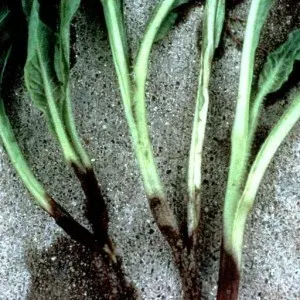
Seedlings often suffer from "black leg," where the stem base turns black and constricted, causing the plants to collapse and die shortly after emergence.
As the rot progresses, lateral roots are destroyed, and the primary root system loses its ability to uptake water and essential nutrients, leading to irreversible wilting.
Pathogen
Black root rot is caused by the soil-borne fungus Thielavia basicola (anamorph: Berkeleyomyces basicola). It is a persistent ascomycete that survives in the soil for years by producing thick-walled, dormant chlamydospores.
The pathogen spreads through endoconidia and chlamydospores, which are easily transported by contaminated soil, irrigation water, and infected agricultural equipment or greenhouse trays.
The fungus is highly aggressive, invading root tissues through root hairs or small wounds, making it a major threat to both greenhouse starts and field-grown vegetables.
It has an exceptionally wide host range, including tobacco, cotton, various legumes, cucurbits, and many ornamental greenhouse plants like begonias and primulas.
Because the pathogen can persist in the soil for long periods without a host, it is considered a difficult-to-manage disease that requires long-term soil management strategies.
Conditions for development
The fungus Thielavia basicola thrives in cool to moderate soil temperatures, with optimal growth occurring between 18°C and 24°C (64°F–75°F).
High soil moisture is a primary requirement for the development and spread of the disease; saturated soils allow the spores to swim or drift to healthy roots easily.
The pathogen prefers neutral to slightly alkaline soil conditions (pH 6.0–7.5). Soil acidification is one of the most effective environmental management tools.
Greenhouse environments with poor ventilation, constant condensation, and high humidity create a perfect microclimate for the rapid multiplication of the pathogen.
The introduction of the disease usually occurs through contaminated soil media, unsterilized compost, or by moving infected plants into a clean facility.
Why it matters
Black root rot causes significant losses in nurseries due to high seedling mortality, leading to increased costs for re-sowing and lost time during the growing season.
In mature crops, the disease limits root growth, leading to poor plant vigor, low yield, and diminished quality of produce, often rendering it unsellable.
The damage to the roots makes the plants highly vulnerable to secondary infections from other soil-borne bacteria and fungi, which further complicates diagnosis and treatment.
Once a field is infested, the long-term survival of chlamydospores forces farmers to abandon certain crops or invest heavily in expensive soil disinfection methods.
The systemic nature of the rot prevents the plant from absorbing nutrients, which can make chemical fertilization ineffective, as the plant can no longer process the additives.
Protection
The primary control measure is the use of pathogen-free, sterilized potting mixes and regular sanitation of greenhouse tools, benches, and containers.
Managing soil pH is critical; lowering the pH to 5.5–5.8 creates an environment hostile to Thielavia basicola and significantly reduces infection rates.
Biological control agents, particularly beneficial fungi like Trichoderma species, are effective in colonizing the root zone and suppressing the growth of Thielavia.
Chemical fungicides can be used for soil drenching, but they should only be used as part of an integrated management program, as they do not eliminate the hardy spores.
- Practice crop rotation with non-host species to reduce inoculum buildup.
- Promptly rogue and destroy infected plants and the surrounding root zone.
- Improve drainage systems to prevent waterlogging, which favors fungal spread.
- Use resistant cultivars or hybrids if they are available for your specific crop.
Discussion
No discussions yet — be the first.