
Thelonectria
Thelonectria
Description
Symptoms
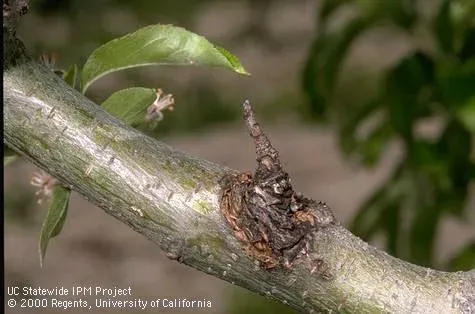
The hallmark symptom is the appearance of sunken or discolored necrotic spots on the bark of stems or branches. Over time, these areas dry out and exhibit vertical cracking.
During the growing season, especially in humid weather, you may observe clusters of small, bright red or orange fungal fruiting bodies appearing within the necrotic areas.
Affected branches often exhibit wilting leaves that turn brown and shrivel. Despite the death of the branch, these withered leaves often remain attached to the tree for an extended period.
Cross-sections of infected branches frequently reveal internal browning or dark discoloration of the wood, confirming the penetration of the fungus into the xylem.
In mature cases, the bark may peel away, revealing a sunken canker often bordered by callus tissue, which represents the tree's partially successful attempt to contain the infection.
Pathogen
The disease is caused by fungi belonging to the genus Thelonectria, with Thelonectria discophora being a well-known representative. These are ascomycete fungi that specialize in attacking the bark and inner tissues of woody plants.
The pathogen functions primarily as a wound parasite. It exploits natural fissures, frost cracks, sunburns, or pruning wounds to gain entry into the host's vascular system.
During its life cycle, the fungus produces sexual reproductive structures known as perithecia, which often appear as small, vibrant reddish or orange eruptions on the bark surface.
The mycelium colonizes the cambium and phloem, disrupting the nutrient and water transport within the tree. This often leads to localized cell death and the formation of necrotic lesions.
Spores are disseminated by wind, rain splashes, and insects. Under favorable humid conditions, these spores land on vulnerable bark areas and initiate new cycles of infection.
Conditions for development
The development of Thelonectria is heavily favored by environmental stress. Trees suffering from drought, waterlogging, or severe weather damage are significantly more susceptible.
High humidity and extended rainy periods provide the optimal environment for spore germination and colonization of new bark tissue.
Overcrowded plantations or sites with poor airflow allow for prolonged moisture retention on the bark, which dramatically increases the risk of infection outbreaks.
Mechanical injuries are the primary gateway for the fungus. Poorly executed pruning that leaves large, untreated stubs creates an ideal nursery for the pathogen.
Nutritional imbalances, particularly an excess of nitrogen, can lead to tender, rapidly growing tissue that is more easily penetrated by the fungal mycelium.
Why it matters
The primary impact of the disease is the gradual decline of the tree's overall vitality, which reduces fruit yield and overall orchard productivity.
Infection leads to the death of major skeletal branches, forcing extensive pruning and often causing the tree to lose its natural shape and aesthetic value.
As the necrosis girdles a branch or trunk, the structural integrity of the wood is compromised, increasing the risk of breakage during storms or high winds.
The disease is highly contagious within an orchard. If left unmanaged, it can spread rapidly, endangering nearby healthy trees and requiring significant labor for control.
In nursery settings, the presence of the pathogen can be devastating, resulting in high mortality rates among young saplings and substantial economic losses for growers.
Protection
The most effective management practice is rigorous sanitation: prune out all infected branches, ensuring that cuts are made into healthy, green tissue beyond the visible necrosis.
Sterilizing pruning tools with alcohol or a bleach solution between every cut is essential to prevent the mechanical transmission of fungal spores from diseased to healthy wood.
Cover all fresh pruning wounds and accidental bark injuries with a high-quality wound sealer or a fungicide-based paint to protect the exposed wood from new infections.
Apply copper-based fungicides during the dormant season (late autumn or early spring) to reduce the overall inoculum density in the orchard environment.
Promote tree health by ensuring proper irrigation and balanced fertilization, and protect trunks from solar radiation and frost damage to minimize potential entry points for the pathogen.
Discussion
No discussions yet — be the first.