
Taphrina fungi
Taphrinales
Description
Symptoms
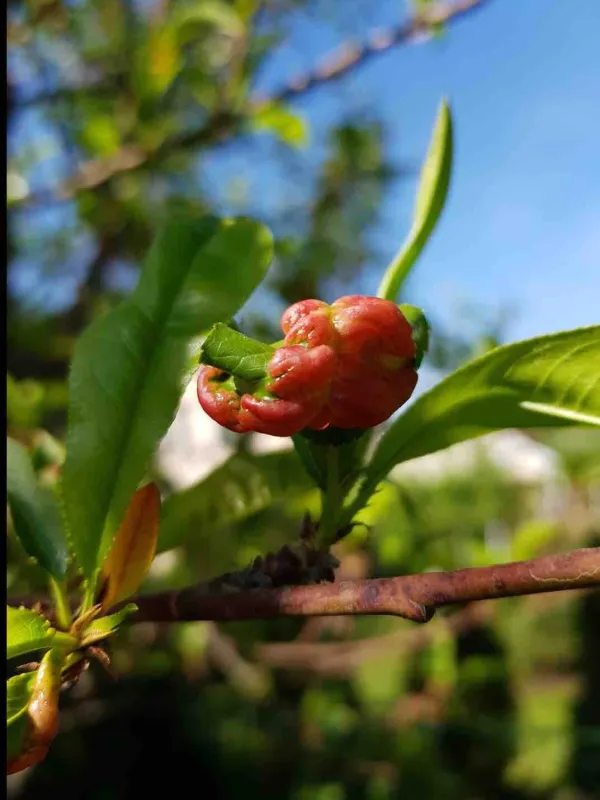
The most distinctive symptom is the curling, puckering, and thickening of leaves, which often appear swollen and distorted shortly after emerging.
Leaves exhibit abnormal coloration, transitioning from green to yellow, red, or deep purple, which makes the infection clearly visible in early spring.
A whitish, velvety layer, known as the asci (the fungal fruiting layer), develops on the underside of infected leaves, containing the spores for dispersal.
Infected shoots often become stunted, thickened, and twisted, frequently leading to dieback if the infection is persistent.
If the infection is severe, the affected leaves drop prematurely, causing partial or total defoliation of the tree early in the season.
Pathogen
Taphrina fungi belong to the order Taphrinales and are known as obligate plant parasites that cause significant damage to woody perennials.
The life cycle typically involves overwintering as blastospores on the bark of the host tree or within the scales of dormant buds.
In spring, when buds begin to swell and open, these spores infect the young, developing leaves and shoots, starting the primary infection cycle.
The fungus develops intercellularly, secreting hormones that cause cells to divide and enlarge abnormally, resulting in characteristic deformations.
Common species include Taphrina deformans, which primarily attacks peaches, nectarines, and occasionally almonds and apricots.
Conditions for development
The spread of Taphrina is heavily dependent on cool and wet weather conditions occurring during the bud-break phase of the tree.
Optimal temperatures for infection range from 10°C to 16°C, as cooler weather keeps the buds in a susceptible state for a longer duration.
Prolonged rain is a critical factor for spore germination, as it facilitates the transport of spores into the expanding leaf tissue.
Conversely, warm and dry weather conditions are unfavorable for the fungus and typically stop the development of new infections.
Trees planted in poorly ventilated areas with stagnant air are more susceptible due to the longer persistence of moisture on the leaf surfaces.
Why it matters
The primary harm is the loss of photosynthetic capacity due to massive defoliation, which severely drains the tree's nutrient reserves.
Chronic infections weaken the overall vigor of the tree, making it susceptible to cold damage during winter and vulnerable to secondary pest infestations.
Yield loss is significant, as the tree directs its limited energy to survival rather than fruit production, often resulting in complete crop failure.
Repeated yearly infections can lead to the death of major branches, reducing the productive lifespan and structural integrity of the tree.
In nursery settings, the infection can render seedlings unsaleable due to the severely stunted and distorted growth patterns caused by the fungus.
Protection
Preventative control is the most successful strategy; spraying with fungicides during the dormant period, specifically before bud swell, is essential.
Copper-based fungicides or appropriate sulfur-containing products are standard in commercial and home garden management to reduce overwintering spore loads.
Sanitation practices, such as pruning out and destroying symptomatic shoots, help reduce the amount of inoculum available for the following season.
Selecting and planting resistant cultivars is a highly recommended long-term strategy for minimizing disease impact in areas with high infection pressure.
- Dormant season spray application.
- Sanitary pruning of affected limbs.
- Monitoring weather for early warning.
- Soil and nutrient management for tree health.
Discussion
No discussions yet — be the first.