
Elm leaf blister
Taphrina ulmi
Description
Symptoms
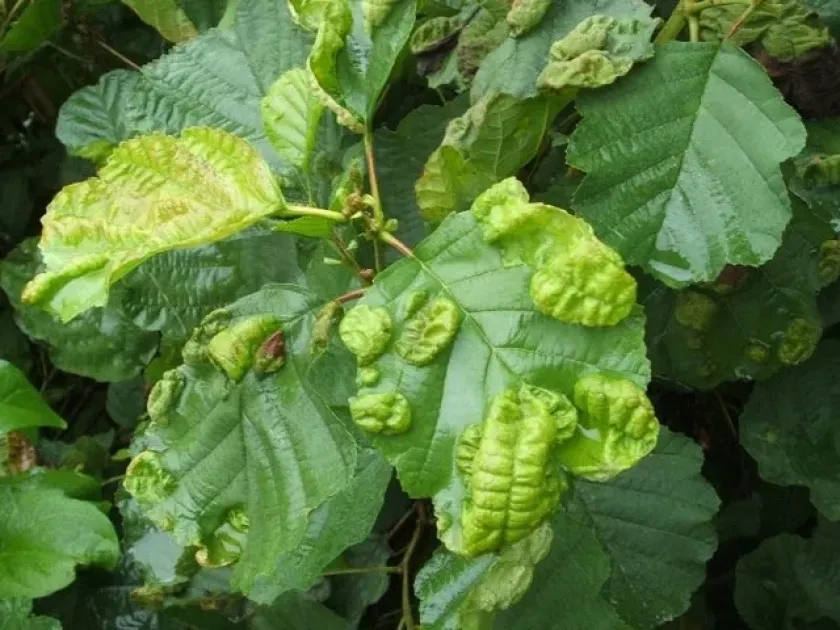
The most visible symptom of the disease is the development of yellow, greenish, or reddish blisters or bubbles on the surface of the leaves.
A fine, dusty, or velvety coating may appear on the undersides of these blisters, representing the reproductive layer of the fungus as it releases its spores.
Affected leaves often curl and distort, leading to a stunted and unhealthy appearance of the canopy, especially during heavy infestations.
In later stages of the disease, the infected tissues may dry out, turn brown, and crack, leading to ragged leaves or localized necrosis.
- Formation of leaf blisters or galls.
- Chlorotic or reddish discoloration.
- Presence of a fungal layer on the lower leaf surface.
- Severe curling and twisting of leaves.
- Premature leaf senescence and abscission.
Pathogen
The disease is caused by the ascomycete fungus Taphrina ulmi, which acts as an obligate parasite of elm trees. It specifically targets the foliage of the host plant.
The pathogen utilizes its ascospores to infect developing leaf tissues during the early stages of spring growth. These spores are spread primarily by wind and rain splashes.
Once established within the leaf tissue, the mycelium secretes substances that trigger abnormal cell growth, resulting in the characteristic deformation of the leaf structure.
The fungus is highly host-specific, meaning it is perfectly adapted to the biological cycle of various Ulmus species, ensuring its survival across seasons.
Survival is maintained through overwintering structures, such as dormant mycelium or spores lodged in the bark crevices and near terminal buds of the elm tree.
Conditions for development
Cool and wet weather during the bud break period is the primary factor that triggers the infection cycle of Taphrina ulmi.
High humidity levels surrounding the canopy are essential for spore germination and the successful penetration of the fungus into the leaf epidermis.
Dense tree canopies with limited airflow create a microclimate that traps moisture, allowing the infection to spread rapidly from leaf to leaf.
Environmental stress, such as drought followed by excess moisture, can weaken the tree's natural defenses, making it more susceptible to fungal colonization.
The timing of the infection is strictly tied to the phenology of the elm, specifically targeting the period of rapid leaf expansion in spring.
Why it matters
The primary impact of the disease is the reduction of functional leaf area, which decreases the tree's overall photosynthetic capacity and vitality.
Chronic annual infections significantly stress the tree, potentially leading to slow growth and increased vulnerability to secondary pests and pathogens.
In urban landscapes, the aesthetic impact is severe, as the deformed leaves and early defoliation detract from the ornamental value of the elm.
Nursery stock infected with the fungus may face growth suppression, making them less marketable and potentially causing economic losses for producers.
While the disease is rarely lethal to established trees, it acts as a debilitating factor that complicates the long-term management of elm populations.
Protection
Sanitation is the most effective management strategy, which includes removing and destroying fallen leaves to eliminate the primary sources of overwintering inoculum.
Pruning out infected branches improves canopy ventilation, which can help create a less favorable environment for the development and spread of the fungus.
Applying copper-based fungicides before bud break is a standard preventative measure used to protect emerging foliage from early spore infections.
Maintaining tree health through proper irrigation and balanced fertilization helps the tree better withstand the physiological stress caused by the fungal disease.
In cases of severe infestation, systemic fungicides applied during the early growing season may be necessary to suppress fungal growth and protect new leaves.
Discussion
No discussions yet — be the first.