
Plum pockets
Taphrina pruni
Description
Symptoms
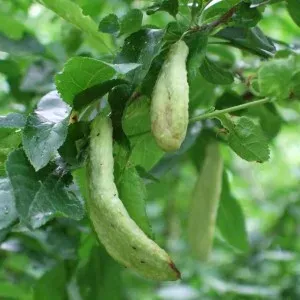
The primary symptom of this disease is the abnormal development of plum fruits, which become elongated, flattened, and curved, resembling little pockets.
Inside the affected fruit, the stone fails to develop properly, the flesh becomes spongy and flavorless, and the fruit eventually rots.
Infected fruits are often larger than healthy ones and tend to drop prematurely from the tree, leading to significant yield losses in affected orchards.
Young shoots can also be affected by the fungus, showing distinct swelling and curling, which often leads to the stunted growth or death of the branches.
During the sporulation stage, a velvety white or grey coating appears on the surface of the deformed fruits, consisting of fungal spores.
Pathogen
The pathogen responsible for this disease is the fungus Taphrina pruni, which belongs to the order Taphrinales.
The fungus survives the winter as mycelium in the crevices of bark, on bud scales, or within the infected twigs of the tree.
In the spring, the fungal spores are spread by wind and rain, infecting flowers and young ovaries, which triggers the infection cycle.
The mycelium grows within the tissue of the fruit, causing uncontrolled cell division and deformation of the developing plum.
This is a specialized parasite that targets members of the Prunus genus, particularly plums, making it a persistent concern for stone fruit growers.
Conditions for development
Cool and wet weather during the spring flowering season is the most critical condition for the development of plum pockets.
Temperatures ranging from 10 to 15 degrees Celsius are optimal for spore germination and infection of the young fruit tissue.
Prolonged rain events during May facilitate the widespread dispersal of spores, potentially leading to an epidemic across the entire orchard.
Poor orchard hygiene, such as dense canopy growth and lack of air circulation, creates an environment where the fungus can easily thrive.
Stress factors such as improper soil drainage or lack of proper pruning make trees more vulnerable to fungal attack and limit their recovery.
Why it matters
The most direct impact of Taphrina pruni is the loss of the crop, as the deformed fruits are unmarketable and unsuitable for consumption.
Chronic infection drains the tree's energy reserves, reducing its vigor and impacting its ability to produce fruit in subsequent years.
Branch damage, including twig deformity and dieback, ruins the structural integrity of the tree canopy over several seasons.
High levels of inoculum in the orchard increase maintenance costs due to the need for repeated fungicide applications and intensive pruning.
The presence of the disease can also decrease the overall tree health, making it more susceptible to other secondary pathogens and pests.
Protection
Sanitation is key: all deformed fruits and infected shoots must be pruned and destroyed immediately to prevent the spread of spores.
Removing fallen leaves and mummified fruits from the ground in autumn helps reduce the reservoir of infection for the next growing season.
Applying copper-based fungicides during the bud swell or green tip stage in early spring is highly effective at preventing initial infections.
If the disease pressure is high, professional growers may apply systemic fungicides during the early fruit set period to ensure full protection.
- Maintaining proper tree spacing to improve airflow and reduce humidity.
- Using fertilizers wisely to maintain overall tree vigor and immunity.
- Planting resistant or less susceptible plum varieties available for your region.
Discussion
No discussions yet — be the first.