
Poplar leaf blister
Taphrina populina
Description
Symptoms
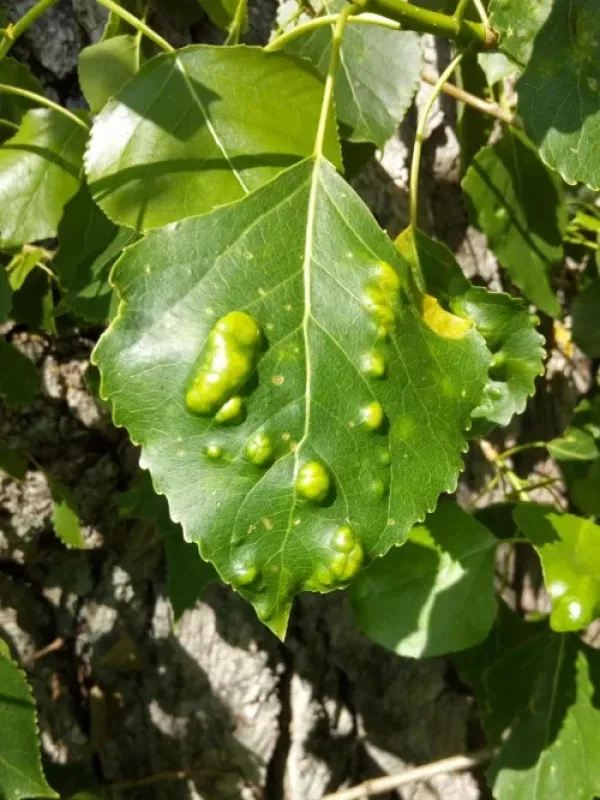
The primary symptom is the appearance of blister-like or curled deformities on the leaf surface. These blisters are often irregular in shape and size.
Affected tissues become thickened and discolored. The color typically transitions from a light yellow to vibrant shades of red or brown as the season progresses.
A fine, waxy, greyish coating often appears on the underside of the leaves in the blistered areas. This is the fungus sporulating as it prepares for further spread.
Leaves affected by Taphrina populina lose their structural integrity and become brittle. Severe infections often cause the leaves to curl significantly.
In advanced cases, the infected leaf tissue dies, leading to browning and premature leaf drop, which can significantly alter the tree's appearance.
Pathogen
The causal agent of this disease is the ascomycete fungus Taphrina populina. It is a specialized pathogen that exclusively affects plants of the Populus genus.
The fungus functions as a biotroph, extracting nutrients from the host cells. It overwinters in the form of dormant spores or mycelium within the bark crevices.
In spring, the pathogen infects developing leaves. The fungal development triggers physiological changes that disrupt normal cell division in the leaf tissues.
The disease is classified as a localized fungal infection. It creates hypertrophy and hyperplasia, which are responsible for the physical deformity of the foliage.
Dissemination is facilitated by wind and rain splashes, which spread the ascospores to healthy tissue during the early stages of tree development.
Conditions for development
The development of poplar leaf blister is highly dependent on environmental factors, particularly cool and damp weather during early spring.
High humidity levels and frequent rainfall are essential for the activation and spread of the pathogen. These conditions allow spores to infect young buds.
Dense tree stands with poor air circulation create an ideal microclimate for fungal growth. Humidity persists longer on the leaves in such environments.
Stressed trees, whether due to nutrient deficiency or adverse climate, are generally more susceptible to the initial infection phase.
Temperature fluctuations in early spring can also weaken the tree's defenses, making it easier for the fungus to establish its presence in the leaf tissue.
Why it matters
The primary impact of the disease is a reduction in the photosynthetic capacity of the tree. The distorted leaves cannot produce energy as efficiently as healthy ones.
Frequent, severe infections weaken the overall health of the poplar. This renders the tree more susceptible to secondary attacks by pests or other pathogens.
In landscape settings, the disease causes significant aesthetic degradation. A tree with curled and discolored foliage is often viewed as a sign of neglect.
Young trees and nursery stock may suffer from stunted growth. This slows down the development of the tree and impacts its commercial viability.
While rarely fatal, the cumulative effect of annual defoliation can reduce the life expectancy and structural health of the tree over many years.
Protection
Effective management requires a combination of sanitation and chemical interventions. Removing and disposing of fallen, infected leaves is crucial to break the cycle.
Preventative fungicide applications should be performed in early spring, specifically before the buds begin to open, to prevent the initial infection.
Proper silvicultural practices, including spacing trees to improve aeration and removing dead branches, help to reduce the fungal inoculum levels.
- Sanitary collection and disposal of fallen foliage;
- Pruning of affected branches;
- Spring application of copper-based fungicides;
- Maintaining optimal tree health and vigor.
Choosing resistant poplar varieties and ensuring healthy soil conditions can also provide long-term protection against severe outbreaks.
Discussion
No discussions yet — be the first.