
Pear leaf blister
Taphrina piri
Description
Symptoms
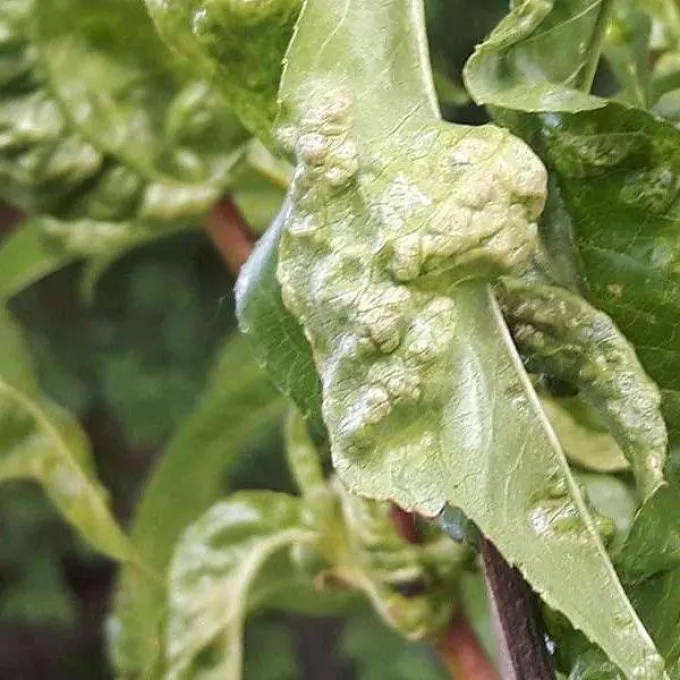
The most distinctive symptom is the curling and thickening of leaves. Infected leaves become deformed, fleshy, and often develop irregular, wavy edges.
A fine, pale, or whitish powder often appears on the surface of these deformed leaves, which is the fungal spore-producing layer. Leaves may sometimes show red or brown discoloration.
Young shoots are also frequently affected, showing signs of hypertrophy, swelling, and twisting. These shoots often fail to develop normally and may wither prematurely.
Fruit set is significantly reduced on infected branches. If fruit does develop, it is often stunted, deformed, and prone to premature dropping from the tree.
- Curled, thickened leaf blades
- White powdery fungal growth on leaves
- Deformed and swollen young shoots
- Premature yellowing and leaf drop
- Reduced fruit development and yield loss
Pathogen
The disease is caused by the microscopic ascomycete fungus Taphrina piri. This pathogen is a specialized parasite that exclusively targets various species of pear trees.
The fungus overwinters primarily as mycelium within the scales of the tree buds and in the crevices of the bark. When the growth season begins, the pathogen reactivates.
The life cycle is synchronized with the phenology of the pear tree. Infection typically occurs during the early spring period when tender young buds are opening and tissues are most vulnerable.
As the pathogen grows, it develops a layer of spores on the surface of the affected plant organs, which are then disseminated by wind and rain to neighboring healthy trees.
Because it is a highly specific parasite, it does not spread to other fruit tree species, which allows for more localized control strategies within the orchard.
Conditions for development
The development of pear leaf blister is heavily favored by cool and damp weather conditions during the early spring months. Temperatures between 10°C and 15°C are optimal for infection.
High humidity and persistent rainfall during the bud-burst stage create the perfect environment for fungal spore germination and penetration into host tissues.
Orchards with poor air circulation, often caused by overly dense planting or lack of pruning, are at higher risk as moisture remains trapped in the tree canopy.
Inadequate sanitation practices, such as leaving infected fallen leaves on the orchard floor, allow the fungus to survive and re-infect the trees during the following spring.
Trees that are already under stress due to poor soil conditions or improper fertilization are generally more susceptible to the initial establishment of the parasite.
Why it matters
The primary damage is caused by the significant reduction in the tree's photosynthetic capability. Deformed leaves cannot produce enough energy for the tree.
This leads to the exhaustion of energy reserves, resulting in stunted growth and a general decline in the overall vigor and health of the pear tree.
Premature leaf drop further hinders the tree's ability to store energy for the winter, making it less resilient to cold weather and frost damage in subsequent seasons.
Yield loss is significant, as the infection prevents the formation of healthy fruit and can weaken the tree to the point where it stops producing fruit entirely.
If left unmanaged, the cumulative stress of the infection over several years can result in branch dieback and, in severe cases, the eventual death of the entire tree.
Protection
The most effective management strategy is to apply protective fungicide sprays in early spring, specifically before the buds begin to open.
Copper-based fungicides, such as Bordeaux mixture, are commonly used as a preventative measure to limit the primary infection and reduce the fungal inoculum in the orchard.
Strict orchard sanitation is essential. All infected shoots and leaves should be promptly removed and disposed of, preferably by burning, to prevent further spread.
Regular pruning is vital to keep the canopy open and well-ventilated, which helps lower humidity levels and makes the environment less hospitable to the fungus.
Removing and destroying leaf litter every autumn helps eliminate the primary source of overwintering inoculum, significantly lowering the risk for the next season.
Discussion
No discussions yet — be the first.