
Synurophyceae
Synurophyceae
Description
Pathogen
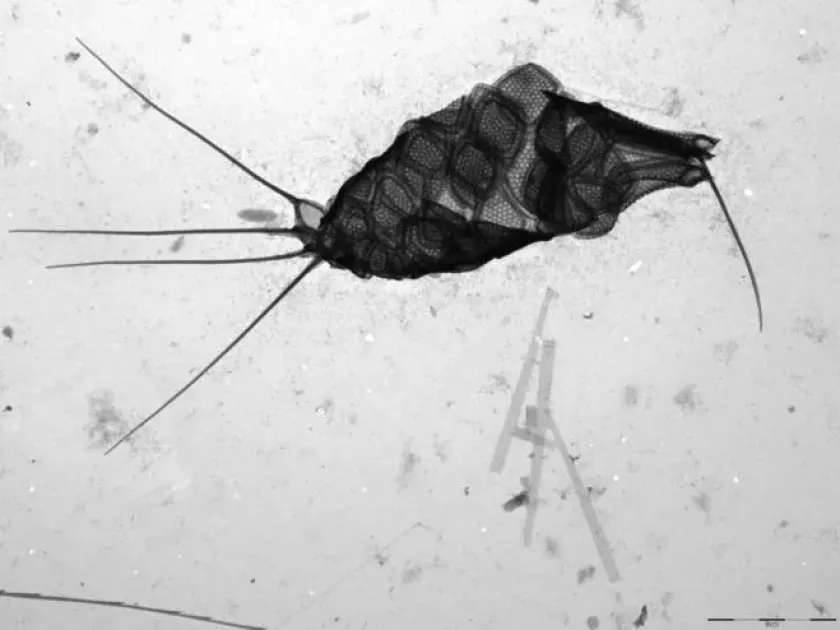
Synurophyceae, commonly known as synurophytes, are a class of golden algae characterized by the presence of silica scales on their cell surfaces.
These microorganisms are essential components of freshwater ecosystems, but they can become problematic in managed agricultural water systems.
While they do not directly infect crops, their massive proliferation significantly alters the quality of irrigation water and aquaculture environments.
They are known for their mixotrophic nature, allowing them to utilize both sunlight and organic matter for survival under varied conditions.
In an agricultural context, their presence serves as a biological marker for the chemical composition of stagnant water bodies.
Conditions for development
Growth is typically favored in nutrient-poor waters with low to moderate temperatures, often peaking during spring and autumn transitions.
Increased runoff from nitrogen-enriched agricultural fields provides nutrients that can stimulate the rapid development of synurophyte populations.
Water stratification and sufficient light penetration are critical environmental triggers for mass blooms in ponds and small reservoirs.
They thrive in slightly acidic water environments that are rich in dissolved organic carbon, which supports their heterotrophic metabolic pathways.
Lack of competition from other phytoplankton species during early spring allows these algae to dominate aquatic habitats quickly.
Why it matters
The primary concern is the degradation of water quality, which impacts both fish farming productivity and the efficiency of irrigation systems.
Some species produce volatile organic compounds that impart offensive odors and tastes to water, negatively affecting aquaculture products.
Rapid biomass accumulation followed by sudden senescence leads to oxygen depletion, resulting in hypoxic conditions that are lethal to aquatic life.
The accumulation of their silica scales and metabolic byproducts can clog irrigation filters and delicate machinery used in modern farming.
Their dominance shifts the microbial community structure, potentially inhibiting the growth of beneficial aquatic organisms.
Protection
Effective management focuses on limiting nutrient runoff from farms by establishing vegetative buffer strips near water sources.
Biological control methods, such as introducing planktivorous fish or utilizing specific zooplankton, can significantly reduce algal biomass.
Implementing mechanical aeration helps maintain optimal oxygen levels and disrupts the conditions necessary for bloom formation.
For closed-loop systems, high-efficiency filtration combined with UV-C light sterilization is recommended to eliminate algae effectively.
- Buffer zones for nutrient runoff control
- Regular water quality monitoring
- Biological suppression strategies
- Advanced filtration techniques
Discussion
No discussions yet — be the first.