
Synura petersenii
Synura petersenii
Description
Symptoms
The primary sign of a Synura petersenii infestation is a distinct, unpleasant odor in the water, often described as smelling of fish, cucumbers, or watermelon rinds, which results from the release of volatile organic compounds.
Water affected by a significant bloom of this algae often exhibits a yellowish-brown tint, causing noticeable turbidity that reduces water clarity in irrigation reservoirs.
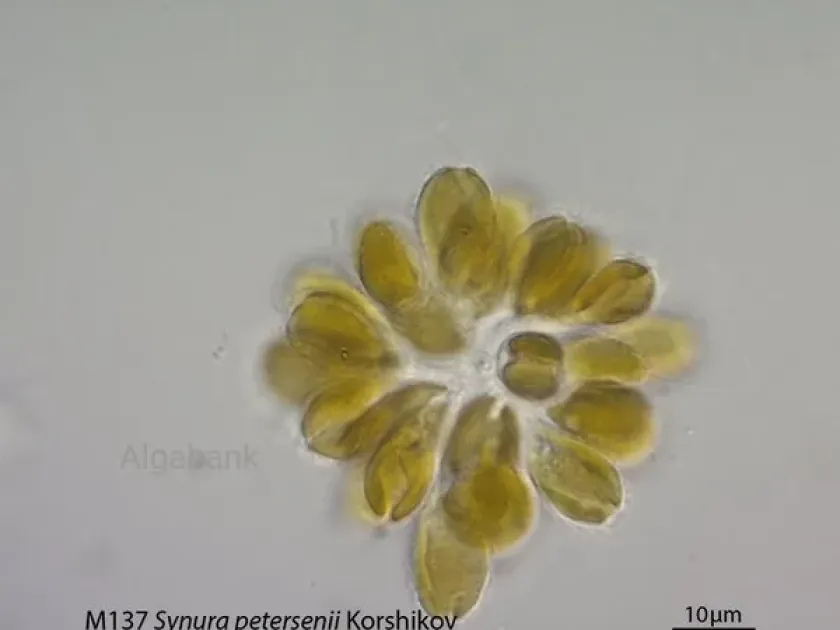
Microscopic analysis reveals characteristic star-shaped colonies that easily break apart into individual scaly cells when disturbed or moved through filtration systems.
Blooms typically occur during spring or autumn months when water temperatures range between 5 and 15 degrees Celsius, providing the ideal climate for rapid growth.
The appearance of light foam or surface scum in stagnant or slow-moving water is often an indicator of high biological activity and the decomposition of algae colonies.
Pathogen
Synura petersenii is a colonial golden algae belonging to the phylum Chrysophyta. While it is not a plant pathogen in the traditional sense, it is a significant biological entity that affects the quality of water used in agricultural and aquaculture systems.
The organism forms spherical or elliptical colonies consisting of multiple flagellated cells connected at their posterior ends. This colonial structure is a diagnostic feature used to identify the species under microscopic examination.
Synura petersenii reproduces through both vegetative division of colonies and sexual reproduction, enabling the population to rapidly adapt and dominate aquatic environments when conditions are favorable.
These algae contain specific pigments that provide a golden-brown coloration, which can cause significant discoloration of water bodies during intense bloom events.
Due to its mixotrophic nature, the organism can survive by both photosynthesis and the intake of dissolved organic matter, making it highly resilient in various aquatic settings.
Conditions for development
Synura petersenii thrives in freshwater bodies that have high levels of dissolved nutrients, particularly phosphorus and nitrogen, which often enter reservoirs via agricultural runoff.
Cooler water temperatures combined with a lack of strong circulation create the optimal environmental niche for these colonies to form and persist for extended periods.
The organism is sensitive to changes in water chemistry, including pH levels and total hardness, which can either trigger or inhibit massive population explosions.
Low light intensity does not significantly hinder the organism's growth, as it can compensate for limited photosynthesis by utilizing dissolved nutrients in the water.
The presence of stagnant, undisturbed water is crucial for the development of large, mature colonies, making sedimentation tanks and small ponds particularly vulnerable.
Why it matters
The main agricultural impact involves the clogging of filtration systems and drip irrigation nozzles by the gelatinous colonies, leading to increased maintenance costs and potential crop irrigation failure.
The odor-causing metabolites released by the algae can negatively affect the quality of water used in greenhouses, potentially impacting the taste and health of hydroponically grown crops.
Mass die-offs of algae colonies can lead to secondary contamination of water supplies and a dangerous reduction in dissolved oxygen levels, threatening aquatic life.
In aquaculture settings, the presence of these algae is known to taint the flavor of fish and other aquatic products, reducing their market value and overall quality.
If left untreated, bloom events can disrupt the entire water management system of a farm, making the water unsuitable for delicate nursery or irrigation applications.
Protection
Effective prevention strategies include the implementation of vegetative buffers around water reservoirs to reduce the influx of nutrient-rich runoff from surrounding fields.
Mechanical aeration of water reservoirs can effectively break up colonial structures, disrupt the growth cycle of the algae, and maintain oxygen levels for other aquatic organisms.
Regular monitoring of water chemistry, especially phosphate and nitrate levels, is essential for predicting potential bloom events and implementing pre-emptive measures.
Advanced water treatment techniques, such as UV sterilization or precise filtration, are highly effective at removing colonial algae before it reaches sensitive irrigation equipment.
Integrated management plans that combine nutrient source control with active water circulation are the best defense against persistent Synura petersenii blooms.
Discussion
No discussions yet — be the first.