
Synalissa symphora
Synalissa symphorae
Description
Symptoms
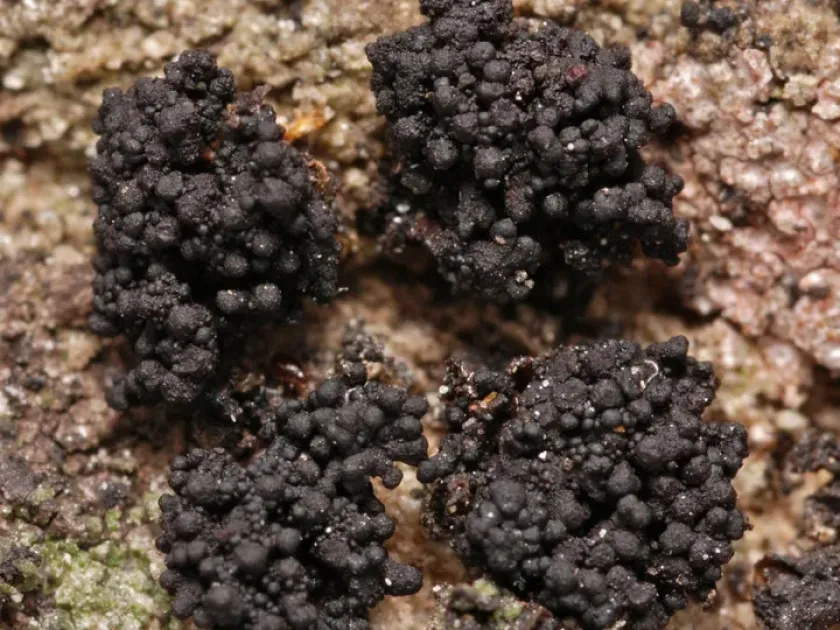
The primary symptom is the appearance of distinct, dark-colored crustose or squamulose patches on the bark of trunks and main branches.
These growths are often tightly adhered to the bark surface and may feel brittle when dry but soft when saturated with moisture.
The lichen is most commonly found on old, rough bark where crevices provide stability for the attachment of the thallus.
There are no associated necrotic spots, wilting of leaves, or signs of systemic infection typical of pathogenic plant diseases.
Growth is typically very slow, and colonies appear as persistent, localized patches that do not spread aggressively like fungal pathogens.
Pathogen
Synalissa symphora is a specialized type of lichen that is occasionally misidentified as a plant disease in agricultural surveys.
Biologically, it is a symbiotic relationship between a fungus and cyanobacteria, functioning as an epiphyte rather than a pathogenic parasite.
It does not feed on the plant's resources; instead, it uses the bark surface primarily as a structural substrate for anchorage.
Unlike parasitic fungi, it does not invade the plant's living tissues or disrupt the vascular system of the host tree.
Correct identification is essential in orchard management to prevent unnecessary chemical treatments aimed at non-pathogenic organisms.
Conditions for development
High relative humidity and consistent moisture are the most critical factors for the development of Synalissa symphora.
Shaded areas within dense orchard canopies provide the low-light, high-moisture environment that favors lichen colonization.
Older trees with weathered, cracked bark are more susceptible to colonization due to the increased surface area and moisture retention.
Air purity is generally high in areas where this lichen thrives, as it is sensitive to atmospheric pollutants and sulfur compounds.
Lack of canopy management and poor ventilation contribute to the sustained humidity levels required for the establishment of these organisms.
Why it matters
The direct damage caused by Synalissa symphora is negligible, as it does not extract nutrients from the tree.
Indirectly, however, large colonies can serve as a refuge for various orchard pests, including scales and mites, which hide beneath the lichen layers.
The presence of thick crusts may hinder gas exchange in the bark, potentially impacting the physiological health of the tree over many years.
Persistent moisture under the lichen thallus can exacerbate frost damage to the bark during cold winters.
Dense coverage may conceal underlying bark damage or early symptoms of genuine infectious diseases that require immediate attention.
Protection
Mechanical removal is the most effective approach; scrubbing the bark with a stiff brush during damp weather clears the lichen easily.
Following manual cleaning, applying whitewash to the trunks helps prevent re-colonization and improves the general sanitation of the orchard.
Fungicidal sprays containing copper, typically used for dormant season pathogen control, effectively inhibit the growth and survival of lichens.
Orchard maintenance, specifically canopy pruning to allow better air circulation and sunlight penetration, naturally limits lichen development.
- Regular tree bark inspections.
- Mechanical cleaning of bark during dormant seasons.
- Application of lime-based whitewash on trunks.
- Pruning to increase airflow and sunlight exposure.
Discussion
No discussions yet — be the first.