
Surirella brightwelli
Surirella brightwelli
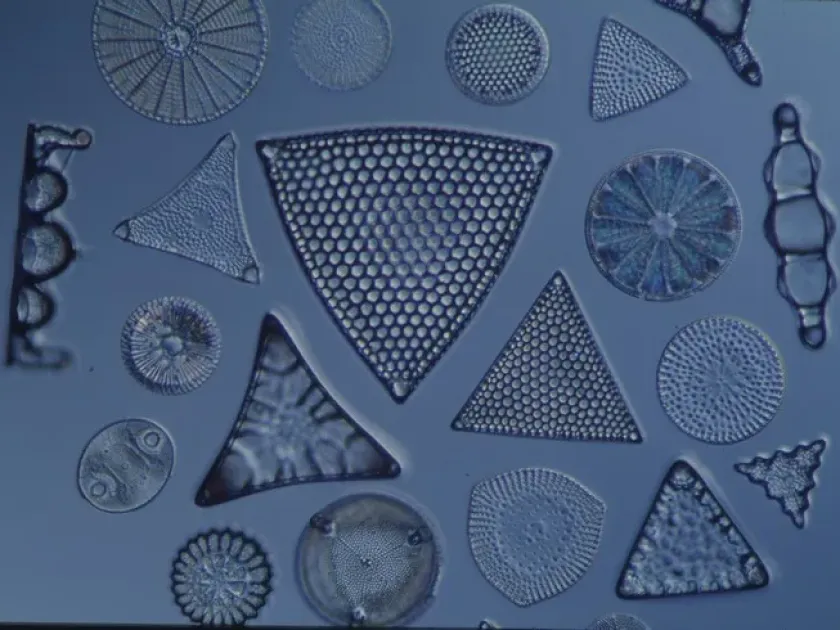
Description
Pathogen
Surirella brightwelli is a species of diatom algae, not a plant pathogen. It is a single-celled organism belonging to the class Bacillariophyceae, commonly found in freshwater environments.
The organism possesses a silicified cell wall, known as a frustule, which is characteristic of the Surirellaceae family. These cells are essential primary producers in aquatic ecosystems.
Biologically, it thrives in benthic communities, residing on the bottom sediments of ponds, streams, and irrigation canals where it carries out photosynthesis.
Identification is based on the morphological analysis of the frustule structure, which requires specialized microscopy to distinguish it from other related species.
While not a disease agent, its presence is a bio-indicator of specific water conditions, reflecting the nutrient content and chemical status of the water body.
Conditions for development
The development of this species is highly dependent on silica concentrations, which are required for the formation of its rigid silicified cell walls.
Optimal growth occurs in well-lit shallow waters with moderate temperature conditions, which facilitate the cell division process during the growing season.
Eutrophication, often caused by agricultural runoff, can significantly increase the population density of these diatoms within irrigation networks.
Water stability and low turbulence are favorable for the accumulation of large populations on the substrate surfaces of aquatic environments.
Changes in seasonal solar radiation influence the metabolic rate and the overall reproductive cycle of the algae in the natural environment.
Why it matters
Although it does not infect plants, excessive growth can clog irrigation pipes, valves, and filtration systems, disrupting water supply to crops.
The accumulation of algae biomass in technical water storage tanks increases maintenance costs due to the need for frequent cleaning and decontamination.
In aquaculture, blooms of diatoms can alter oxygen levels in the water column, potentially stressing the fish population in the integrated systems.
High concentrations of organic matter produced by algae blooms can lead to increased turbidity, necessitating extra treatment for agricultural water use.
The biological material can form biofilms on submerged structures, which potentially reduces the flow efficiency of irrigation channels over time.
Protection
The primary control strategy involves managing nutrient runoff from adjacent fields to prevent the eutrophication of water sources used for irrigation.
Regular mechanical cleaning of canal beds and irrigation ditches prevents the build-up of biomass that serves as a substrate for diatom colonization.
Utilizing high-quality filtration systems ensures that algae cells are removed before water enters sensitive crop irrigation infrastructure.
Maintaining proper water circulation helps prevent the stagnation of water, which is a major factor in the rapid multiplication of these algae.
- Implement nutrient management plans.
- Maintain and clean irrigation infrastructure.
- Monitor water quality for nutrient indicators.
Discussion
No discussions yet — be the first.