
Surirella
Surirella
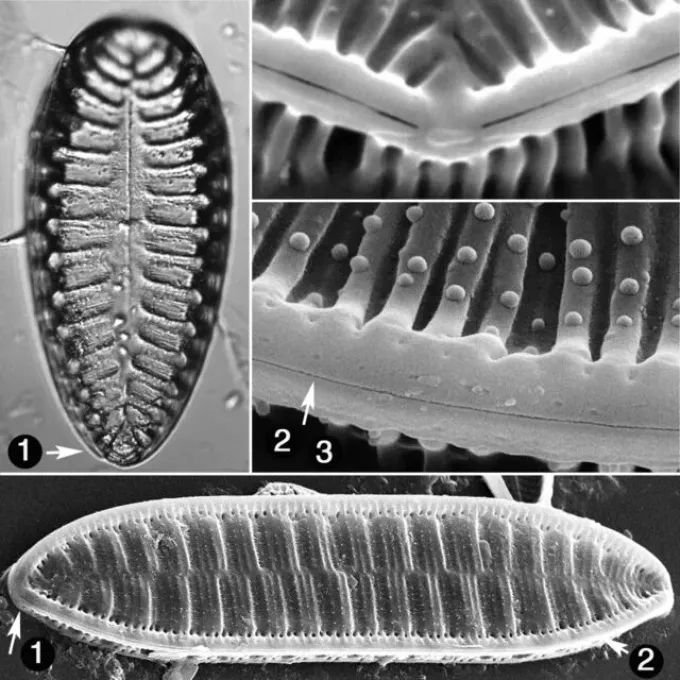
Description
Symptoms
The presence of Surirella is visually characterized by a brown or yellowish slimy film covering wet surfaces in greenhouses.
In irrigation systems, you may notice clogged emitters and a visible sediment layer inside transparent supply pipes.
Plant roots affected by heavy diatom growth often appear coated in a brown, muddy substance that impairs their contact with the nutrient solution.
Growth stunting in seedlings may occur if the algae proliferate to a point where they alter the pH balance of the rhizosphere.
A distinct organic or "musty" odor emanating from the water reservoirs often signals an uncontrolled algal bloom.
Pathogen
Surirella is a genus of diatoms, which are not true plant pathogens, but can act as nuisance organisms in controlled agricultural environments.
These organisms are defined by their unique silica cell walls, or frustules, which provide them with significant structural resilience.
In modern agronomy, they are primarily identified in hydroponic setups, aquaponics, and greenhouse irrigation systems where moisture is persistent.
They operate as photoautotrophs, meaning they require light to thrive and can outcompete plants for essential nutrients within a solution.
While they do not actively attack plant tissues, their dense colonization can disrupt the rhizosphere balance and nutrient uptake efficiency.
Conditions for development
The primary driver of Surirella development is exposure to light, especially in pipes or reservoirs intended to be dark.
High concentrations of dissolved silica in the water supply provide the necessary building blocks for their durable cell walls.
Warm temperatures, typically ranging from 18°C to 26°C, significantly accelerate their division and metabolic rate.
High levels of nitrogen and phosphorus in fertilizer solutions provide the excess energy required for rapid colonization.
Stagnant water with low flow rates prevents the natural dilution of organisms and allows colonies to anchor securely to surfaces.
Why it matters
The most significant economic damage is caused by the physical blockage of drip irrigation systems, leading to uneven crop hydration.
Algal mats can harbor other microbes, potentially increasing the risk of secondary root rot infections in sensitive crops.
By consuming vital micronutrients, these diatoms effectively limit the resources available for proper plant development and yield formation.
The biofilm layer reduces the efficiency of filtration systems, leading to increased maintenance costs and operational downtime.
In cases of heavy infestation, the root zone may suffer from hypoxia due to the restricted exchange of oxygen through the dense algal layer.
Protection
The most effective preventative measure is light-proofing all water transport lines and reservoirs to prevent algal photosynthesis.
Implementing UV sterilization in the irrigation circuit is a highly efficient way to eliminate diatoms without leaving chemical residues.
Mechanical cleaning and the use of approved mild oxidizing agents can remove established biofilms from equipment surfaces.
- Optimizing fertilizer levels
- Routine system flushing
- Maintenance of water circulation
Periodic testing of water quality for silica content can help predict and prevent outbreaks before they become a systemic issue.
Discussion
No discussions yet — be the first.