
Trident bolete
Suillus tridentinus
Description
Symptoms
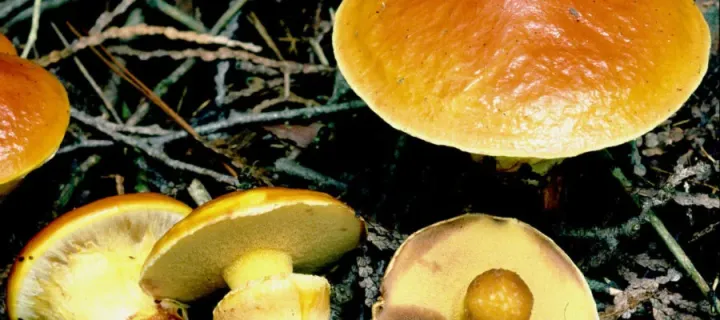
The fruit body of the Trident bolete is characterized by its vivid orange-red to rust-brown cap color, which is quite distinct.
The cap surface is covered in fine, reddish-brown scales, giving it a unique texture compared to other members of the genus.
The hymenium consists of large, golden-yellow pores that may display color changes upon physical contact or damage.
The stipe is robust, typically featuring a ring or veil remnants, with a reticulated pattern visible above the ring zone.
When sliced, the flesh of the mushroom often exhibits a color shift, turning slightly greenish or bluish due to the oxidation of chemical compounds.
Pathogen
The Trident bolete (Suillus tridentinus) is not a plant disease, but a biological species of fungus within the Suillaceae family.
This mushroom functions as an essential mycorrhizal partner, establishing a symbiotic relationship with coniferous trees, specifically the larch.
Through this symbiosis, the fungus assists the tree in water and mineral uptake from the soil, while receiving essential carbohydrates in return.
Biologically, it is classified as an ectomycorrhizal fungus, which is vital for the health and development of its host trees in natural environments.
Consequently, it should not be treated as a plant pathogen or a disease agent in any agricultural context.
Conditions for development
The development of Trident bolete fruiting bodies is strictly dependent on the presence of mature larch trees (Larix) in the forest.
It prefers well-drained soils and is commonly found in mountainous or sub-alpine regions, often on calcareous substrates.
Optimal fruiting typically occurs during the late summer and autumn seasons, provided there is adequate rainfall and cool temperatures.
Intact forest ecosystems with minimal soil disturbance provide the most stable environment for its mycelium to thrive.
Environmental fluctuations, such as severe soil acidification or changes in moisture levels, can inhibit the growth of its subterranean mycelium.
Why it matters
This fungus poses no threat to agricultural crops, as its biological niche is entirely restricted to woodland coniferous tree hosts.
In forest management, the presence of this mushroom is considered an indicator of a healthy root system and a thriving forest soil ecosystem.
Because it does not infect or cause decay in vegetable or grain crops, it requires no eradication efforts or agricultural monitoring.
In many regions, this species is considered a rare or protected mushroom, highlighting its value to forest biodiversity.
There is no evidence of this fungus acting as a pest or a disease vector for cultivated plants or woody ornamentals.
Protection
No control or preventive measures are necessary as the Trident bolete is a beneficial symbiont rather than a pest or pathogen.
To preserve the health of its host trees, it is recommended to maintain undisturbed soil conditions and avoid excessive chemical fertilizer application.
Avoiding the use of systemic fungicides in forest habitats helps maintain the natural mycorrhizal community, which benefits tree resilience.
When maintaining larch plantations, general forest health practices that encourage mycorrhizal activity are preferred over any intervention.
Protection of natural forest sites is the primary strategy for ensuring the survival and proliferation of this ecologically important fungus.
Discussion
No discussions yet — be the first.