
Larch Bolete
Suillus grevillei
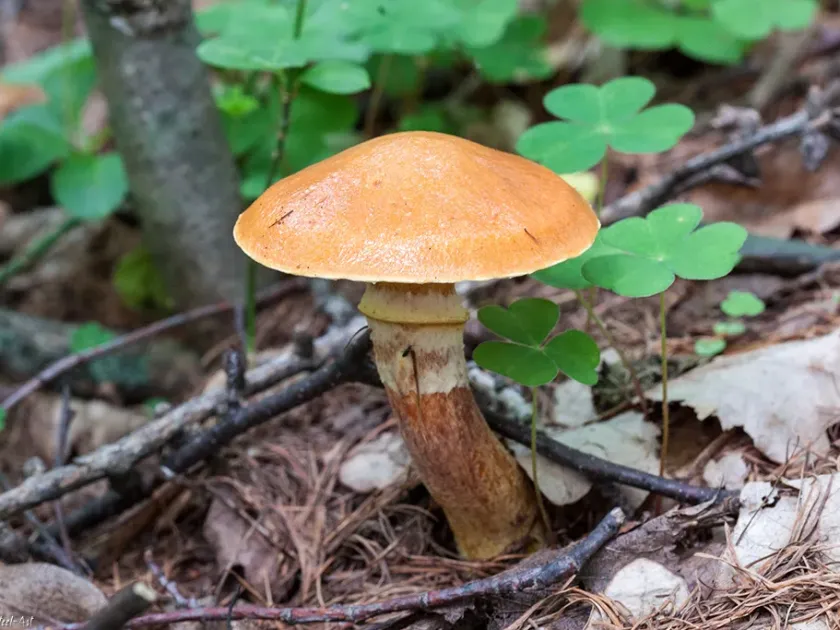
Description
Symptoms
Signs of the Larch Bolete's presence appear during the active fruiting season in the root zones of trees.
Characteristic yellow-orange or golden mushroom caps with a slimy surface appear on the soil around the larch trees.
Under the layer of forest litter or soil, upon inspecting the larch roots, one can notice the white threads of the fungal mycelium.
The overall health of the plant itself remains unaffected by this symbiont, and the needles maintain their normal color.
The absence of specific spots, ulcers, or wilting confirms the non-pathogenic nature of this organism for forest plantations.
Pathogen
The Larch Bolete (Suillus grevillei) is mistakenly classified as a plant disease, as biologically it is not a pathogen, but a typical mycorrhiza-forming fungus.
The causative agent of the mycorrhiza process is a basidiomycete fungus from the Boletaceae family, closely associated with conifer species.
This organism functions as an obligate symbiont, penetrating the root tissues or enveloping them in a dense sheath of hyphae.
The biological role of the fungus is to facilitate the exchange of nutrients between the soil and the tree's root system.
It is not a parasitic organism causing necrosis, but a specialized fungus that helps the tree adapt to environmental conditions.
Conditions for development
The development of the mycelium occurs exclusively through direct contact with the roots of European larch, Siberian larch, or their hybrids.
Optimal conditions include high soil moisture and moderate temperatures, typical of forest ecosystems during the summer and autumn months.
The fungus prefers acidic soils rich in organic matter, which favors the formation of mycorrhiza.
Spore dispersal occurs via the air, but successful germination is only possible upon contact with the root system of a suitable host.
Fruiting is actively stimulated by abundant rainfall and the warming of the forest floor after dry periods.
Why it matters
The Larch Bolete does not harm woody plants, so it cannot be considered a pest or a cause of diseases.
On the contrary, the tree receives significant benefits from the presence of this fungus in its root zone.
Symbiosis helps increase the surface area for water and mineral absorption, enhancing the larch's resilience to stress.
In commercial forestry, the presence of this fungus is viewed as an indicator of ecosystem health and good condition of the stands.
There are no economic losses associated with this fungus, and its fruiting bodies can be valuable as a non-timber forest product.
Protection
Protective measures to eliminate the Larch Bolete in forest areas or gardens are unnecessary because it is not a pathogen.
The use of fungicides to combat this fungus is highly discouraged, as they may destroy beneficial soil microflora.
If the presence of mushrooms is undesirable in a decorative garden, their fruiting bodies can simply be removed mechanically.
Preventing the appearance of the fungus is only possible by changing the soil composition to be less favorable for mycorrhiza, which may harm the larch tree.
Agronomists recommend maintaining the existing symbiosis to support the natural balance and improve larch nutrition.
Discussion
No discussions yet — be the first.