
Bovine bolete
Suillus bovinus
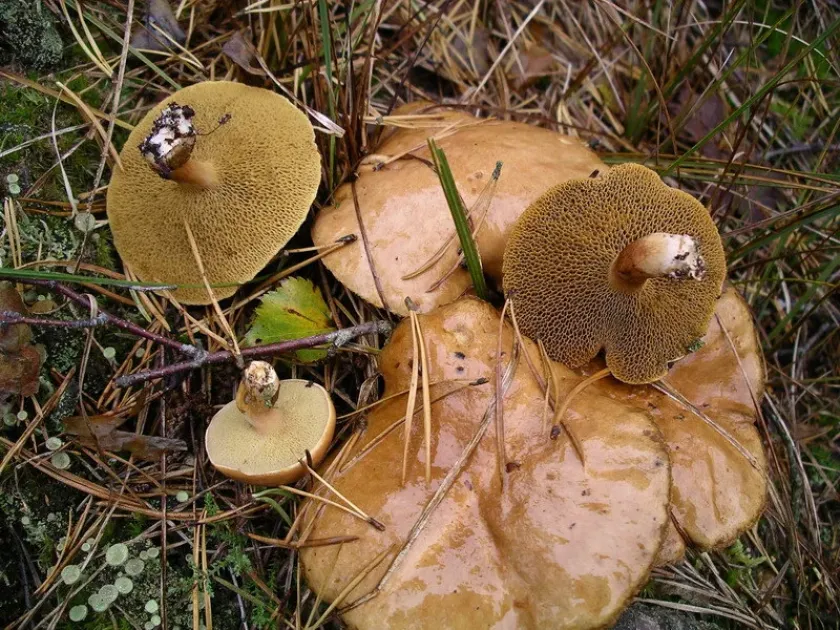
Description
Pathogen
The bovine bolete (Suillus bovinus) is not a plant disease or a pathogen; it is a mycorrhizal fungus.
It forms a beneficial symbiotic relationship with the root systems of coniferous trees, particularly pines.
In the field of mycology, it is categorized as a basidiomycete that aids in nutrient uptake for its host plant.
There are no known reports of this fungus causing any type of infection, necrosis, or damage to plant tissues.
It functions as a partner in forest ecosystems rather than an agent of plant disease or decay.
Conditions for development
The development of the mycelium is strictly dependent on the presence of pine root systems in the soil.
Optimal growth occurs in sandy or gravelly soils where moisture can be retained by the mycorrhizal network.
Climate factors such as moderate summer temperatures and regular precipitation are critical for sporocarp development.
Acidic soil environments are typically preferred by this species, which are common in coniferous forest settings.
The fruiting season generally occurs from mid-summer through late autumn during favorable humidity levels.
Why it matters
The bovine bolete causes no harm to the health, growth, or vitality of its host tree species.
It does not feed on living plant tissue and does not cause rotting of the root system or the trunk.
As a mycorrhizal associate, it provides the tree with essential water and phosphorus in exchange for sugars.
The fungus contributes to the resilience and overall stability of the forest ecosystem it inhabits.
There is no agricultural or silvicultural threat associated with the presence of this mushroom.
Protection
No control or mitigation measures are necessary, as the bovine bolete is a beneficial organism in nature.
Practices that promote forest health and preserve the natural microbiome of the soil are encouraged.
Application of fungicides should be avoided in forest stands to protect the natural mycorrhizal associations.
Preventative measures against this fungus are not relevant since it is not a pest or disease vector.
Conservation of natural forest habitats is the only recommended approach to managing the presence of the species.
Discussion
No discussions yet — be the first.