
Asian larch bolete
Suillus asiaticus
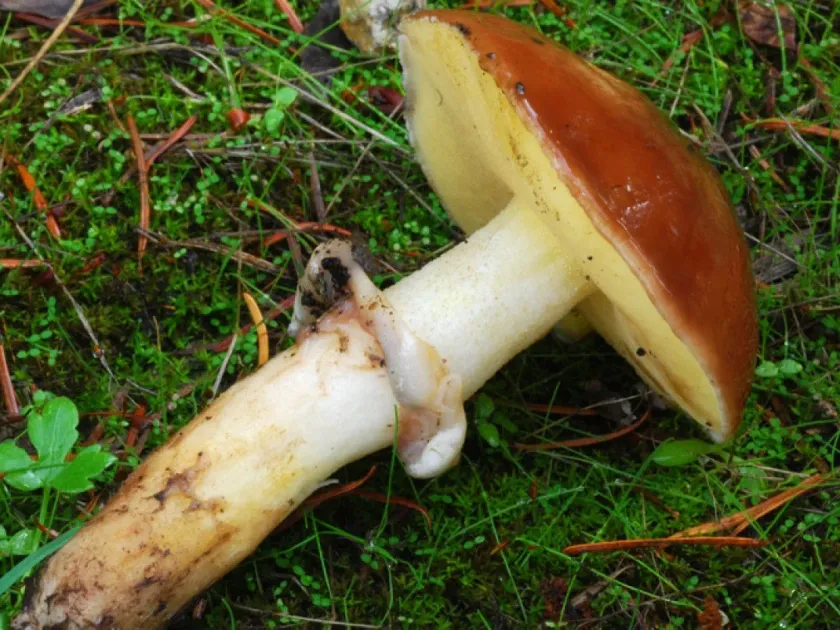
Description
Pathogen
The Asian larch bolete (Suillus asiaticus) is a basidiomycete fungus belonging to the Suillaceae family. It is crucial to note that this species is not classified as a plant pathogen or a disease agent in agronomy or forest pathology.
The organism is an obligate mycorrhizal partner, forming symbiotic relationships with the roots of specific tree species, primarily larch (Larix). Unlike pathogens that cause tissue decay, this fungus supports tree health.
The biological morphology of the fungus consists of a distinct orange-red cap and a tubular hymenophore. These features are characteristic of the Suillus genus and are adapted for efficient spore dispersal in coniferous forest environments.
The fungal mycelium integrates into the root system of the host tree, creating an ectomycorrhizal network. This network enhances the tree's uptake of water and essential soil minerals, contributing to its overall vigor and development.
As this species provides ecological benefits rather than causing damage, it does not require any agricultural or silvicultural control measures. It is considered a beneficial and integral part of the natural forest ecosystem.
Conditions for development
The development of the Asian larch bolete is strictly dependent on the presence of host trees, particularly larch species. The fungus requires this specific partner to establish the necessary symbiotic exchange of nutrients.
Optimal environmental conditions include high soil humidity and moderate ambient temperatures. These factors stimulate the growth of the fungal mycelium within the soil and the subsequent emergence of fruiting bodies.
The organic layer of the forest floor, rich in decomposing plant matter, serves as a nutrient-rich habitat for the fungus. This layer protects the mycelium from extreme weather conditions and maintains consistent moisture levels.
Spore dispersal occurs via wind currents and small animals roaming the forest. This mechanism ensures that the species can colonize suitable habitats where its host trees are established and thriving.
Because the fungus is naturally adapted to forest soils, it maintains its lifecycle without external intervention. Its survival is closely linked to the conservation of the natural forest habitat and the health of the larch population.
Discussion
No discussions yet — be the first.