
Pinecone cap
Strobilurus tenacellus
Description
Symptoms
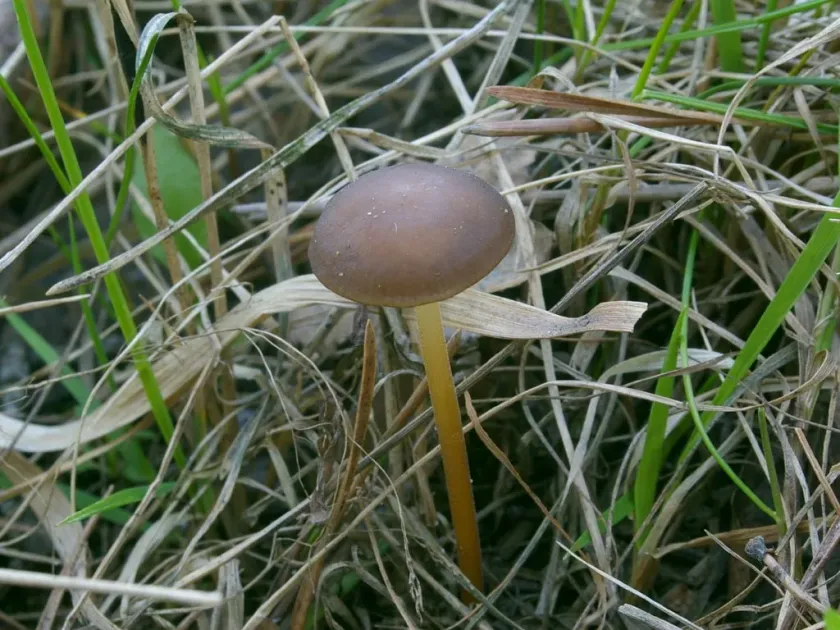
The most prominent sign is the presence of small, light-brown mushrooms growing directly from old pine cones during the spring months.
The internal structure of the cone becomes brittle, mushy, and darkened, indicating deep mycelial colonization of the seed scales.
A white, thread-like fungal mat is often visible inside the cone, binding the scales together and replacing the healthy woody tissue.
Upon handling, infected cones show signs of premature disintegration and lack the structural integrity of healthy, uninfected forest cones.
The seeds contained within these cones often appear discolored and shriveled, showing signs of chemical degradation from the fungal enzymes.
Pathogen
Strobilurus tenacellus is a saprotrophic basidiomycete fungus that specializes in decomposing woody debris, specifically fallen pine cones.
In the context of silviculture, this organism is studied for its ability to colonize and degrade the seed-bearing structures of coniferous trees.
The fungus produces small, agaric-like mushrooms that emerge from the cones, anchored by long, tough stalks extending deep into the cone tissues.
The mycelium effectively breaks down cellulose and lignin within the cone scales, utilizing the nutrient-rich environment for its own biomass production.
Its life cycle is tightly synchronized with the humidity of the forest floor, allowing it to become one of the first active colonizers in the spring.
Conditions for development
High moisture levels in the forest litter layer are essential for the germination of spores and the development of the fungal fruiting bodies.
Optimal temperatures for the growth of Strobilurus tenacellus range from 5 to 15 degrees Celsius, matching the cool conditions of early spring.
Stagnant air and high humidity under dense canopies provide the perfect environment for the rapid colonization of fallen cone material.
The presence of abundant woody organic matter, particularly buried or partially buried cones, serves as a primary reservoir for the pathogen.
Mild winters followed by rainy springs trigger massive sporulation, leading to widespread distribution of the fungus throughout the forest floor.
Why it matters
The primary economic harm is the degradation of seed lots collected from the forest floor, which are intended for forestry nurseries.
Infected cones yield lower-quality seeds with reduced viability and poor germination rates, directly impacting reforestation efforts.
Stored seed material can be compromised if damp, infected cones are mixed in, leading to the rapid spread of the fungus within storage bins.
While the fungus is a natural decomposer, its interference with seed collection processes creates labor-intensive sorting and cleaning requirements.
The reduction in the overall seed supply can lead to increased costs for procuring reliable plant material for large-scale forest regeneration projects.
Protection
The most effective strategy is the timely collection of cones before they come into contact with the ground and become colonized by fungi.
Proper storage is crucial; keeping cones in well-ventilated, dry facilities prevents the mycelium from growing and spreading within the collected lots.
Sanitation practices, such as removing debris and excess litter from seed collection sites, help minimize the fungal inoculum in the area.
Pre-sowing treatment of seeds with appropriate fungicides can protect the embryos from any residual fungal pathogens present on the seed coat.
Monitoring cone health during the collection process allows for the rapid identification and separation of infected lots, preventing further contamination.
Discussion
No discussions yet — be the first.