
Old man of the woods
Strobilomyces strobilaceus
Description
Symptoms
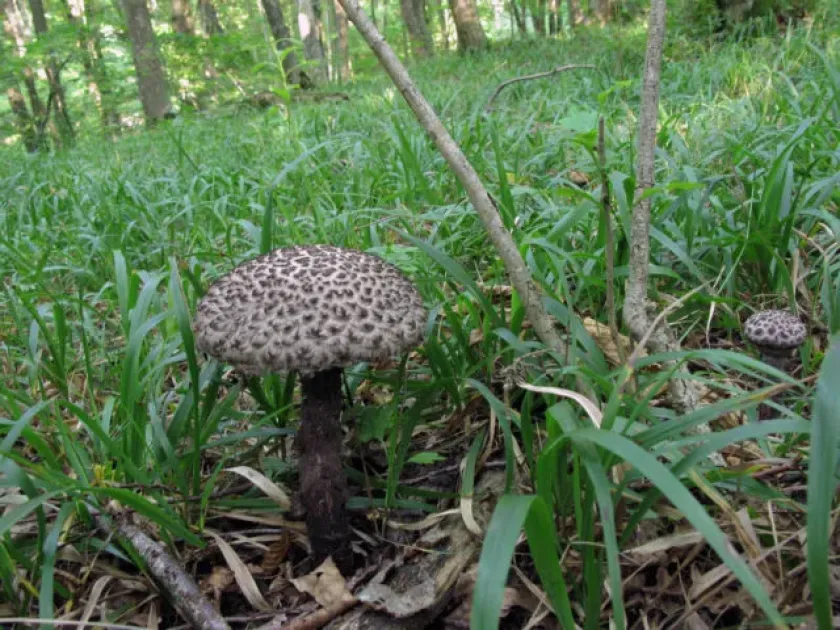
The most distinctive sign is the fruiting body's shaggy, dark-colored surface, covered in thick scales that give it a pinecone-like appearance.
When the flesh of the mushroom is bruised or cut, it exhibits a rapid chemical reaction, shifting from white to pinkish-red and eventually to black.
The cap color is typically dark grey, brown, or black, providing excellent camouflage against the dark forest soil and debris.
Beneath the cap, the pore surface is initially white or grey, darkening as the spores mature and the overall structure becomes more fibrous.
The stipe (stalk) is equally covered in dark scales and is robust, which serves as a primary morphological feature for identifying the specimen in the field.
Pathogen
Strobilomyces strobilaceus, commonly known as the Old man of the woods, is a Basidiomycete fungus and is not classified as a plant disease.
It acts neither as a parasite nor as a pathogen, meaning it poses no risk to agricultural crops, garden plants, or forest trees.
The fungus functions primarily as a saprotroph, decomposing organic matter, or as a mycorrhizal partner that aids tree root nutrient uptake.
There are no recorded instances of this fungus causing tissue necrosis, wilting, or any form of botanical pathology in agricultural settings.
From an agronomic perspective, this organism is considered a natural component of the forest floor, contributing to healthy soil biodiversity.
Conditions for development
This species thrives in temperate deciduous and mixed forests where humidity levels remain consistently high throughout the growing season.
The mycelium requires well-drained, nutrient-rich soils with deep leaf litter to successfully establish its symbiotic connections.
Environmental conditions that favor its development include mild summer temperatures and consistent rainfall, which trigger the emergence of fruiting bodies.
Sporulation and dispersal are largely dependent on wind currents, allowing the species to propagate within stable, undisturbed woodland environments.
Excessive land clearing and soil disturbance are detrimental to its growth, as the fungus relies on established micro-ecosystems to survive.
Discussion
No discussions yet — be the first.