
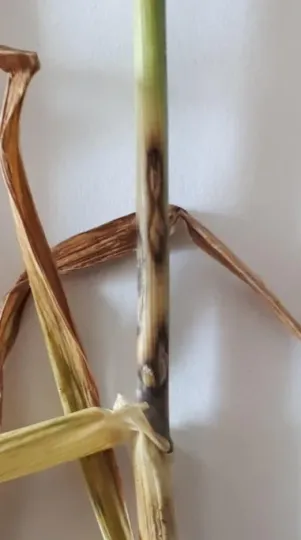
Description
Symptoms
Early symptoms of Gibellina stalk rot typically manifest in winter wheat crops during the early spring as vegetation resumes growth. Grayish or brownish spots appear on the lower stems.
Over time, the infected tissues become soft and necrotic, leading to structural weakness in the stem that causes lodging even under mild wind conditions.
Under the leaf sheaths, one can often find fungal mycelium, which darkens as the season progresses and becomes the site for new fungal spore production.
Infected plants display stunted growth, premature yellowing, and drying of the lower leaves, which directly interrupts the development of the wheat ear.
Severe infestations lead to shriveled grains and poorly developed heads, which significantly reduces the overall grain yield and quality parameters.
Pathogen
The causative agent of this disease is the fungus Gibellina cerealis, which belongs to the Ascomycota phylum. It is a specialized pathogen that primarily targets cereal crops in temperate climate zones.
The life cycle involves the formation of fruiting bodies that develop on crop residues after overwintering. The infection can persist in the soil and on plant debris for several years, making it a persistent threat to cereal fields.
The fungus invades plant tissues through the root system or the base of the stem, colonizing the vascular system and disrupting the plant's ability to transport nutrients.
Spore dispersal is facilitated by wind and rain splashing, which allows the pathogen to spread rapidly between plants within a field.
Understanding the biology of Gibellina cerealis is vital, as the pathogen's sensitivity to crop rotation remains the most reliable biological weak point to exploit in management strategies.
Conditions for development
The disease flourishes in environments characterized by prolonged and wet spring weather, where moderate temperatures persist for extended periods.
High soil and air humidity are essential factors that promote spore germination and the successful penetration of the fungus into the wheat stem tissues.
High seeding densities create a stagnant microclimate at the base of the plants, which limits airflow and promotes moisture retention, favoring the development of the rot.
Poor agricultural practices, such as excessive nitrogen fertilization or improper planting depth, can weaken the plant's natural resistance and make it more susceptible to infection.
Winter conditions involving frequent freeze-thaw cycles can also stress the wheat crop, making it more vulnerable to pathogen colonization during the subsequent spring season.
Why it matters
The primary danger of Gibellina stalk rot is the substantial reduction in yield resulting from stem collapse and systemic impairment of nutrient flow within the plant.
Widespread lodging caused by the disease creates severe logistical challenges during harvest, as it makes mechanical collection difficult and increases crop losses.
The grain harvested from infected fields is often of poor quality, showing lower test weights and reduced milling and baking potential due to poor nutrient uptake.
In cases of severe infestation, the disease can cause a loss of up to 30 percent of the total potential harvest, resulting in significant economic losses for producers.
The presence of the pathogen in a field necessitates long-term changes to crop management to prevent the continuous cycle of infection in subsequent seasons.
Protection
The fundamental strategy for controlling Gibellina stalk rot is rigorous adherence to crop rotation, ensuring that susceptible cereals are not grown in frequent succession.
Deep plowing and proper burial of crop residues are crucial practices, as they limit the survival of the fungus and reduce the total inoculum present in the field.
Chemical control using fungicides is effective during the vegetative stages; however, applications must be timed correctly with the appearance of the first visible symptoms.
The use of high-quality, treated seed is mandatory to provide early protection against infection during the critical stages of seedling establishment.
- Optimizing seeding rates to ensure good ventilation.
- Balanced application of potassium and phosphorus fertilizers.
- Effective weed management to remove potential infection reservoirs.
- Selection of resistant winter wheat cultivars for at-risk areas.
Pathogens and affected parts
Affects crops · 1
Discussion
No discussions yet — be the first.