
Stagonospora leaf spot of strawberry
Stagonospora fragariae
Description
Symptoms
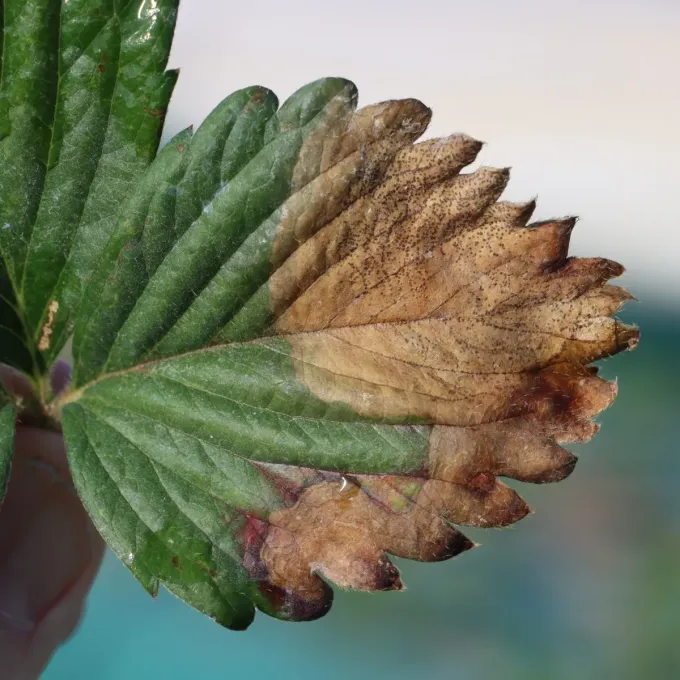
The first symptoms appear as small, purplish-red spots on the leaves. Initially, these spots are round and distinct, but as the disease progresses, they enlarge and can coalesce into larger necrotic areas.
The center of the spots eventually turns light brown or gray and becomes brittle. A characteristic dark, purple-brown margin usually remains visible around the necrotic center, helping to distinguish it from other strawberry diseases.
A key diagnostic feature is the appearance of tiny, black, pimple-like structures within the center of the spots. These are the pycnidia, and their presence confirms a fungal infection caused by Stagonospora fragariae.
The disease can also affect petioles and flower stalks. This can lead to distortion, premature browning, and structural weakening of the plant's support system, often causing the stalks to collapse.
Extensive spotting leads to premature leaf senescence and death. This significantly reduces the plant's total photosynthetic surface area, leaving the strawberry bush weak and unable to support fruit development effectively.
Pathogen
The causative agent of the disease is the imperfect fungus Stagonospora fragariae. It is a specialized pathogen that primarily infects strawberry plants (genus Fragaria), causing significant damage in both commercial fields and home gardens.
The fungus survives in infected plant debris in the form of pycnidia, which are specialized fruiting bodies. These structures protect the fungus during winter and adverse environmental conditions, acting as the primary source of inoculum.
In spring, pycnidia release spores that are disseminated by water splash, wind, or agricultural equipment. Upon landing on healthy leaf tissue, the spores germinate and enter the plant through stomata or small injuries.
Once inside, the fungus colonizes the intercellular spaces, developing a mycelium network. It secretes enzymes that break down plant cell walls, allowing the fungus to extract nutrients and continue its life cycle.
The pathogen completes its cycle by producing new generations of spores throughout the growing season. This ability to continuously re-infect the host makes it a persistent issue if left unmanaged during the peak summer months.
Conditions for development
Stagonospora leaf spot flourishes in cool, wet environments. High humidity levels and prolonged leaf wetness are essential for spore germination and the successful establishment of the infection on the leaf surface.
The optimal temperature range for the development of this fungus is between +15°C and +22°C. Periods of persistent spring rains or foggy weather create the perfect climate for rapid disease expansion.
Crowded plantings that prevent proper air circulation trap moisture, maintaining high humidity within the canopy. This microclimate significantly increases the risk of an outbreak and accelerates the transmission of spores between plants.
The presence of overwintered, diseased leaves left on the ground serves as the primary reservoir for the fungus. Poor sanitation practices in the berry patch lead to higher levels of infection in subsequent years.
Stressed plants with poor root health or inadequate nutrient supply are more susceptible to the disease. Balanced fertilization and good water management are crucial to maintaining plant vigor against fungal pathogens.
Why it matters
The primary impact of the disease is the reduction of the leaf area, which limits the plant's ability to produce energy through photosynthesis. This directly impacts the yield, resulting in smaller, lower-quality fruits.
Infection of the flower stalks can cause the flowers to wilt or fail to develop properly, leading to a significant loss of harvest. This is particularly damaging during the fruit-set phase of the season.
Plants affected by the disease have weakened immune systems and reduced vigor going into winter. This leads to poor winter survival and reduced plant health in the following growing season.
The disease ruins the aesthetic and physiological quality of strawberry runners. Using infected runners for propagation spreads the fungus to new, clean areas of the farm, causing systemic long-term problems.
Economic losses occur not only through reduced yield but also from the increased cost of fungicide programs and the potential need for early renovation of the strawberry beds.
Protection
- Remove and destroy all infected foliage after harvest to reduce inoculum load.
- Choose strawberry varieties that exhibit natural resistance to leaf spot diseases.
- Maintain appropriate spacing between plants to encourage air movement and reduce leaf wetness.
- Utilize drip irrigation rather than overhead sprinklers to keep leaves dry.
- Apply recommended copper-based or synthetic fungicides during the spring vegetative growth phase.
Discussion
No discussions yet — be the first.