
Stagonospora leaf blotch
Stagonospora foliicola
Description
Symptoms
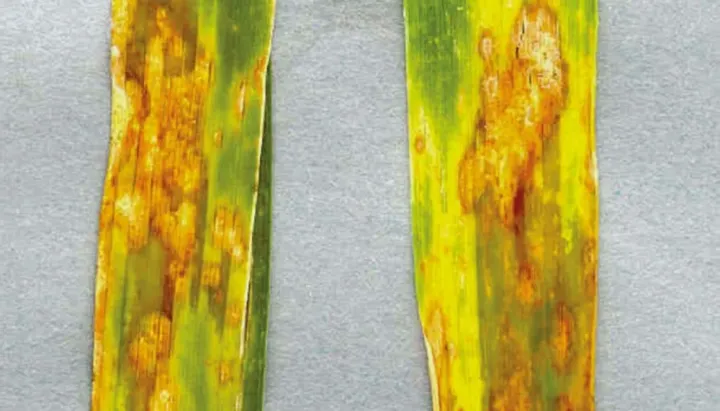
Early symptoms appear as small, chlorotic or light brown lesions on the lower leaves, which eventually expand into irregular, elongated shapes.
As the disease progresses, tiny black dots known as pycnidia appear within the lesions, which are the hallmark diagnostic feature of this fungal infection.
Severe infestations cause leaves to turn yellow, wither, and die prematurely, significantly reducing the green surface area of the plant.
The infection usually starts at the base of the plant and spreads upwards towards the flag leaf if the weather conditions remain conducive for the fungus.
Without proper identification, the disease is often confused with other septoria-like leaf blotches, necessitating professional field scouting or lab analysis.
Pathogen
The disease is caused by the fungus Stagonospora foliicola (formerly classified under the Septoria complex), which is a common pathogen of various small grain crops.
The fungus reproduces by forming pycnidia, which are small fruiting bodies that release conidia (spores). These spores are the primary agents of infection for the vegetative parts of the host plants.
The pathogen can survive as mycelium or pycnidia in crop residues, soil, and even on infected seeds, making it a persistent threat in continuous cropping systems.
Infection is typically initiated when spores are splashed onto the lower leaves by rain, followed by colonization of the host tissue under appropriate environmental conditions.
Genetic diversity of the pathogen allows it to adapt to different hosts and environments, requiring constant vigilance in disease management programs.
Conditions for development
High relative humidity (above 80%) and moderate temperatures between 15°C and 22°C are the primary factors favoring the development and spread of the pathogen.
Frequent rainfall and prolonged dew periods facilitate the dispersal of spores from residues to the growing crop, accelerating the disease cycle.
Dense planting patterns create a microclimate with reduced airflow and increased moisture retention, which is ideal for fungal colonization and infection.
Heavy nitrogen fertilization can lead to lush, succulent tissue growth that is more susceptible to the penetration of the fungal hyphae.
A lack of crop rotation significantly increases the spore load in the field, as the fungus persists on previous season's stubble and plant debris.
Why it matters
The primary economic impact of the disease is the destruction of leaf tissue, which inhibits photosynthesis and disrupts the supply of nutrients to the developing grain.
Premature leaf death reduces the grain filling period, leading to lighter, shriveled kernels and a significant decrease in overall grain yield.
Quality parameters, such as protein content and seed weight, are often negatively affected, potentially lowering the commercial grade of the harvest.
In susceptible varieties, yield losses can reach up to 30%, making Stagonospora leaf blotch a serious concern for intensive cereal production systems.
The disease also weakens the plant's overall vigor, making it more vulnerable to opportunistic pests and secondary environmental stresses.
Protection
Effective management begins with the use of resistant or tolerant cultivars, which can significantly reduce the impact of the disease.
Implementing a proper crop rotation strategy helps to break the disease cycle by depriving the fungus of its primary host for extended periods.
Tillage practices that bury crop residues help to reduce the primary inoculum level in the soil, effectively delaying the onset of the infection.
Fungicide applications, particularly around the flag leaf emergence, are essential to maintain crop health and ensure optimal grain filling.
- Monitor fields for early symptoms.
- Use certified, disease-free seed.
- Optimize plant density to improve aeration.
- Apply systemic fungicides as a preventative measure.
Discussion
No discussions yet — be the first.