
Description
Symptoms
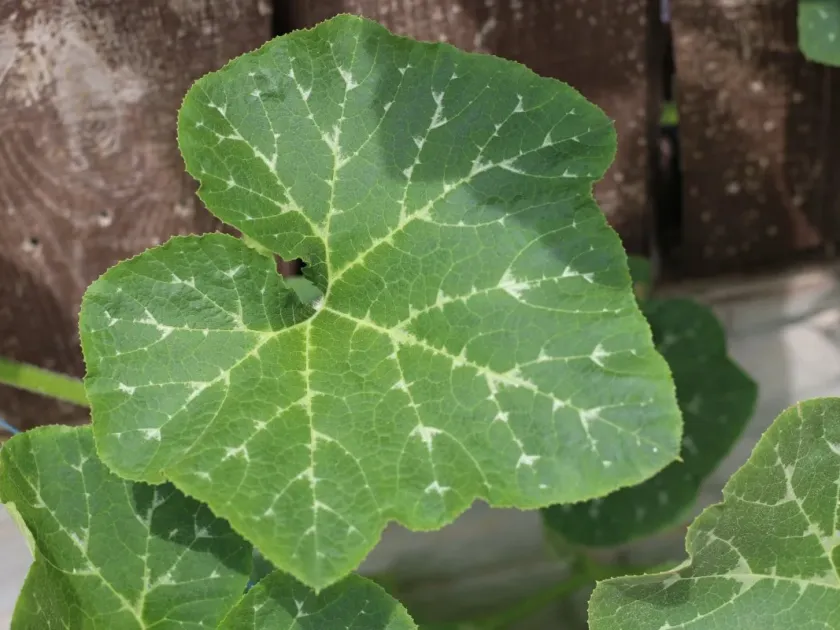
The hallmark symptom of the disease is the yellowing of the leaf tissue directly adjacent to the veins. As the infection progresses, the yellowing spreads outward, causing the entire leaf to become chlorotic.
In watermelons, the leaves may show severe distortion and mottling. The plant's growth pattern is significantly altered, often resulting in a stunted appearance and reduced leaf size.
Severe infections lead to systemic plant decline. Internodes become shortened, and the overall vigor of the vine decreases, which limits the plant's ability to produce healthy fruits.
Floral development is frequently compromised, leading to poor fruit set. Any fruits that do develop on infected plants are often small, poorly shaped, and have uneven maturation.
The terminal stage of the disease involves leaf necrosis and premature plant death. This early senescence reduces the photosynthetic capacity of the plant and exposes the fruit to sunscald.
Pathogen
The disease is caused by the Squash vein yellowing virus (SqVYV), a member of the Ipomovirus genus within the Potyviridae family. It is a single-stranded RNA virus that specifically targets cucurbitaceous crops.
The primary vector for the transmission of this virus is the silverleaf whitefly, Bemisia tabaci. The insect acquires the virus while feeding on infected plant tissues and can transmit it to healthy plants almost immediately.
The host range of SqVYV includes major commercial crops such as watermelons, pumpkins, squashes, and cucumbers. It is highly contagious and spreads rapidly within susceptible plantings.
The virus is known for its high genetic diversity, which presents a significant challenge for plant breeders attempting to develop resistant cultivars through traditional methods.
Laboratory confirmation is essential for accurate identification, as the symptoms caused by SqVYV can mimic those of other mosaic viruses or abiotic stress factors.
Conditions for development
The disease incidence is heavily dependent on the population dynamics of the whitefly vector. Outbreaks often occur during seasons with high whitefly pressure.
Warm, humid conditions are ideal for whitefly reproduction, facilitating the rapid spread of the virus throughout the field. High temperatures generally accelerate the insect's life cycle.
Weed hosts in and around the field can serve as reservoirs for both the virus and the whitefly, allowing the pathogen to persist during the off-season.
Lack of crop rotation contributes to the build-up of the viral reservoir in the soil and surrounding vegetation, making consecutive plantings of cucurbits increasingly risky.
Wind-borne migration of whiteflies from neighboring infested fields or harvested plots can trigger sudden, widespread infections in previously healthy-looking crops.
Why it matters
The primary economic impact of SqVYV is the drastic reduction in fruit quality. Marketability is significantly compromised due to physical deformation and poor internal texture of the fruit.
Yield loss can be devastating, with some heavily infected fields experiencing near-total loss of harvestable, commercial-grade watermelons.
The virus interferes with essential metabolic processes, including photosynthesis and sugar translocation. This results in fruits with low Brix levels, failing to meet the sweetness standards for consumption.
Infected plants become highly susceptible to secondary pathogens, including various fungal wilts, which further hasten the destruction of the crop.
The disease poses a severe financial threat to growers due to the dual costs of potential harvest loss and the increased necessity for intensive pest control measures.
Protection
Management focuses primarily on controlling the whitefly vector. The timely application of systemic insecticides is crucial to preventing the virus from establishing itself in a new planting.
Maintaining spatial isolation between new cucurbit plantings and older, potentially infested fields can help reduce the influx of whiteflies.
Sanitation practices, including the aggressive removal of weeds, are essential for eliminating potential virus and vector reservoirs near the crop production area.
The use of row covers or physical barriers during the early vegetative stage can effectively protect young seedlings from the initial whitefly colonization.
- Monitor whitefly populations using yellow sticky traps to time insecticide applications.
- Promptly rogue and destroy any plants showing early symptoms of yellowing.
- Rotate with non-cucurbit crops to break the cycle of the virus and the vector.
Pathogens and affected parts
Affects crops · 1
Discussion
No discussions yet — be the first.