
Sphaeropsis blight
Sphaeropsis
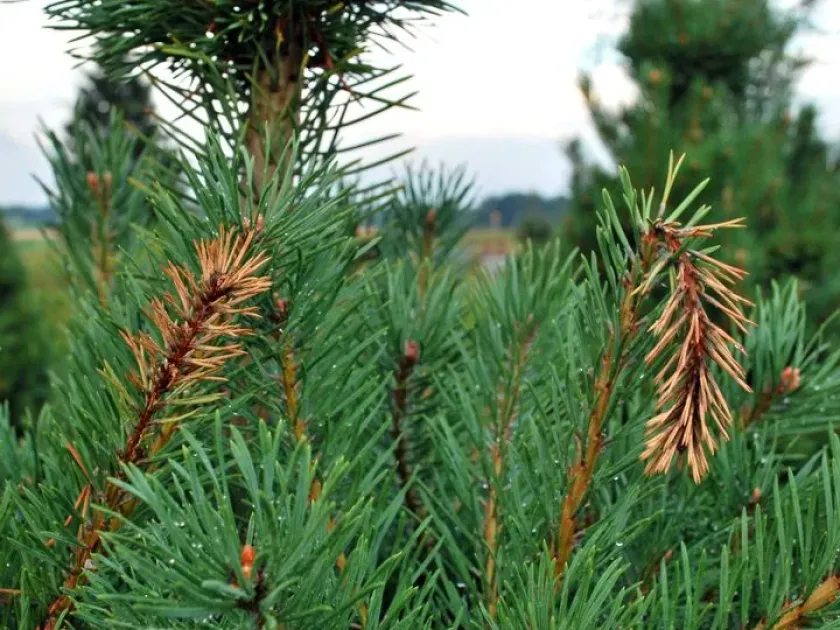
Description
Symptoms
The most distinctive symptom is the stunting and browning of current-year shoots, which often fail to elongate properly compared to healthy branches.
Affected needles become discolored, turning yellow and eventually turning straw-colored or reddish-brown while still remaining attached to the shoot.
Cankers often develop at the base of infected branches, which are frequently characterized by visible resin exudation and localized bark death.
Tiny, black, pimple-like structures, which are the pycnidia, can be seen at the base of the dead needles or on the scales of fallen cones.
Over time, the infection spreads from branch to branch, eventually causing crown dieback and creating an irregular, sparse appearance in the tree canopy.
Pathogen
Sphaeropsis blight is caused by the fungus Sphaeropsis sapinea (formerly known as Diplodia pinea), which is a common and destructive pathogen of coniferous trees.
The fungus is known for its ability to persist in dead needles, branches, and cones, making it a persistent threat in forests and home landscapes alike.
It predominantly attacks members of the Pinaceae family, with pine species (especially Pinus nigra) being the most susceptible hosts for the infection.
The fungus produces numerous pycnidia, small black fruiting bodies, which appear on the surface of infected tissues and release spores during wet weather conditions.
As a facultative parasite, the fungus typically exploits wounded or stressed plants, though it can also infect healthy tissues under favorable environmental conditions.
Conditions for development
Warm, wet, and humid weather provides the optimal environment for the spores to germinate and penetrate the host plant's tissues effectively.
Physical injuries caused by hail, heavy snow, or pruning activities provide perfect entrance points for the fungus to establish its primary infection.
Trees subjected to environmental stressors, such as prolonged drought, poor soil fertility, or extreme temperatures, show significantly higher susceptibility.
High-density plantings or lack of proper pruning decrease airflow within the canopy, which allows moisture to remain on needles for extended periods.
The presence of infected plant debris around the base of the tree ensures a constant cycle of reinfection unless the area is cleaned thoroughly.
Why it matters
Sphaeropsis blight causes severe aesthetic damage, significantly reducing the visual appeal and commercial value of ornamental conifer plantings.
By killing the leaders and primary shoots, the fungus stunts the overall growth of the tree and permanently distorts its natural shape.
Repeated annual infections drain the energy reserves of the host plant, leaving it highly vulnerable to secondary attacks by wood-boring insects.
If left untreated, the blight can lead to the slow decline and ultimate death of the entire tree over several consecutive growing seasons.
The economic impact in nurseries is significant, as infected stock must be discarded to prevent the spread of the pathogen to healthy plants.
Protection
Pruning out and removing dead or dying branches during dry weather is the primary and most effective method for managing this fungal disease.
All pruned materials should be promptly destroyed or buried far away to minimize the risk of spores dispersing back onto healthy parts of the landscape.
Preventive fungicide applications containing copper or chlorothalonil, applied during bud break and early shoot development, are highly recommended.
Proper landscape management, including regular irrigation during dry spells and adequate fertilization, helps trees remain resilient against fungal attacks.
Selecting and planting resistant species or cultivars is the most sustainable approach to long-term disease prevention in high-risk areas.
Discussion
No discussions yet — be the first.