
Sphaerophorus globulosus
Sphaerophorus globulosus
Description
Symptoms
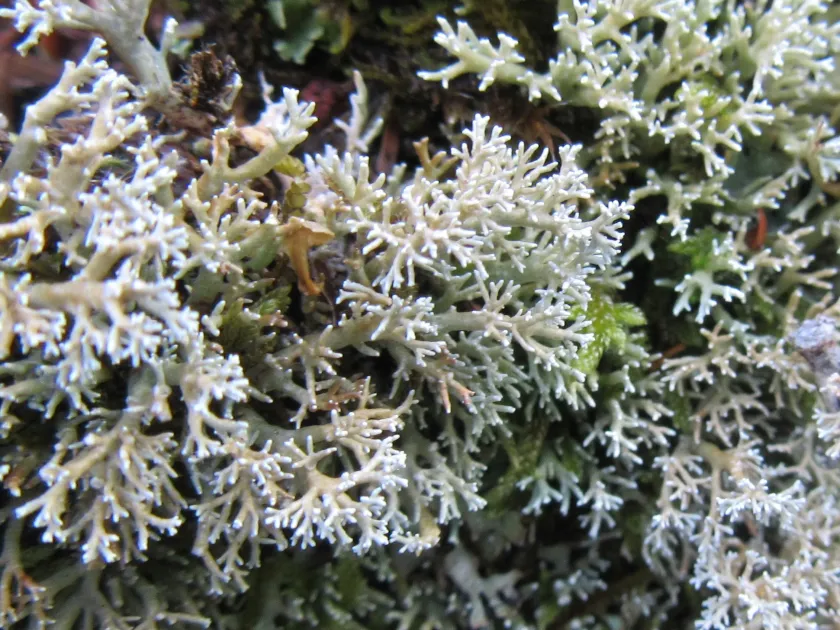
The most prominent sign is the presence of dense, shrub-like growth on the bark of mature trees or rock surfaces. The thallus is typically olive-brown in color, providing a distinct visual appearance.
The ends of the branches often feature globose (spherical) apothecia, which give the organism its species name. These structures are easily visible to the naked eye upon close inspection.
The texture of the thallus is firm and can have a polished, shiny surface when damp. These dense clumps are usually fixed firmly to the substrate and do not easily detach.
Unlike parasitic fungi, it does not cause necrotic spots, wilting, or rotting of the supporting plant's tissues. The colonization pattern is superficial and generally harmless to the host tree.
Observing these colonies in the field is a good sign of ecological health, as the organism is intolerant to significant sulfur dioxide levels and industrial pollution.
Pathogen
Sphaerophorus globulosus is a lichenized fungus belonging to the family Sphaerophoraceae. It functions as a complex symbiotic organism, where the fungus provides the structural thallus and reproductive organs, while algae provide the photosynthetic capability.
In the context of botany, it is not considered a plant pathogen, but rather an epiphyte that lives in association with trees and rocks. It plays a significant role in the primary colonizing of forest substrates.
The fungal mycelium is highly specialized, forming dense thalli that are characteristic of the species. Reproduction is primarily sexual through the development of specialized fruiting bodies known as apothecia.
Scientific studies focus on its morphology, growth patterns, and its distribution within cold and temperate climates. It is an essential component of forest lichen communities, supporting biodiversity.
As a biological entity, it exhibits high sensitivity to environmental stress. Its biology is deeply integrated into the moisture cycles of the forest floor and canopy, making it a critical research subject.
Conditions for development
The species requires high atmospheric humidity to thrive, making it most common in fog-prone temperate rainforests and northern boreal forests.
Cool to moderate temperatures are ideal for its metabolic activity. Extremely hot or arid climates act as a limiting factor, often causing the organism to become desiccated and dormant.
Air purity is the most critical environmental parameter. It serves as a classic bioindicator for good air quality, as it cannot survive in regions with high levels of acid rain or smoke.
The substrate must remain stable over long periods to allow for the slow growth characteristic of this lichen. Old-growth forests offer the best conditions for its long-term survival.
Indirect light is preferred, as intense, direct sunlight can damage the photosynthetic components within the lichenized structure. Sheltered areas in the forest are typical habitats.
Why it matters
Sphaerophorus globulosus causes no economic harm to agricultural crops or horticultural plants. It does not infect vascular plant tissues nor compete for nutrients in a way that affects plant growth.
In forestry, its presence is sometimes viewed as a sign of environmental stability rather than a nuisance. It does not promote wood decay or reduce the commercial value of timber.
For ornamental trees, it is rarely perceived as an issue. Any perceived "infestation" is simply an aesthetic preference and has no impact on the physiological health of the tree.
The main threat involving this organism is the loss of its habitat. Climate change and deforestation are the primary factors contributing to the decline of this lichen species.
Because it is a non-pathogenic organism, it does not require management strategies related to the control of plant diseases or agricultural pests.
Protection
No control methods are required or recommended for this organism. It is a natural component of healthy ecosystems and does not impact plant health negatively.
If removal is requested for aesthetic reasons, simple mechanical brushing is sufficient. No chemical treatments are necessary, as they would harm the surrounding ecosystem.
Prevention of excessive growth is not a standard practice in agriculture or forestry, as the lichen is considered a beneficial bioindicator rather than a threat.
Maintaining a healthy environment and protecting old-growth trees is the best way to preserve these organisms, which contribute to the overall biological complexity of the site.
In general, we advocate for the protection of such lichen species as they represent high air quality and ecological integrity within the monitored area.
Discussion
No discussions yet — be the first.