
Sphaerophoraceae lichens
Sphaerophoraceae
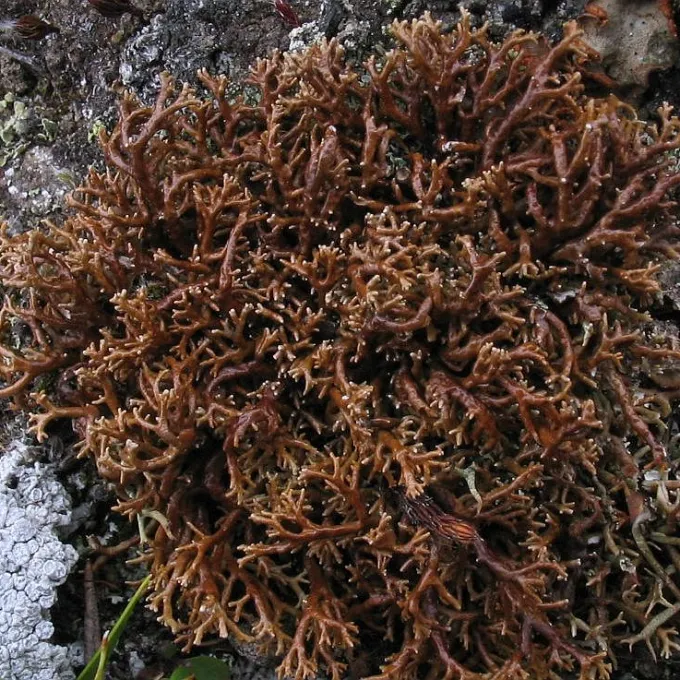
Description
Symptoms
Sphaerophoraceae lichens manifest as bushy, branched thalli that attach firmly to the bark of tree trunks and main branches.
Visually, the colonies appear as coral-like structures with a greyish, brownish, or greenish-grey color palette.
Small fruiting bodies, known as apothecia, often form at the tips of the lichen branches, resembling tiny spheres or balls.
When present, the bark becomes rough, and in areas of dense colonization, local epidermal necrosis may occur due to inhibited gas exchange.
Unlike parasitic fungi, these lichens do not have root systems, yet their dense covering traps moisture and restricts the tree's bark respiration.
Pathogen
The organism belongs to the Sphaerophoraceae family (order Lecanorales), which is a symbiotic life form.
Biologically, it is not a pathogen in the traditional sense, but a stable symbiosis between a fungus (mycobiont) and an alga (phycobiont).
While lichens do not feed on the tree's sap, their presence is a reliable indicator of poor tree vigor or environmental stagnation.
Reproduction occurs through spores or small fragments of the thallus, which are dispersed by wind or rain splash onto neighboring trees.
Colonization is a gradual process, starting from micro-cracks in the bark where organic matter and moisture accumulate.
Conditions for development
High relative humidity and consistent light exposure are the primary requirements for the development of Sphaerophoraceae.
The spread is most significant in dense orchards where air circulation is restricted and canopy thinning is neglected.
Older trees with weathered, fissured bark provide the most suitable substrate for these lichens to anchor securely.
Insufficient garden maintenance, lack of pruning, and slow tree growth rates contribute to rapid colonization of the bark surface.
They are known to be sensitive to air pollution; therefore, their presence often indicates clean air but also a need for improved tree management.
Why it matters
The primary harm caused by Sphaerophoraceae is the creation of a microhabitat for other pests and secondary pathogens within their dense mats.
Lichens retain moisture on the bark surface, which leads to prolonged wetting and potential rot during autumn and winter months.
Hidden beneath the lichen colonies, micro-cracks serve as safe overwintering sites for various scale insects and mites.
Restricted oxygen access to living bark tissues slows down physiological processes, resulting in overall tree decline.
In severe cases, massive coverage of branches by these lichens can lead to localized necrosis and the gradual dieback of main limbs.
Protection
The first step in management is mechanical cleaning of the bark using stiff brushes or scrapers during the dormant season.
Applying a 3–5% iron sulfate solution is highly effective in suppressing lichen growth and preventing further infestation.
Regular sanitary pruning is essential to thin the canopy, which improves sunlight penetration and air circulation throughout the tree.
Timely whitewashing of trunks with lime milk and copper sulfate creates an unfavorable alkaline environment for spore attachment.
- Optimize mineral nutrition to promote healthy bark growth and vigor.
- Disinfect wounds after pruning with horticultural sealant or putty.
- Monitor and manage soil moisture levels in the tree's root zone.
Discussion
No discussions yet — be the first.