
Sphaerobolus
Sphaerobolus
Description
Symptoms
The primary symptom is the presence of tiny, sticky, dark brown to black spots, measuring approximately 1–2 mm in diameter, firmly attached to foliage, stems, or fruit.
These spots are the glebae of the fungus, which are extremely difficult to remove without damaging the plant's cuticle due to their adhesive nature.
Upon close inspection, one may notice a faint light halo or residue around the spot, which is the remains of the mucilage used to anchor the spore to the surface.
The damage is typically localized in the lower canopy of plants situated near or directly above mulch beds that provide an ideal substrate for the fungus.
These spots are frequently misidentified by gardeners as insect frass or as symptoms of serious fungal leaf spots like anthracnose.
Pathogen
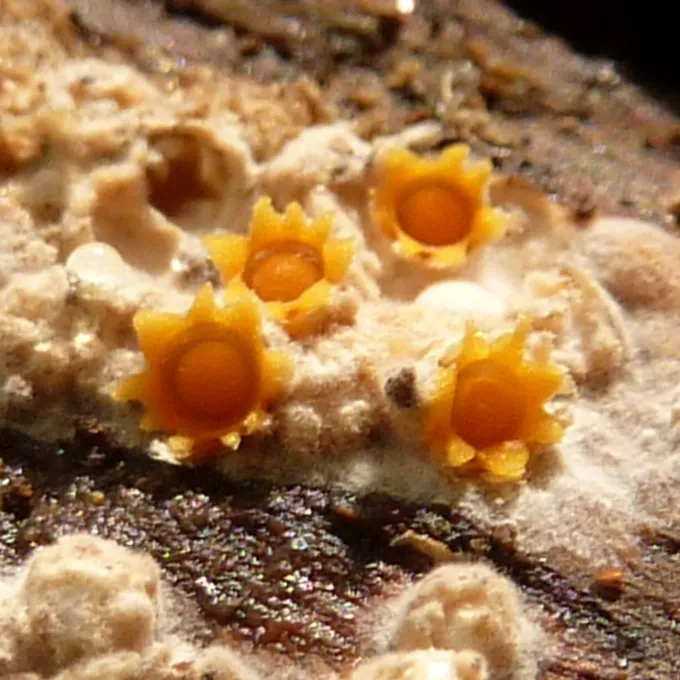
Sphaerobolus, commonly known as the "cannonball fungus", belongs to the Geastraceae family. It is a saprotrophic fungus that thrives on decaying organic matter, particularly wood mulch and bark.
In an agricultural setting, it is often mistakenly identified as a plant pathogen because it forcefully ejects spore-filled packets, known as glebae, onto nearby vegetation.
It is not a true parasite that infects plant tissues for nutrients; rather, it uses the leaf or stem surface as a landing site for its spores.
The most prominent species, Sphaerobolus stellatus, features a unique hydraulic mechanism that can launch its spore mass up to several meters away.
While the fungus does not feed on the plant, its presence is highly problematic for ornamental nurseries and landscapes where aesthetic quality is paramount.
Conditions for development
The development of Sphaerobolus is strictly dependent on the presence of moist, lignin-rich organic substrates such as wood chips, sawdust, or bark.
The fungus thrives and triggers its spore-ejection mechanism during periods of high humidity and moderate temperatures, typically between 15°C and 25°C.
It is most prevalent in shaded areas with poor air circulation, where mulch remains damp for extended periods, providing a perfect incubator for growth.
High rainfall events serve as a primary trigger for mass dispersal, as the increased moisture in the mulch optimizes the hydraulic pressure within the fungus.
Without sufficient airflow and drying time for the mulch, the risk of "cannoning" spores onto neighboring plants remains consistently high throughout the growing season.
Why it matters
The primary harm is the severe loss of aesthetic value, rendering ornamental plants unsalable and detracting from the beauty of public landscapes.
The presence of spore packets on leaves can physically obstruct stomata and block sunlight, potentially interfering with normal photosynthetic activity.
Attempts to manually scrape off the sticky spore masses often lead to physical injury of the plant's epidermis, which may then serve as an entry point for real pathogens.
In cases of heavy infestation, the foliage may look dirty and unkempt, leading to a negative perception of plant health and maintenance quality.
Economic losses are particularly significant in the horticultural industry where visual quality standards are rigid and strict.
Protection
The most effective strategy is to replace organic wood-based mulch with inorganic alternatives like gravel, stones, or landscape fabric near sensitive plants.
Avoid the use of coniferous bark in humid, shaded areas, as this material is a preferred host for the Sphaerobolus fungus.
Improving site drainage and ensuring adequate air movement around the base of plants can significantly reduce the moisture levels needed for fungal colonization.
Regular maintenance, including turning or raking the mulch, can help break up fungal colonies, though complete removal of infested material is often necessary.
- Chemical fungicides are largely ineffective because the organism is a saprotroph and not a plant-infecting pathogen.
- Prevention through proper substrate choice is the only reliable method of long-term control for this fungus.
Discussion
No discussions yet — be the first.