
Sphacelotheca
Sphacelotheca
Description
Symptoms
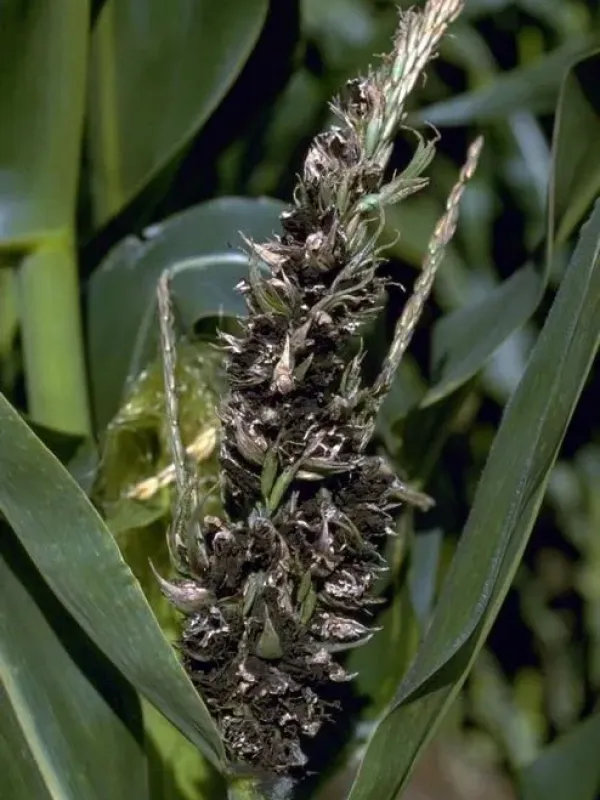
The most visible symptom of this disease is the replacement of normal flower structures with smut sori. Instead of healthy grains, the inflorescence develops sac-like structures filled with a dark mass of fungal spores.
In sorghum, the affected panicles appear as elongated or conical structures. These sori are covered by a thin, greyish-white membrane that eventually ruptures, releasing a black powder of teliospores to be dispersed by wind.
Infected plants often display stunted growth and abnormal tillering. The leaves may show distorted angles, and the overall plant height is significantly reduced compared to healthy neighbors in the field.
The internal structure of the sorus typically contains a columella—a solid column of host tissue remnants that provides structural support until the spore mass is fully matured and ready for dissemination.
Visual diagnosis is most effective during the flowering or grain-filling stages, when the transformation of reproductive organs into abnormal, dark-colored smut structures becomes clearly apparent to the naked eye.
Pathogen
The disease is caused by fungi of the genus Sphacelotheca, which belong to the Basidiomycota phylum. These pathogens are highly specialized parasites, primarily attacking the inflorescences of various grass species, especially sorghum.
The life cycle of the pathogen is intrinsically linked to the development of the host plant. Teliospores persist in the soil or on the surface of seeds, germinating concurrently with the host to infect the seedling at its most vulnerable stage.
Once infection occurs, the fungus develops systemically within the plant's meristematic tissues. The mycelium spreads through the stem, remaining largely invisible until the plant begins to form its reproductive organs.
Infection is typically spread through contaminated seeds or soil-borne spores. As the plant matures, the fungus replaces the healthy grain tissue with its own mass of spores, eventually breaking the plant's natural structure.
While modern taxonomic revisions have reclassified many species within this genus into Sporisorium, the term Sphacelotheca remains standard in agricultural literature to describe this specific type of smut disease.
Conditions for development
The development of the disease is most favorable under moderate soil and air temperatures during seed germination. The optimal range for seedling infection is between 18 and 25 degrees Celsius.
Soil moisture plays a crucial role in spore germination and the success of seedling infection. Excessive soil moisture at the time of sowing can accelerate the infection process and increase the prevalence of the disease.
Seed planting depth also significantly influences the rate of infection. Planting seeds too deep slows down seedling emergence, extending the period during which the young plant is vulnerable to fungal invasion.
A high concentration of spores in the topsoil creates a heavy infectious background, making it extremely difficult to grow susceptible hybrids without rigorous seed treatment protocols.
Field conditions such as high density and poor air circulation contribute to the accumulation of spores and facilitate the rapid spread of the disease among adjacent plants throughout the growing season.
Why it matters
The primary damage caused by Sphacelotheca is the total destruction of grain yield. Because the fungus replaces the reproductive organs, the harvest consists of spore powder instead of valuable agricultural grain.
Even in areas where the disease is not fully systemic, the presence of spores can contaminate healthy grain during harvest. This significantly reduces the commercial quality of the crop and creates storage challenges.
The plant diverts its energy and nutritional resources to support the parasitic fungus, which weakens the host. This leaves the crop more susceptible to other diseases, insect attacks, and environmental stresses.
Economic losses can be substantial, with infection rates sometimes reaching over 50% in untreated fields. Such losses threaten the profitability of grain production for farmers relying on standard cultivars.
The continuous use of infected seed stock perpetuates the disease cycle, creating an increasingly difficult phytosanitary situation that requires long-term management and rigorous crop rotation practices.
Protection
The most effective management strategy is seed treatment with systemic fungicides prior to planting. This protective layer ensures that the fungus is neutralized before it can successfully invade the emerging seedling.
Strict adherence to crop rotation is essential for long-term control. Avoiding susceptible host crops for 3–4 years on infected fields allows for the natural decline of spore populations in the soil.
Selecting and planting genetically resistant cultivars is a cornerstone of effective disease management, significantly reducing the reliance on chemical control methods and stabilizing farm productivity.
Optimizing planting dates helps crops emerge and develop rapidly, shortening the critical stage of vulnerability and limiting the pathogen's window of opportunity to infect the plant tissue.
- Pre-sowing seed disinfection.
- Use of smut-resistant hybrids.
- Rigorous crop rotation cycles.
- Cleaning of agricultural machinery to prevent spread.
- Removal and destruction of infected plant debris.
Discussion
No discussions yet — be the first.