
Spermosporiosis
Spermospora
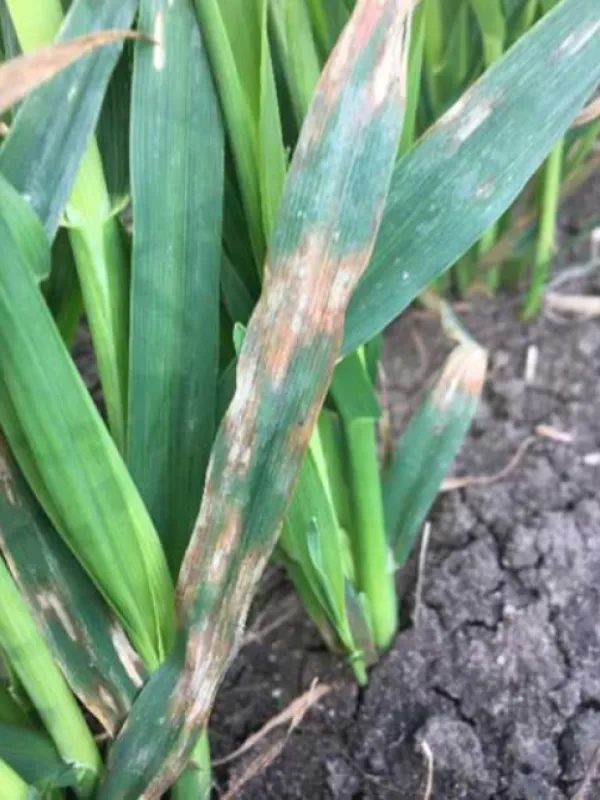
Description
Symptoms
Spermosporiosis is characterized by the appearance of distinct leaf spots that often develop a necrotic center and a chlorotic halo.
As the infection advances, these spots may expand and coalesce, leading to large portions of the leaf tissue becoming withered and dead.
Under high humidity conditions, a fine, powdery layer of fungal sporulation may be observed on the surface of the lesions.
Affected leaves tend to yellow prematurely, curl, and die off, which significantly reduces the plant's overall photosynthetic capacity.
In severe cases, the infection can progress to the stem or sheath, causing weakening and lodging of the plant structures.
Pathogen
The disease is caused by fungi belonging to the genus Spermospora, which are known to act as plant pathogens, particularly affecting various cereal species.
The pathogen reproduces via conidia, which are produced on the surface of infected plant tissues and disseminated by wind and rain splashes.
The fungus survives primarily in crop residues left in the field, acting as a primary source of inoculum for subsequent growing seasons.
It colonizes plant leaves by penetrating the epidermis and obtaining nutrients from living host cells, eventually causing tissue necrosis.
The biology of Spermospora is highly dependent on humidity, as moisture is essential for the germination of fungal spores on the plant surface.
Conditions for development
The development and spread of the disease are strongly favored by mild temperatures and extended periods of high relative humidity.
Frequent rainfall and persistent dew are critical environmental triggers that promote the germination and infection cycles of the fungus.
Densely planted crops that limit air circulation often experience higher disease severity due to the creation of a microclimate conducive to fungal growth.
Optimal temperature ranges for the pathogen generally fall between 15°C and 22°C, which align with the peak vegetative growth period of many cereals.
Poor crop rotation practices and the presence of infected straw increase the risk of disease outbreaks in fields during the early stages of growth.
Why it matters
The primary economic impact of the disease is the reduction of leaf area index, which directly correlates to lower biomass production.
Infected crops often exhibit stunted growth and reduced grain filling, leading to lighter, lower-quality kernels at harvest.
By compromising the integrity of the foliage, the pathogen makes plants more susceptible to environmental stress and opportunistic secondary infections.
Severe infestations can lead to significant yield losses, potentially impacting the profitability of cereal production in affected regions.
The presence of the pathogen also necessitates additional investment in chemical control, increasing the overall cost of production for farmers.
Protection
Integrated disease management for Spermosporiosis starts with crop rotation, which breaks the pathogen's life cycle by removing host plants.
Proper soil management, including the deep incorporation of crop residues, helps accelerate the decomposition of fungal inoculum.
Treating seeds with high-quality systemic fungicides is essential to provide early-season protection and prevent initial infection.
Monitoring fields during the vegetative stage allows for the timely application of foliar fungicides before the disease reaches an epidemic level.
Utilizing resistant or tolerant crop varieties is the most sustainable and efficient strategy to mitigate the impact of the disease.
Discussion
No discussions yet — be the first.