
Spathulosporaceae
Spathulosporaceae
Description
Pathogen
The Spathulosporaceae are a family of marine ascomycete fungi known for their specialized parasitic relationship with red algae.
These fungi function as obligate parasites, meaning they cannot complete their life cycle without their specific algal host.
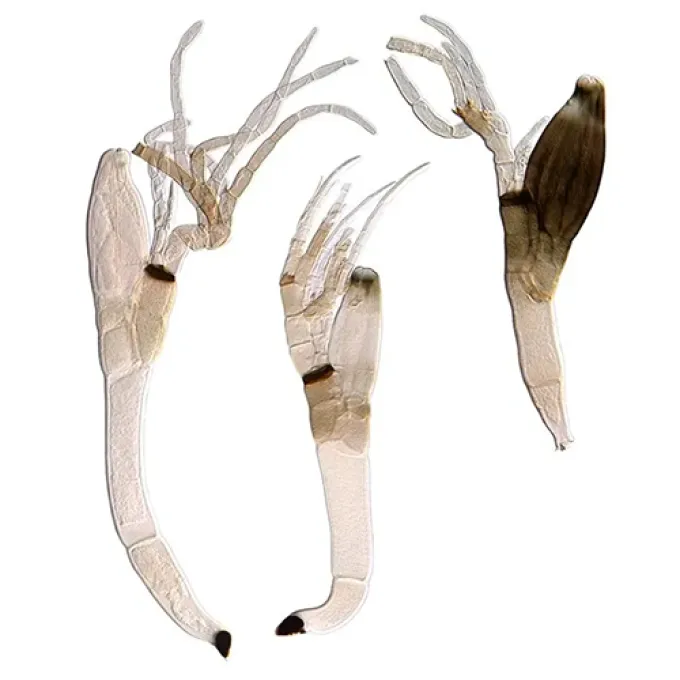
The pathogen is highly adapted to the marine environment, exhibiting unique morphological features in their reproductive structures.
These microscopic organisms are distributed globally where their host species are present in ocean ecosystems.
Scientific interest in this family centers on their evolutionary adaptation to a strictly marine lifestyle.
Conditions for development
Development and infection depend heavily on the physiological state of the host red algae.
Optimal environmental conditions for these fungi include specific salinity, water temperature, and light levels favored by red algae.
Water currents act as a primary vector for the dispersal of fungal spores to new, healthy algal hosts.
Seasonal patterns in algal growth cycles dictate the activity and intensity of fungal colonization.
Any disruption in the maritime habitat can alter the interaction between the pathogen and its host.
Why it matters
The infection results in structural damage to the thallus of red algae, hindering their metabolic processes.
Damage symptoms often manifest as localized lesions which can reduce the algae's photosynthetic capacity.
These fungal pathogens can negatively impact the density of algal beds, which serve as nurseries for various marine species.
Weakened tissues become susceptible to opportunistic secondary infections by other microorganisms.
Understanding their impact is essential for monitoring the health and biodiversity of marine coastal environments.
Discussion
No discussions yet — be the first.