
Description
Symptoms
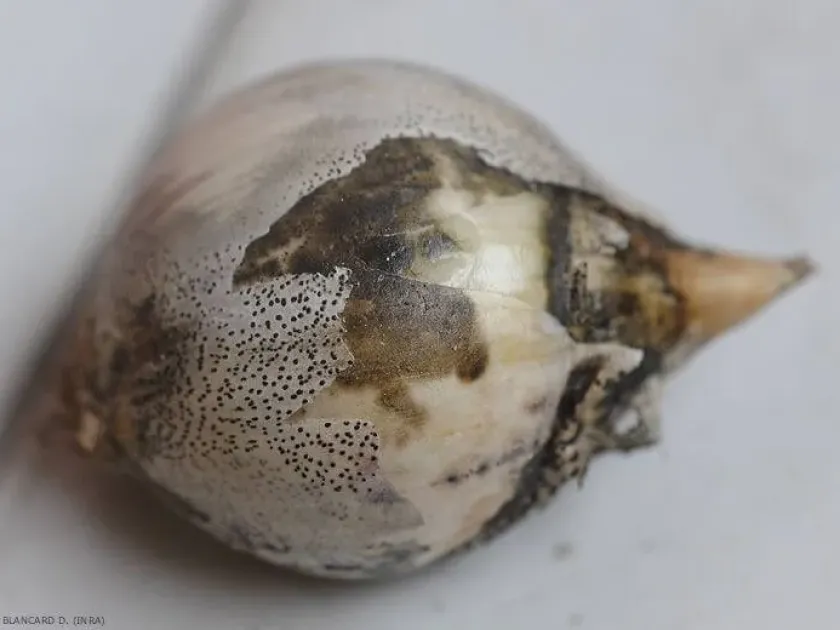
Onion neck rot typically appears during postharvest storage or curing. The tissues around the neck area become soft, watery, and take on a grayish, translucent appearance as the infection takes hold.
As the disease progresses, the rot moves downward into the bulb, affecting the succulent inner scales. A dense, gray, powdery mold develops on the surface, which consists of the fungus's conidia and mycelium.
Over time, small, hard, black structures called sclerotia appear on the decaying tissues. These can merge into a continuous crust, signaling advanced stages of infection and severe decay of the bulb.
The bulb gradually loses firmness, eventually collapsing into a shriveled, rotten mass with a distinct, pungent odor. Often, the infection remains hidden internally until the bulb is cut or begins to leak.
In the field, symptoms are rarely visible, but affected seed stalks may exhibit necrosis and collapse, which can lead to premature lodging and seed production failure.
Pathogen
The pathogen responsible for neck rot is the fungus Botrytis allii (formerly identified as Vermicularia circinans in some historical classifications). It is a specialized necrotrophic fungus infecting the Allium genus.
The fungus survives in the soil and on crop debris as sclerotia and mycelium. These sclerotia are highly resilient and can remain dormant in the field for several years, serving as the primary source of inoculum.
During the growing season, the fungus spreads via airborne conidia, water splashes, or insects. Infection most frequently occurs just before or during harvest through mechanical injuries or tissues that have not properly dried.
The pathogen demonstrates significant ecological flexibility, allowing it to thrive across a wide range of temperatures, particularly in storage environments where humidity levels are poorly controlled.
Its life cycle includes both a parasitic phase on living tissue and a saprophytic phase on organic debris, making complete eradication in agricultural systems extremely challenging.
Conditions for development
High relative humidity (above 75–80%) is the primary catalyst for the development of neck rot, especially during the curing phase. Prolonged rainfall prior to harvest drastically increases the risk of infection.
Optimal temperatures for mycelial growth and conidial germination range from +15°C to +25°C. These temperatures are common during late summer, which is why harvest timing is critical to minimizing disease exposure.
Poor ventilation in storage facilities creates a microclimate conducive to the rapid spread of spores from infected bulbs to healthy ones. A single infected bulb can quickly become a localized epicenter of rot.
Agronomic mistakes, such as harvesting immature bulbs with thick, fleshy necks, provide easy entry points for the pathogen. Incomplete drying keeps these neck tissues vulnerable for longer periods.
Excessive nitrogen fertilization promotes overly succulent growth, which slows down the curing process and renders the bulb tissues more susceptible to the fungal invasion of Botrytis.
Why it matters
Neck rot is one of the most devastating postharvest diseases affecting onions and garlic. If environmental conditions are not managed, losses in storage facilities can exceed 50%, representing significant economic damage.
Beyond quantity losses, the disease ruins the overall marketability of the crop. Infected bulbs are unsuitable for human consumption due to the rotting process and the presence of fungal metabolites.
Infected planting material leads to poor stand establishment and reduced yields in seed-grown crops. The disease can cause mass failure of nursery seedlings if the soil or seed is contaminated.
The buildup of sclerotia in the soil necessitates long crop rotation intervals, limiting land use flexibility for farmers and increasing the costs associated with disease management.
Managing an outbreak requires labor-intensive sorting and disposal of infected produce, which significantly inflates operational costs and decreases the overall profit margins for the agricultural enterprise.
Protection
Integrated pest management starts with strict crop rotation, ensuring onions are not replanted on the same plot for at least 3–4 years. Always use high-quality, pathogen-free seeds or sets.
Harvest should be conducted during dry weather, ensuring the bulbs are fully mature with dry, tightly closed necks. Proper curing is the most effective natural defense against this fungus.
Storage facilities must be maintained at low temperatures (near 0°C) with constant, efficient ventilation to prevent moisture condensation on the bulb surfaces, which otherwise promotes fungal growth.
Chemical control includes preventive fungicidal applications on crops during the growing season under high-risk conditions and pre-planting treatment of seeds or sets to reduce early infection rates.
- Carefully sort and remove any damaged or suspect bulbs before placing the harvest into storage.
- Maintain balanced soil nutrition, avoiding excessive nitrogen that delays maturity.
- Select resistant cultivars or those specifically bred for long-term storage and quick maturation.
- Perform thorough disinfection of storage bins, crates, and facilities before every season.
Pathogens and affected parts
Affects crops · 2
Discussion
No discussions yet — be the first.