
Serpula
Serpulaceae
Description
Symptoms
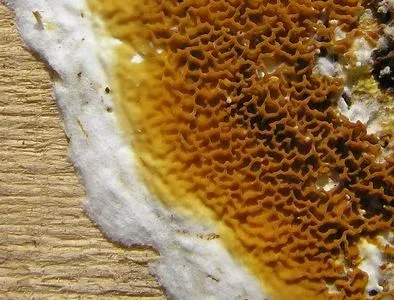
The first indicator of infestation is the appearance of a white, cotton-like mycelial mat on the wood surface. Over time, it may turn yellow or brownish in color.
A classic sign of brown rot is the structural change: the wood darkens, loses its strength, and fractures into characteristic cube-like pieces across and along the grain.
In areas of active growth, one can often observe water droplets on the fungal surface, which are metabolic byproducts excreted by the fungus during wood breakdown.
The fruiting bodies of the fungus appear as flat, fleshy, or crust-like structures, often with a wrinkled surface and an ochre to orange-brown hue, indicating a severe infestation.
A distinct, musty, or "earthy" smell in basements or confined spaces is a significant warning sign that Serpula is active behind walls or under flooring.
Pathogen
The causative agent of diseases within the Serpulaceae family is primarily the dry rot fungus, scientifically known as Serpula lacrymans. This basidiomycete has evolved into a specialized decomposer of building timber.
These fungi are classified as wood-decay organisms causing brown cubical rot. By secreting specific enzymes, the fungus breaks down the structural components of wood, primarily cellulose and hemicellulose.
A distinctive biological characteristic of this pathogen is its ability to produce extensive mycelial cords. These structures act as transport channels for water and nutrients, enabling the fungus to colonize dry wood.
While playing a role as a decomposer in forest ecosystems, Serpula becomes an aggressive destroyer of organic building materials when provided with suitable conditions.
The life cycle encompasses both vegetative growth and a reproductive stage, where basidiomata are formed to disseminate millions of spores via air currents.
Conditions for development
The primary prerequisite for development is a wood moisture content of 20% to 40%. The fungus cannot thrive in well-seasoned, dry timber.
Optimal temperatures for fungal metabolic activity range from +18 to +25 degrees Celsius. The fungus is highly adaptable and can persist in various indoor climates.
Poor ventilation and stagnant, humid air are critical factors promoting spore germination. Inadequate damp-proofing of building foundations is the most common entry point.
Since these fungi are heterotrophic, they do not require sunlight for energy and can grow in the complete darkness of floor cavities and wall voids.
Contact transmission is a major factor; if healthy timber comes into contact with mycelium from an infected source, the fungus can rapidly jump to new areas.
Why it matters
The main threat is the severe structural degradation of timber. Load-bearing beams and supports can lose their integrity in a relatively short time, potentially causing structural failures.
A secondary impact is the degradation of the building's indoor air quality. High spore concentrations can lead to respiratory issues or allergic reactions in occupants.
The economic impact is significant, as infestations often necessitate major renovations and the complete replacement of compromised structural components.
In forestry, these fungi can affect stacked logs or stored lumber, reducing the economic value and industrial quality of the raw material.
The fungus can also degrade secondary materials like insulation, plaster, or brickwork by growing through them to reach new sources of organic matter.
Protection
The foundation of control is strict moisture management. Ensuring proper cross-ventilation in attics and crawl spaces is vital to keep wood moisture levels low.
Chemical control involves the application of professional-grade fungicides and wood preservatives to prevent colonization or halt existing growth.
In cases of confirmed infestation, infected wood must be physically removed, with cuts extending at least 0.5 to 1 meter into healthy material to ensure all hidden mycelium is cleared.
Deep impregnation of wood with preservatives based on copper, boron, or other biocidal compounds provides long-term protection against fungal outbreaks.
- Regular inspection of structural timber
- Repair of water leaks and roof damage
- Maintaining adequate building ventilation
- Using preservative-treated wood in high-risk areas
Discussion
No discussions yet — be the first.