
Serpula
Serpula
Description
Symptoms
The earliest signs include white or greyish cotton-like mycelial growth on the surface of the wood, which may later turn into a dense mat.
A distinctive "weeping" effect occurs, where the fungus secretes moisture droplets, resulting in visible wetness on the timber and adjacent walls.
Infected wood exhibits a typical "cuboidal cracking" pattern, where it breaks into large, deep cubes as the cellulose structure collapses.
A strong, mushroomy, or earthy odor is often present in the room, indicating that the fungus is actively decomposing the organic material.
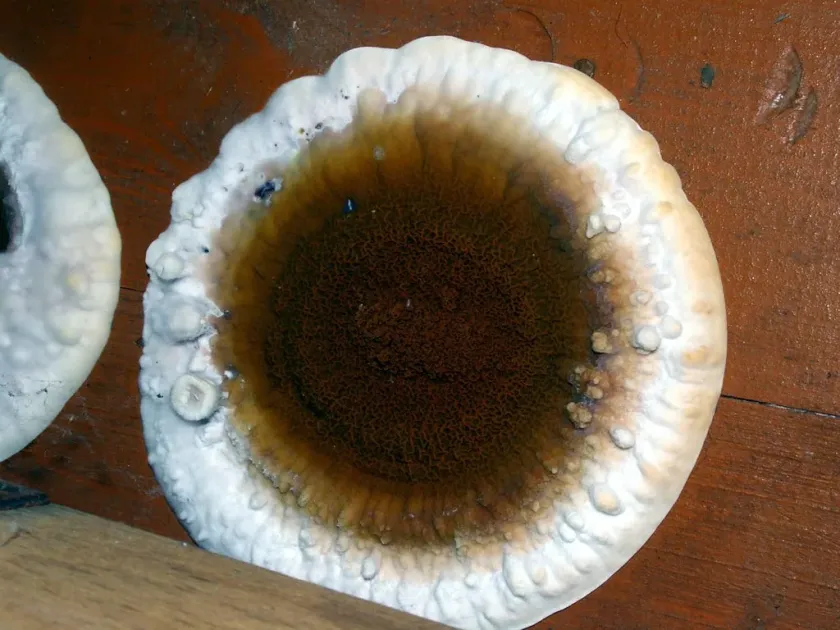
Large, pancake-like fruiting bodies with a wavy, reddish-brown center and white margin may appear near the source of moisture.
Pathogen
Serpula is a genus of basidiomycete fungi, with Serpula lacrymans being the most infamous species, primarily known as the "true dry rot" fungus.
This pathogen is a highly specialized wood-decay fungus that thrives by decomposing cellulose and lignin within structural timber.
The fungus is characterized by the production of thick, white, cotton-like mycelium that can travel long distances over non-nutritive surfaces like stone or masonry.
Serpula lacrymans effectively transports water and nutrients from moist areas to drier parts of the wood, allowing it to destroy structures from within.
Its life cycle involves the development of conspicuous, rusty-brown fruiting bodies that release millions of microscopic spores into the air.
Conditions for development
Serpula thrives in environments with a moisture content between 20% and 40% and temperatures ranging from 18°C to 25°C.
The fungus is highly sensitive to light and requires poor ventilation and dark, stagnant conditions to successfully colonize new timber.
Buildings with damp basements, crawl spaces, or poorly maintained leaking pipes provide the perfect habitat for rapid fungal expansion.
The presence of contact between timber and moist concrete or soil acts as a bridge for the fungus to spread from the environment into the structure.
While it prefers moderate temperatures, the mycelium can remain dormant during less favorable periods, waiting for a rise in moisture to resume its activity.
Why it matters
Serpula is extremely destructive, capable of reducing sound structural timber to a brittle, unusable state within a relatively short period.
By consuming the strength-providing elements of wood, it poses a severe threat to the structural integrity of residential and industrial buildings.
Severe infestations can lead to the collapse of beams, floor joists, and staircases, necessitating expensive and extensive building repairs.
The economic impact is significant, as complete removal of damaged timber and remediation of the site are required to stop the decay.
Beyond structural risks, the massive release of spores and the damp environment associated with the fungus can adversely affect indoor air quality.
Protection
The primary control strategy involves the complete excision of all infected wood, plus a safety margin of at least 0.5 to 1 meter beyond the visible growth.
Eliminating the source of moisture—such as fixing leaks and improving ventilation—is crucial to preventing the recurrence of dry rot.
Surrounding masonry and concrete should be treated with fungicidal solutions to eliminate any dormant mycelial strands hidden in the pores.
Using preservative-treated timber during construction and design is a key preventive measure against future fungal attacks.
Regular monitoring of moisture levels in basements and wood-based structures is essential to catching potential outbreaks before they become catastrophic.
Discussion
No discussions yet — be the first.