
Septoria leaf spot of nettle
Septoria urticae
Description
Symptoms
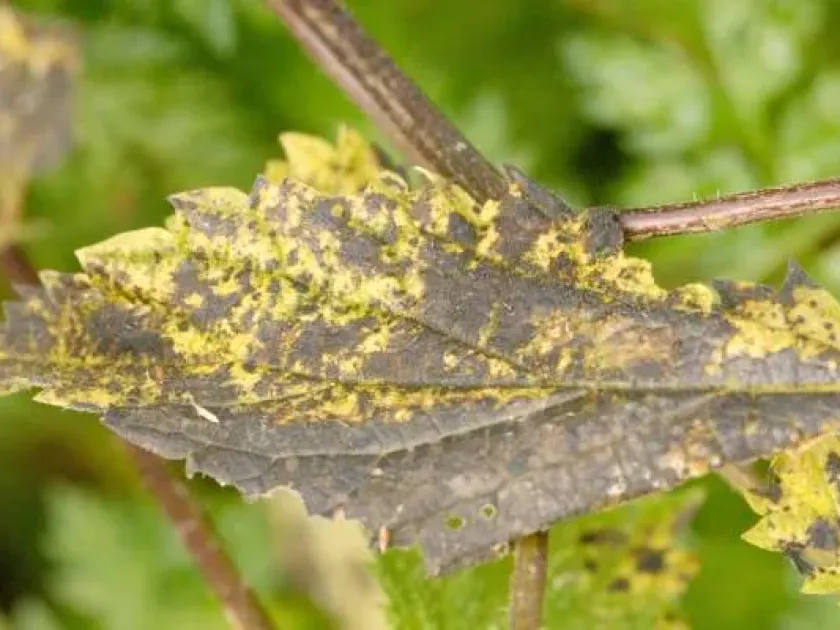
The primary symptom of the disease is the appearance of distinct spots on the leaf blades. Initially, these are small, light-colored or brownish spots that gradually darken over time.
The spots are often characterized by a dark or blurred margin. At the center of these lesions, tiny black specks can be observed; these are the pycnidia, which are a definitive diagnostic feature of Septoria infection.
As the disease progresses, individual spots may coalesce, covering a significant portion of the leaf surface. This eventually leads to premature drying and wilting of the leaves.
Damaged tissues frequently become brittle and dry, often falling away to create a "shot-hole" effect, which is a common visual indicator of advanced Septoria infection.
Infection typically initiates on the lower leaves closest to the moist soil and progresses upwards toward the top of the stem as the season continues.
Pathogen
The causative agent of this disease is the fungus Septoria urticae, which is classified as an anamorphic fungus (Coelomycetes). It primarily targets various species within the Urtica genus.
The fungus produces small, dark fruiting bodies known as pycnidia within the leaf tissue. Inside these structures, numerous conidia are developed, serving as the primary spores for spreading the infection.
The pathogen overwinters primarily in the form of mycelium or mature pycnidia found on fallen leaves and stem debris remaining on the soil surface throughout the dormant season.
When environmental conditions become favorable in the spring, conidia are released from the pycnidia. They are disseminated to healthy plant tissues via rain splashes, wind, or insect movement.
The biological cycle of Septoria urticae is tightly synchronized with the growth phases of the nettle plant, ensuring its survival and persistence across the entire vegetative period.
Conditions for development
High humidity and frequent rainfall are the most critical factors that trigger the mass development and spread of this fungal infection.
Temperatures ranging from 18°C to 24°C are considered optimal for the intensive production of spores and the subsequent germination of conidia on the host plant tissues.
Dense nettle stands with poor air circulation create a microclimate with trapped moisture, which significantly accelerates the rate at which the disease spreads.
The presence of last year's plant debris on the field acts as a constant reservoir of infection, ensuring the disease returns every season if sanitation is neglected.
Fluctuations in humidity levels can trigger the release of spores from pycnidia, allowing the fungus to quickly colonize new areas within the nettle patch.
Why it matters
Septoria leaf spot significantly reduces the photosynthetic efficiency of the nettle plant, as the active green leaf surface area is drastically diminished by necrosis.
The loss of biomass negatively impacts the plant's overall development, slowing down stem elongation and the formation of new, healthy foliage.
For nettles grown for medicinal or commercial use, this disease is critical, as the damaged harvest loses its pharmacological potency and commercial value.
Plants weakened by the disease become less resistant to abiotic stressors, such as moisture deficits or extreme temperature variations, potentially leading to plant death.
In cases of severe infestation, the disease can cause premature senescence of the entire vegetative part of the plant, shortening the productive lifespan of the patch.
Protection
Agronomic practices remain the fundamental approach to disease management. Thorough removal and destruction of plant debris at the end of the season are mandatory to reduce the inoculum level.
Maintaining proper plant spacing and ensuring good airflow help create a less hospitable environment for the fungus to thrive.
Fungicide application is generally reserved for commercial-scale production and should be managed strictly according to safety regulations and label instructions.
Regular monitoring of the nettle population allows for the early detection of disease hotspots, enabling targeted sanitation and removal of affected plants.
- Collecting and composting or burning infected plant debris.
- Thinning dense stands to improve ventilation and airflow.
- Avoiding overhead irrigation to keep foliage dry.
- Applying preventive bio-fungicides if necessary in high-risk areas.
Discussion
No discussions yet — be the first.