
Passion fruit septoria
Septoria passifloricola
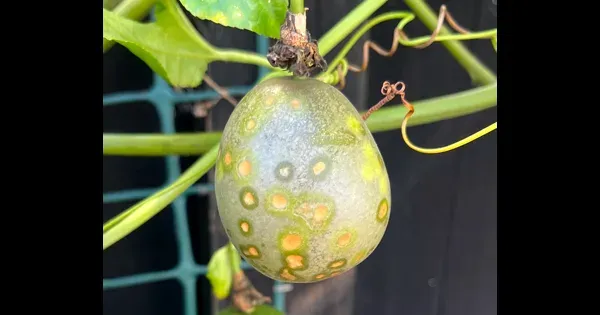
Description
Symptoms
The first symptoms appear as small, irregular or circular spots that gradually increase in size. The centers of these spots typically turn a grayish or beige color.
A distinct dark or reddish-brown border often surrounds the necrotic spots. Over time, tiny black dots—the pycnidia—become visible on the lesion surface, which is a hallmark of the disease.
The disease affects leaves, petioles, and young stems. In cases of severe infestation, premature yellowing and dropping of leaves are observed, which significantly weakens the plant.
Under high-humidity conditions, the spots may coalesce, forming large blighted areas. This leads to rapid tissue necrosis and deformation of the plant's vegetative parts.
- Appearance of chlorotic spots.
- Formation of dark borders around necrosis.
- Presence of visible black pycnidia.
- Massive premature leaf drop.
- Withering of young shoots.
Pathogen
The causative agent of this disease is the fungus Septoria passifloricola, which belongs to the Ascomycota phylum. The pathogen infects the host by entering through stomata or microscopic lesions on the plant epidermis.
The fungal mycelium develops within the intercellular spaces, gradually breaking down the structure of the leaf blade and stems. The pathogen reproduces via pycnidia, small flask-shaped fruiting bodies that form inside infected tissues.
The infection persists in crop debris, fallen leaves, and on infected stems for extended periods. Under high humidity, spores are actively spread by wind, splashing rain, and agricultural tools.
The biology of this pathogen is highly adapted to tropical and subtropical climates where passion fruit is cultivated, making it a persistent challenge for growers.
Due to its high specialization, the fungus colonizes the host effectively, leading to necrotizing processes that eventually destroy the entire photosynthetic surface of the leaves.
Conditions for development
Excessive humidity in the air and soil is the primary factor promoting disease development. Frequent rains, fog, and poor greenhouse ventilation facilitate the spread of the pathogen.
The optimal temperature range for the growth of Septoria passifloricola is between +20°C and +28°C, which coincides with the typical growing conditions for passion fruit.
High planting density significantly increases infection risk by disrupting natural airflow. In dense canopies, moisture remains on leaves for prolonged periods, allowing spores to germinate.
Injuries caused by pests or mechanical harvesting create entry points for the infection, making stressed plants more susceptible to the fungus.
Improper irrigation practices, especially overhead watering, create a favorable environment for fungal spores to settle and develop on the foliage.
Why it matters
Septoria causes significant yield losses by drastically reducing the total leaf surface area available for photosynthesis, which stunts fruit growth.
Affected fruits often lose marketability, showing signs of deformation or premature abscission, which leads to direct financial losses for the grower.
Severe infection lowers the plant's overall immunity, making it more vulnerable to secondary pathogens and opportunistic pests that further damage the vines.
If left uncontrolled, the disease can lead to extensive defoliation, eventually exhausting the plant and potentially causing it to die over several growing seasons.
On large-scale plantations, septoria can trigger epiphytotics, requiring intensive chemical management and high maintenance costs to protect the crop.
Protection
Protection strategies are based on prevention: using certified disease-free propagation material and maintaining appropriate spacing to ensure proper aeration.
Sanitation is critical; all infected plant debris must be removed and destroyed to minimize the inoculum reservoir in the soil and surrounding environment.
Copper-based fungicides are effective as a preventive measure at the beginning of the growing season to protect healthy foliage from initial spore attacks.
Systemic fungicides should be applied when the first symptoms are detected to arrest the development of the fungal mycelium within the plant tissues.
Growers should avoid overhead irrigation and maintain efficient drainage systems to keep the root zone dry and reduce the ambient humidity near the foliage.
Discussion
No discussions yet — be the first.