
Sunflower septoria leaf spot
Septoria obesa
Description
Symptoms
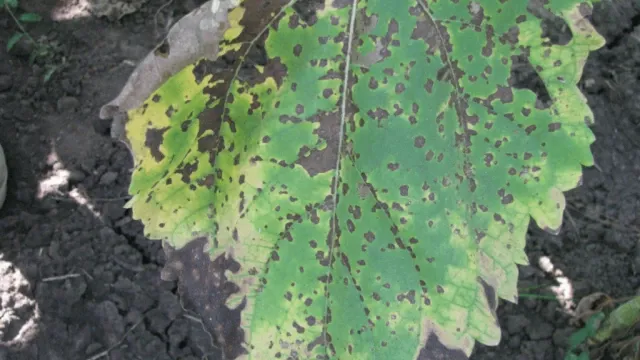
Symptoms of sunflower septoria typically appear first on the lower, older leaves. The disease manifests as small, irregular-shaped spots that are brown or yellow-brown in color.
A distinctive feature of these spots is the presence of a dark, well-defined margin that separates the necrotic area from healthy green leaf tissue. As the spots expand, the center often turns grey.
Within the dead leaf tissue, tiny black dots called pycnidia become visible to the naked eye. These structures are the hallmark of the fungus and are essential for accurate field identification.
If the infection is severe, the individual lesions will coalesce, covering large portions of the leaf surface. This leads to complete leaf blight, where the foliage dries up, curls, and falls prematurely.
While the leaves are the primary site of infection, the pathogen can also manifest on stems under high humidity conditions. The overall health of the plant declines as the leaf surface area is lost.
Pathogen
The causative agent of this disease is the fungus Septoria obesa, which belongs to the Deuteromycetes group. It is a specialized pathogen that primarily targets plants within the Asteraceae family.
The pathogen survives the winter season on infected crop residues left in the field, existing as mycelium and pycnidia. These residues serve as the primary reservoir for new infections in subsequent seasons.
During the spring, the pycnidia release spores (pycnospores) that are disseminated by rain splash or wind currents to healthy foliage. This initial transmission is crucial for the start of the disease cycle.
Throughout the growing season, the fungus produces multiple generations of conidia, allowing it to spread rapidly across the crop under suitable environmental conditions.
The mycelium colonizes the inter-cellular spaces of the host tissue, producing toxins that kill the plant cells. This process effectively reduces the photosynthetic capacity of the sunflower plant.
Conditions for development
Septoria obesa thrives in warm, humid environments. Frequent rainfall and the presence of leaf wetness are critical factors that promote spore germination and fungal invasion.
The optimal temperature range for the development of the disease is between 18°C and 25°C. These conditions significantly shorten the incubation period of the fungus, leading to rapid disease spread.
High planting densities create a microclimate with stagnant air and elevated humidity levels, which are ideal for the proliferation of the fungus. Such conditions facilitate the movement of spores between plants.
Improper crop rotation or the presence of sunflower debris on the soil surface increases the initial inoculum pressure in a field. This makes the crop significantly more susceptible to outbreaks.
Plant stress, often caused by nutrient imbalances or pest infestations, weakens the host's natural defenses. Weakened plants are less capable of resisting the colonization of the fungus.
Why it matters
The primary damage caused by septoria leaf spot is the severe reduction of photosynthetically active leaf area. This limits the plant's ability to produce energy, which is essential for seed development.
The loss of leaves directly affects the grain filling process, leading to lower test weights and reduced seed yields. This represents a significant financial loss for producers.
Beyond quantity, the quality of the harvest is also affected, as the oil content of the sunflower seeds can be significantly reduced due to the metabolic stress on the plant.
The disease hastens the maturity of the sunflower, cutting short the critical period of grain filling. Yield losses can reach 10-30% depending on hybrid susceptibility and weather patterns.
Furthermore, weakened plants are more susceptible to secondary infections, including various stem and head rots, which can lead to total crop failure in extreme cases.
Protection
Strict adherence to a crop rotation system is the most important cultural practice to minimize septoria, ideally allowing a 3-4 year break between sunflower crops.
Effective management of crop residues is essential. Deep plowing helps incorporate plant debris into the soil, speeding up the decomposition process and reducing the fungal survival rate.
Selecting and planting resistant or tolerant sunflower hybrids is a key component of an integrated disease management strategy. This significantly reduces the reliance on chemical inputs.
Fungicide applications are recommended when conditions are favorable for disease development. Using triazole or strobilurin-based fungicides can effectively manage the disease if applied early.
- Utilizing certified, disease-free seed.
- Managing weed populations that might act as alternative hosts.
- Optimizing seeding rates to ensure better airflow within the canopy.
- Maintaining balanced soil fertility to boost plant vigor and immunity.
Discussion
No discussions yet — be the first.