
Septoria leaf spot of lavender
Septoria lavandulae
Description
Symptoms
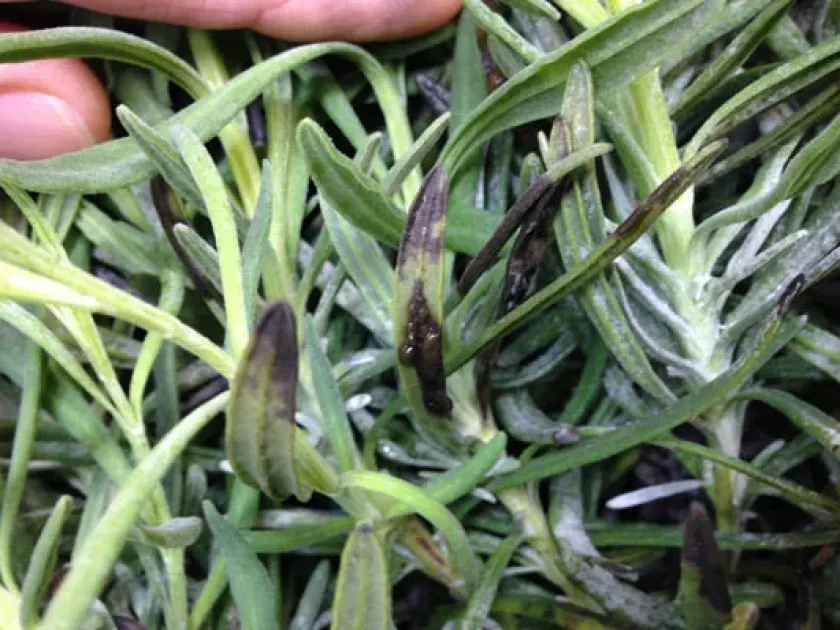
The primary symptom of Septoria leaf spot is the appearance of small, circular, or irregular spots on the leaves. These spots start as pale yellow or light brown and eventually darken to deep brown or grey.
A distinctive feature of this disease is the presence of tiny black dots visible within the lesions. These dots are the pycnidia, which produce the next generation of infectious spores.
As the infection advances, the spots often coalesce, covering large parts of the leaf surface. This leads to yellowing (chlorosis) and eventually the premature death and abscission of the leaves.
Stems can also be affected, showing discolored lesions that may weaken the shoot, leading to stunted growth or even death of the affected branch if the infection is severe enough.
Lavender plants infested with Septoria look ragged and unthrifty, losing their characteristic silver-green density and vigor, which impacts their overall aesthetic value.
Pathogen
The causative agent of the disease is the fungus Septoria lavandulae, a pathogenic organism that specifically infects lavender plants. This fungus belongs to the group of deuteromycetes, which are characterized by asexual reproduction through spores.
The pathogen survives the winter in infected plant debris, fallen leaves, and soil, remaining within pycnidia. These are small, flask-shaped structures that protect the spores during adverse conditions.
Spores are released during periods of high humidity and rainfall. They are disseminated via splashing water droplets, wind currents, and human activity, making the transmission quite efficient in nursery or field conditions.
Once they land on a host plant, the spores penetrate the leaves or stems, primarily through natural openings like stomata or through minor mechanical injuries in the plant tissue.
The mycelium of the fungus colonizes the internal tissues of the lavender plant, leading to the breakdown of cells and the formation of characteristic leaf spots as the disease progresses.
Conditions for development
High relative humidity and stagnant air are the most critical factors for the development of Septoria leaf spot. The disease is most prevalent in areas with frequent rainfall or heavy dew.
The fungus thrives within a temperature range of +18°C to +25°C. This makes the spring and early summer periods, when lavender experiences a growth spurt, particularly high-risk times for infection.
Dense planting schemes that prevent airflow between plants create a humid microclimate. When moisture remains on the foliage for extended periods, the risk of fungal germination increases drastically.
Improper watering techniques, such as overhead irrigation, can mimic rainfall, splashing spores from the soil onto lower leaves and promoting the rapid spread of the pathogen.
Waterlogged soil or poor drainage exacerbates the issue by keeping the humidity levels high around the crown of the plant, weakening its natural resistance to infection.
Why it matters
The primary damage caused by Septoria is the loss of leaf surface, which directly impacts the plant's photosynthetic ability, reducing its overall growth rate and vigor.
In commercial lavender production, the disease leads to a reduced yield of essential oils, as healthy foliage and flowers are necessary for oil accumulation and quality.
Severe infestations can lead to significant defoliation, leaving the plant vulnerable to secondary infections and making it less able to survive harsh winter conditions due to lack of stored energy.
The aesthetic decline is a major concern for ornamental lavender varieties, as the unsightly spots and shedding leaves make the plants unsuitable for landscapes and garden displays.
Failure to control the disease allows the pathogen to build up in the soil, ensuring that every subsequent season starts with a high inoculum pressure, leading to persistent management difficulties.
Protection
Cultural control is the first line of defense. Ensure proper plant spacing to facilitate air movement and choose planting sites with full sun and excellent drainage.
Pruning is essential for maintaining plant health. Remove and destroy all infected plant material, especially during the autumn cleaning, to reduce the amount of inoculum for the next year.
Switch to drip irrigation or other methods that deliver water to the base of the plant, avoiding wetting the foliage. This simple change significantly reduces the risk of spore transmission.
- Use disease-free planting stock for new beds.
- Apply copper-based fungicides or systemic products if the disease threshold is reached.
- Monitor the plantation regularly during humid weather.
By integrating these practices, growers can maintain healthy lavender fields and significantly minimize the impact of Septoria leaf spot on both yield and appearance.
Discussion
No discussions yet — be the first.