
Septoria leaf spot of lettuce
Septoria lactucae
Description
Symptoms
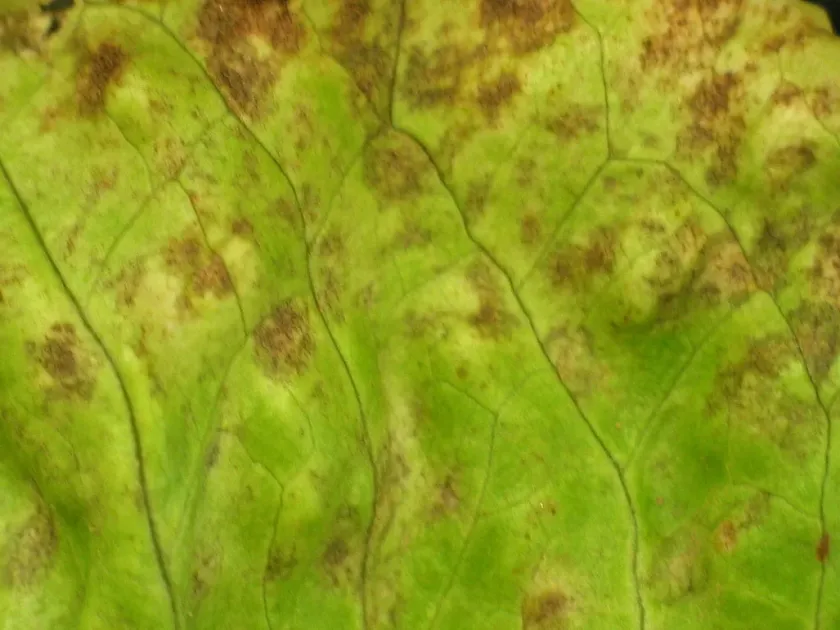
Early symptoms appear as small, irregular, water-soaked spots on the lower leaves. These spots gradually expand and transition to a light brown or grey color with a distinct dark margin.
As the disease progresses, the center of the spots develops small black dots, which are the fungal pycnidia. This is the most reliable visual indicator for field diagnosis.
In cases of severe infestation, individual spots coalesce to cover large areas of the foliage, resulting in chlorosis and eventual necrosis. The affected leaves dry out, wither, and become detached from the plant.
The infection usually progresses from the base of the plant upwards. As the lower leaves die, the fungus finds new sites on the developing inner leaves, weakening the overall plant structure.
Under humid conditions, the lesions may display a faint greyish fungal mass. The foliage appears unsightly, and the overall plant growth is significantly stunted.
Pathogen
The disease is caused by the fungus Septoria lactucae, which is characterized by the formation of pycnidia — small, flask-shaped reproductive structures. These pycnidia are embedded within the lesions on the leaves.
The fungus overwinters in crop debris, soil, and on infected seed. During the growing season, conidia are dispersed by wind, rain splashes, and irrigation water, facilitating the secondary spread of the infection.
The life cycle begins when conidia land on susceptible lettuce leaves. Under suitable conditions, they germinate and penetrate the leaf tissue, leading to the development of necrotic spots within 7–10 days.
Septoria lactucae is a host-specific pathogen that primarily affects members of the Lactuca genus. Its ability to produce multiple cycles of spores during a single season makes it a dangerous threat to high-density crops.
The pathogen thrives by extracting nutrients from the host's cells, progressively killing tissue as the infection expands. The survival of the fungus in the soil makes long-term rotation essential for suppression.
Conditions for development
The development of Septoria lactucae is highly dependent on environmental moisture. High relative humidity (above 85%) and moderate temperatures (18°C to 25°C) create the perfect environment for spore germination.
Prolonged leaf wetness, often caused by rain or overhead irrigation, is the primary trigger for infection. Water droplets act as the primary medium for the transport of conidia across the leaf surface.
Dense plant spacing restricts airflow, leading to high micro-humidity levels near the soil line. This environment accelerates the maturation of pycnidia and the spread of spores between neighboring plants.
Poor ventilation in greenhouse systems acts as a multiplier for the disease. Stagnant, humid air prevents foliage from drying out, leaving the plants vulnerable to continuous fungal attack.
Poorly drained soils or excessive irrigation practices that maintain constant leaf wetness are strongly correlated with higher rates of infection in commercial fields.
Why it matters
The economic impact of Septoria leaf spot is primarily due to the loss of marketable yield. Leaves showing necrosis and fungal spotting are unacceptable for fresh market sale or processing.
The disease inhibits the development of firm lettuce heads, significantly reducing weight and size. In severe outbreaks, the entire harvest can be rendered unmarketable due to the rapid spread of lesions.
Infected areas of the leaves often serve as entry points for secondary bacterial soft rot. This secondary infection leads to the rapid disintegration of the plant, even during transit or short-term storage.
The infection decreases the photosynthetic capacity of the plant, which results in poor biomass production. This weakens the plant, making it more susceptible to environmental stressors and other pests.
Global trade and local market standards are strictly enforced regarding quality; thus, even minor symptoms can result in the rejection of entire shipments, causing substantial financial loss.
Protection
Effective management begins with the use of certified, disease-free seed and the cultivation of resistant or tolerant lettuce varieties. Crop rotation for at least 3–4 years is essential to break the pathogen cycle.
Sanitation practices play a crucial role in reducing initial inoculum. Removing and destroying crop residues immediately after harvest prevents the survival of the fungus for the next season.
Cultural control practices include:
- Implementing drip irrigation to avoid wetting the foliage.
- Increasing plant spacing to ensure better air circulation.
- Ensuring greenhouses have adequate ventilation to reduce internal humidity.
- Implementing weed control to eliminate alternative hosts for the pathogen.
Chemical control involving fungicides can be effective if applied early. It is vital to monitor the field regularly and initiate treatments as soon as the first symptoms are detected.
Using a rotation of fungicides with different modes of action is necessary to prevent the development of resistant fungal strains. Always adhere to local regulations regarding pre-harvest intervals for food safety.
Discussion
No discussions yet — be the first.