
Carnation Septoria leaf spot
Septoria dianthi
Description
Symptoms
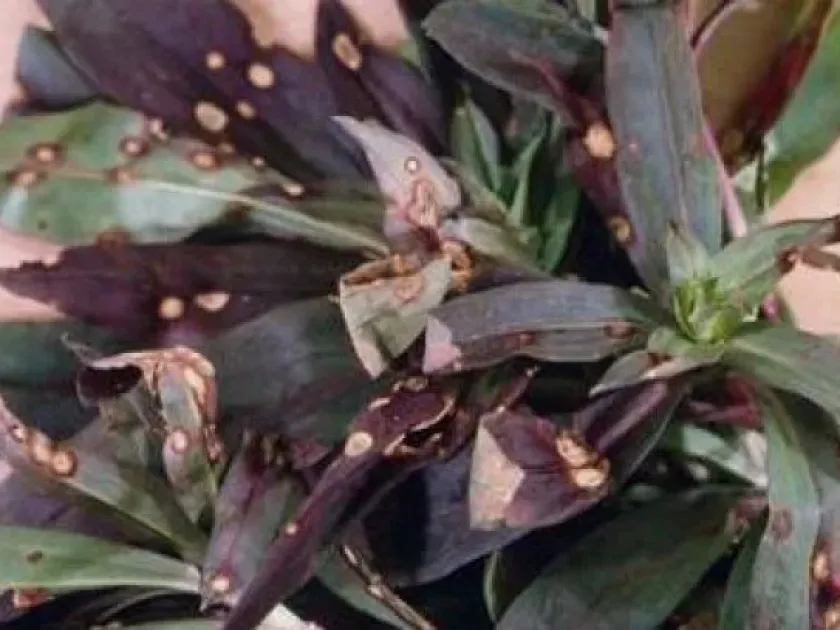
Initial symptoms appear as small, circular, light-colored spots on the lower leaves. As the disease progresses, these spots expand, often developing a distinct reddish-brown margin with a pale or grayish center.
The most reliable diagnostic sign is the formation of tiny, black, pimple-like structures in the center of the spots. These are the pycnidia, which are visible to the naked eye or under a simple magnifying lens.
When environmental conditions are conducive to fungal growth, the spots merge, causing large sections of the leaf to wither. This results in premature yellowing, browning, and finally the death of the leaf blade.
Stem infections are also common, appearing as elongated necrotic lesions. These lesions can girdle the stems, interrupting the flow of nutrients and causing the upper portions of the shoots to droop and die.
Heavily infected plants become stunted and lose their aesthetic appeal. The reduction in foliage significantly impacts the plant's ability to produce flowers, often leading to bud abortion and poor growth.
Pathogen
The disease is caused by the fungus Septoria dianthi, an ascomycete pathogen that specifically targets Dianthus species. It is a common cause of foliage damage in both greenhouse and outdoor carnations.
The fungus produces microscopic fruiting bodies called pycnidia within the leaf tissues. These pycnidia release conidia, which are the primary spores responsible for spreading the infection from one plant to another during the growing season.
The pathogen survives the winter in infected plant debris, fallen leaves, and stems left in the garden. These remains act as a reservoir, releasing spores when weather conditions become favorable in the spring.
Infection occurs when spores land on leaves and germinate in the presence of moisture. The fungus penetrates the host through stomata or small wounds and colonizes the intercellular spaces, gradually killing the host cells.
As an obligate-like pathogen in terms of its host range, Septoria dianthi is highly adapted to the physiological characteristics of carnation plants, making it a persistent threat in favorable climates.
Conditions for development
Septoria dianthi thrives in cool to moderate temperatures and high humidity. Extended periods of rainfall or heavy dew are the most critical factors triggering large-scale outbreaks of the disease.
Optimal development usually occurs between 18°C and 25°C. In these conditions, the fungal lifecycle completes rapidly, allowing for multiple infection cycles within a single growing season.
Poor air circulation, often caused by overcrowding or lack of proper pruning, creates stagnant air pockets where humidity remains high for long periods. This prevents leaf surfaces from drying, facilitating spore germination.
Irrigation methods also play a significant role. Overhead watering that leaves the foliage wet for hours creates an ideal environment for spore transfer and infection, particularly in closed or poorly ventilated greenhouses.
Plant stress due to low light levels or nutrient imbalances can compromise the plant's natural defense mechanisms, making it significantly more susceptible to colonization by the fungus.
Why it matters
The primary damage caused by Septoria leaf spot is aesthetic, which is detrimental to the commercial value of carnations grown for cut flowers or ornamental displays. Infected foliage is unsightly and disqualifies the product.
Physiologically, the disease leads to a drastic reduction in photosynthetic capacity. Since the lower leaves are often the first to die, the plant loses the energy reserves needed for blooming and winter hardiness.
Stem lesions can cause the plant to collapse or snap, especially during windy conditions or when the stems are weighed down by flowers, leading to total loss of individual stalks.
Chronic infection weakens the perennial root system, which can result in plant death during the winter months. This forces gardeners to replace or replant entire sections of the flower garden.
The pathogen builds up an infection load in the garden soil and litter, making it increasingly difficult to grow healthy carnations in the same location without intensive soil management or long rotations.
Protection
Effective management begins with strict sanitation practices. Removing and destroying all infected plant debris at the end of the season is essential to reduce the primary inoculum for the next year.
Cultural methods include ensuring proper spacing between plants to maximize airflow. It is also important to use drip irrigation or water early in the day so that the foliage can dry off completely before nightfall.
Chemical control involves the use of copper-based fungicides or systemic triazoles. These should be applied preventively or at the very first sign of infection to limit the spread of the fungus.
For greenhouse production, managing humidity through ventilation and climate control is paramount. Routine scouting for initial leaf spots allows for localized treatment before the entire crop is compromised.
- Dispose of all diseased plant material
- Improve ventilation around plants
- Use fungicides as a preventative measure
- Select resistant cultivars whenever possible
Discussion
No discussions yet — be the first.