
Seimatosporium disease
Seimatosporium
Description
Symptoms
Typical symptoms include the development of necrotic lesions on twigs and branches, which may expand into sunken, cankerous areas over time.
Affected bark often exhibits splitting or cracking, and in species like stone fruits, there is frequently an associated exudation of gum (gummosis).
As the disease progresses, the leaves distal to the canker may show yellowing, wilting, and eventually drop prematurely due to the restricted flow of water and nutrients.
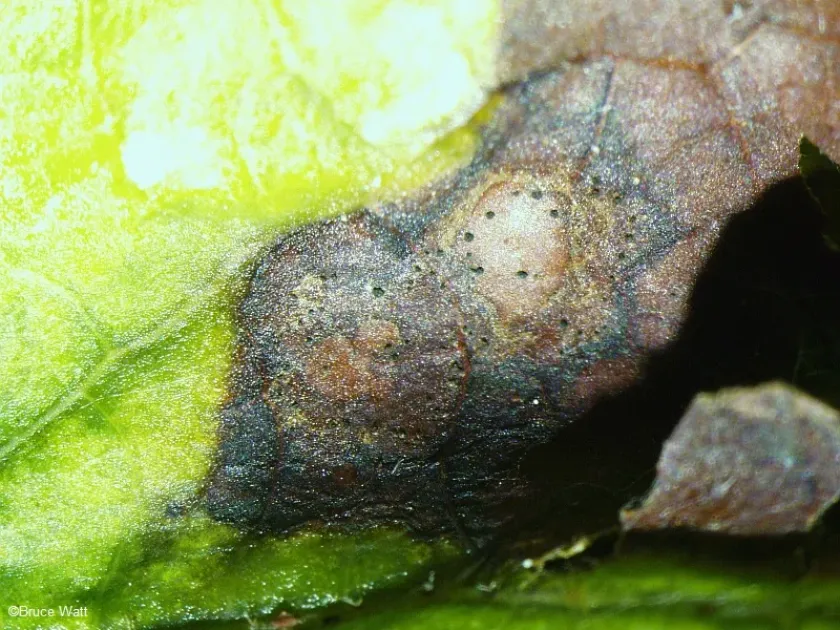
Microscopic examination of the bark surface reveals small, dark-colored pustules, which represent the fungal fruiting bodies erupting through the epidermal layers.
In severe cases, the infected branch becomes girdled by the canker, resulting in the sudden death of the entire branch above the site of infection.
Pathogen
The disease is caused by fungi of the genus Seimatosporium, which are members of the Coelomycetes group. These pathogens are known to colonize the bark and stems of various woody and ornamental plants.
The fungus survives as mycelium within the affected tissues of the host, producing specialized fruiting structures known as acervuli on the surface of the bark during favorable weather conditions.
Conidia are released from these fruiting bodies and are disseminated primarily by water splashes and wind, allowing the pathogen to move between trees within an orchard or landscape.
The pathogen is opportunistic, often taking advantage of tree stress to penetrate the periderm and establish deeper infections in the cambium layer.
Research indicates that various species of Seimatosporium have specific host preferences, though the mechanism of pathogenesis remains consistent across the genus.
Conditions for development
High humidity and moderate temperatures are the most critical environmental drivers for the development and spread of Seimatosporium infections.
Tree stress, induced by drought, nutrient deficiencies, or previous mechanical injury, significantly lowers the plant's resistance to fungal invasion.
Poor orchard sanitation, such as failing to remove dead wood or fallen leaves, provides a continuous reservoir of inoculum that persists from season to season.
Dense canopy growth, which restricts sunlight penetration and airflow, creates the humid microclimate favored by the pathogen's spore development.
Frequent rain events during the growing season facilitate the splashing of conidia onto healthy, susceptible tissue, leading to rapid infection cycles.
Why it matters
The primary economic harm caused by Seimatosporium is the loss of productive scaffold branches, which reduces fruit yield and compromises tree architecture.
Infected trees exhibit decreased vigor and increased susceptibility to secondary stressors, including cold damage and attacks by wood-boring insects.
Nurseries are particularly vulnerable, as the disease can lead to the widespread rejection of stock and significant loss of revenue.
For ornamental plants, the disease causes aesthetic blight, characterized by dieback and thinning crowns, which diminishes the landscape value.
Management costs are high due to the necessity for constant monitoring, labor-intensive pruning, and repeated fungicide applications.
Protection
The cornerstone of management is the rigorous removal and destruction of all infected wood to reduce the total amount of inoculum in the environment.
Disinfecting pruning tools between cuts is essential to prevent the mechanical transmission of fungal spores from diseased to healthy wood.
- Maintain vigorous tree growth through proper irrigation and nutrition.
- Prune to improve light penetration and air circulation.
- Apply copper-based fungicides as a preventative measure.
- Ensure prompt treatment of wounds caused by frost or machinery.
- Remove and dispose of all infected plant debris during the dormant season.
Systemic fungicides may be used when disease pressure is high, though they are most effective when applied early in the infection cycle.
Regular scouting throughout the growing season is necessary to detect early cankers before they girdle the branches and become lethal.
Discussion
No discussions yet — be the first.