
Beech sponge mold
Scorias spongiosa
Description
Symptoms
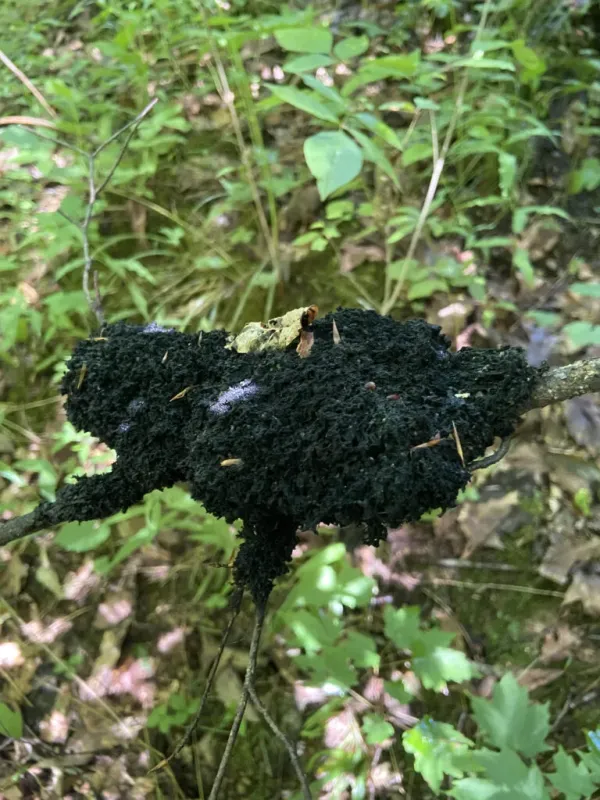
The primary symptom of beech sponge mold is the formation of a dense, black or dark brown growth that resembles a sponge or thick felt. This mass can cover significant portions of branches, bark, and leaves, giving the tree a distinctly dark and sickly appearance.
Early stages of the mold look like a thin, velvety film, but as it progresses, it thickens significantly. The resulting structure is soft, bumpy, and porous, often reaching several centimeters in thickness, which is a unique characteristic of this specific fungal growth.
The mold is loosely attached to the bark and can often be peeled away, though its underlying surface usually reveals clear signs of insect activity. While the fungus does not penetrate deep into the woody tissue, it creates a thick, suffocating layer over the surface.
The presence of this fungus is almost always linked to a sticky residue on the leaves known as honeydew. This is a direct result of feeding by aphids or scale insects, which produce the sugary liquid that serves as the perfect substrate for the fungus to thrive.
In severe cases, the mold can spread across the entire canopy, making affected trees stand out in a forest or garden setting due to their blackened, matted texture.
Pathogen
The pathogen responsible is the fungus Scorias spongiosa, which belongs to the group of sooty molds. It is a saprotrophic organism, meaning it does not attack living plant tissue but rather feeds on the sugary secretions left behind by other insects.
The fungus is inextricably linked to the presence of the woolly beech aphid Grylloprociphilus imbricator. The honeydew excreted by these aphids is essential for the fungal growth; without this food source, the mold cannot maintain its mass.
Because it is not a primary parasite, the fungus does not kill the tree by infection. However, its heavy, dark crust causes significant indirect damage by interfering with the physiological functions of the tree.
The life cycle of the fungus depends on environmental moisture. Spores are easily disseminated by wind or rain and germinate quickly when they land on surfaces coated with the sweet honeydew, beginning the cycle of colony formation.
This fungus is persistent and can remain active as long as the insect population continues to provide the necessary nourishment, often persisting throughout the growing season in favorable conditions.
Conditions for development
The most important condition for the development of sponge mold is the abundance of the aphid population. A high density of these insects is the primary trigger for a massive outbreak of the fungus on the tree's surface.
High humidity and consistent rainfall are crucial for the rapid growth of the fungal mycelium. Damp weather prevents the honeydew from drying out, keeping the surface sticky and perfect for the mold to continue expanding.
Densely planted groves or trees with thick, unpruned canopies often lack proper airflow. This stagnant environment promotes higher humidity levels, allowing the fungus to spread rapidly across the bark and foliage.
The overall vigor of the host tree also influences the severity of the infestation. Stressed or weakened trees are more prone to aphid attacks, which naturally creates more favorable conditions for the mold to take hold.
Warm temperatures, combined with moisture, act as a catalyst for the fungus to develop its characteristic thick, sponge-like structure in a relatively short period.
Why it matters
The main danger posed by the mold is the obstruction of photosynthesis. The thick black layer acts as a barrier, blocking sunlight from reaching the leaves, which hinders the tree's ability to produce energy and leads to metabolic stress.
The mold also interferes with normal gas exchange. By clogging the leaf stomata, it restricts the tree’s respiration, which can lead to premature leaf drop and overall thinning of the canopy over several seasons.
While the mold does not cause decay directly, it traps moisture and debris against the bark. This can create a microenvironment that is prone to secondary fungal infections or rot, potentially weakening the health of the tree.
Prolonged heavy infestation exhausts the tree's resources, making it less resilient to environmental stressors like drought, frost, or secondary attacks by wood-boring insects.
From a landscape perspective, the mold significantly detracts from the visual health of the trees, making them look unkept and unsightly, which is a major concern for park management and urban landscaping.
Protection
The most effective strategy for controlling beech sponge mold is to manage the aphid population. Using systemic insecticides to target the sap-sucking insects stops the production of honeydew, effectively starving the mold.
Pruning branches that are heavily infested helps to improve airflow within the canopy. This reduces humidity and prevents the mold from finding a suitable environment to grow on the inner parts of the tree.
Encouraging natural predators, such as ladybugs and lacewings, is an excellent biological method for controlling aphid populations, thereby preventing the buildup of sooty mold in the first place.
Maintaining tree vigor through proper watering and soil fertilization helps the tree resist insect colonization. A healthy, robust tree is far less likely to suffer from severe mold outbreaks.
- Monitor aphid activity starting in early spring.
- Apply targeted insecticides during peak aphid feeding periods.
- Mechanically remove heavy mold accumulation from stems where possible.
- Promote biodiversity to maintain natural biological controls.
Discussion
No discussions yet — be the first.