
Sooty mold
Scorias
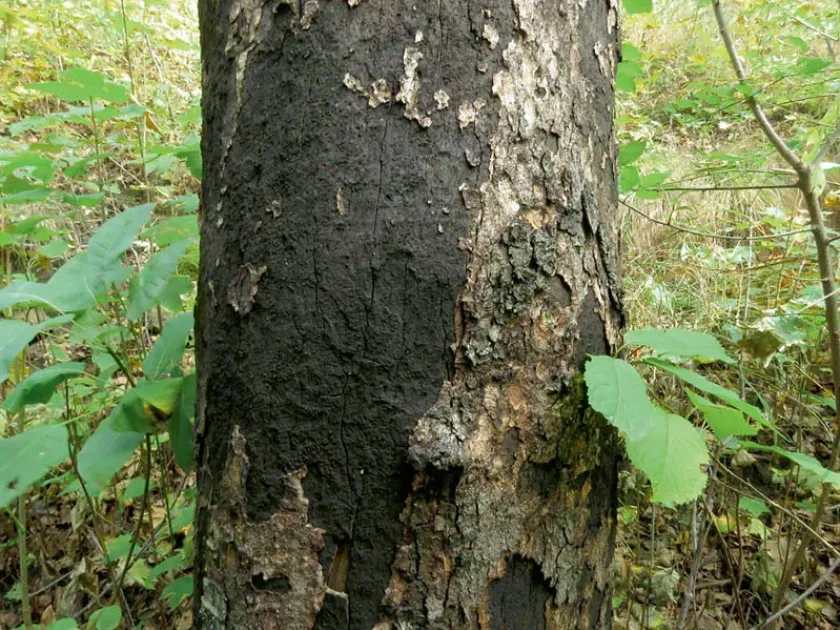
Description
Symptoms
The primary symptom is the appearance of a dark, sooty, or velvet-like coating on leaves, twigs, and stems that can be rubbed off to some extent.
In the case of Scorias spongiosa, the fungus forms distinct, bulky, black, sponge-like masses that can wrap around branches and twigs.
Leaves affected by the growth often appear dull and may show signs of chlorosis or curling due to the stress of being covered by the fungal mats.
Fruits often become coated in the black residue, which is difficult to remove and significantly lowers the aesthetic and market value of the harvest.
Visible colonies of insects are almost always present near the area of fungal growth, as they provide the necessary nutrients for the fungus to colonize.
Pathogen
The disease is caused by fungi of the genus Scorias, with Scorias spongiosa being a well-known representative that forms dense, sponge-like structures.
These fungi are saprophytes, meaning they do not directly feed on living plant tissue, but rather thrive on the surface of plants by consuming sugary secretions.
The sugary substance, known as honeydew, is produced by sap-sucking insects such as aphids, scale insects, whiteflies, and mealybugs.
The fungus develops its mycelium entirely on the exterior of the leaves, stems, and fruits, anchoring itself using the sticky environment created by the insect pests.
The dark pigmentation of the fungal mats is a protective mechanism that helps the organism survive exposure to sunlight and environmental fluctuations.
Conditions for development
High humidity and warm temperatures are critical environmental triggers that promote the rapid germination and spread of fungal spores.
Poor airflow, caused by dense canopy growth or improper planting density, creates a stagnant environment where humidity stays high for extended periods.
The presence of large populations of honeydew-producing insects is the most significant condition required for the successful establishment of the disease.
The fungus thrives in shaded or poorly ventilated parts of the plant where dew and insect excretions do not dry out quickly.
Late summer and early autumn are typically the peak periods for this disease, coinciding with the highest activity of sucking insects.
Why it matters
The fungus physically blocks sunlight from reaching the leaf surface, which severely inhibits the plant's ability to perform photosynthesis.
Stomata, the microscopic pores on leaves used for gas exchange, become clogged, causing the plant to struggle with normal respiration and gas exchange.
The accumulation of the fungal mass acts as a stress factor, reducing the plant's vigor and making it more susceptible to environmental extremes.
Young plants or those with heavy infestations may experience stunted growth, premature leaf drop, and overall reduced health and vitality.
The cosmetic damage caused by the black coating renders ornamental plants unsightly and can lead to the loss of entire branches if the infection is severe.
Protection
The most effective strategy is the systematic management and control of sap-sucking insect populations to remove the source of honeydew.
Pruning to improve light penetration and air circulation is essential for reducing the humidity levels that favor the development of the mold.
Copper-based fungicides can be applied to surfaces to kill fungal spores and prevent further spread of the mold throughout the plant.
Washing the plant with mild soap solutions can help remove the sticky honeydew, which cleans the foliage and discourages further fungal growth.
- Monitor and control aphid and scale populations.
- Prune trees for better air circulation.
- Apply copper fungicides where necessary.
- Wash foliage to remove honeydew residue.
Discussion
No discussions yet — be the first.